
By Adaobi Rhema Oguejiofor
For millions of Nigerians, owning a home has remained a distant dream. Rising construction costs, soaring inflation, expensive mortgages, and rapid urbanisation have widened the country’s housing deficit, leaving many families trapped in a cycle of renting or living in inadequate shelter.
Now, the Federal Government says it is making one of the most ambitious housing interventions in recent history. President Bola Tinubu recently announced that more than 15,000 housing units are currently under construction across Nigeria under the Renewed Hope Housing Programme, part of a broader promise to deliver 100,000 homes nationwide. The announcement has reignited a national conversation on whether or not Nigeria can finally make affordable housing a reality.
A Promise Taking Shape
According to the President, the housing initiative goes beyond erecting buildings. It aims to transform the entire housing value chain, from land acquisition and mortgage financing to building materials and equipment leasing.
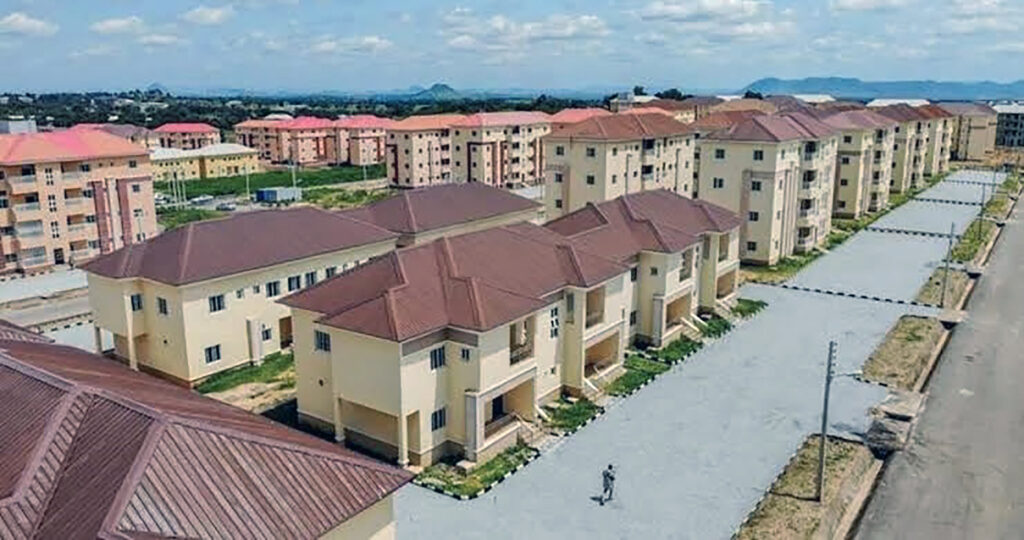
Among the flagship projects are more than 3,000 housing units in Karsana, Abuja, and a 2,000-unit housing city in Ibeju-Lekki, Lagos, which has reached an advanced stage, with sales already underway. Across other parts of the country, thousands more units are being developed simultaneously.
The first phase of the programme targets 50,000 homes through housing cities in each of Nigeria’s geopolitical zones and the Federal Capital Territory, alongside estates in other states.
Housing experts often describe housing as an economic engine rather than just a social necessity. Every new home creates demand for cement, steel, electrical fittings, tiles, roofing sheets, furniture, transport services, and labour.
The Federal Government has embraced this broader perspective. President Tinubu said housing has moved “from a welfare conversation to a national growth strategy,” noting that real estate and construction are increasingly important contributors to Nigeria’s economy.
The projects are already creating jobs for artisans, engineers, contractors, suppliers, small businesses linked to the construction industry, and even local food vendors who provide food for sale to construction workers. Officials believe this multiplier effect could stimulate local economies across the country.
However, building homes is only half the challenge. Making them affordable and available to the right people is another side of the coin. The government says it is addressing this through mortgage reforms. According to the President, over 1,800 families across 25 states have already accessed mortgages worth N128 billion at a fixed interest rate of 9.75 per cent, repayable over 20 years. For many Nigerians accustomed to double-digit lending rates and short repayment periods, such financing offers a glimpse of possibility

However, affordability remains a critical concern. With inflation still affecting household incomes and construction materials remaining expensive, analysts argue that sustained financing, transparent allocation processes, and private-sector participation will determine the programme’s long-term success.
Confronting a Massive Deficit
Nigeria’s housing challenge is immense. The nation’s housing deficit runs into millions of units, a reality President Tinubu himself acknowledged.
“I will not stand before you and declare the work is finished, because it is not. The housing deficit this nation carries is counted in the millions, and it will take years of steady labour to close,” he stated.
That acknowledgement may be as important as the construction figures themselves. Housing deficits are not erased overnight. They require sustained policy, financing, land reforms, and political commitment over many years.
The administration says it is also tackling structural barriers that have long hindered housing delivery. These include reforms in land titling, expansion of formal land registration, easier access to construction equipment through leasing frameworks, and the establishment of building material hubs across Nigeria’s six geopolitical zones.
The government is also collaborating with international partners, including the World Bank, to improve land administration and unlock what officials describe as “dead capital” tied up in unregistered land.
The Road Ahead
The sight of cranes, bulldozers, and emerging housing estates across Nigeria offers a measure of optimism at a time when affordable housing remains elusive for many citizens.
Yet the true measure of success will not simply be the number of houses built. It will be the number of families able to buy them, the communities that grow around them, and the economic opportunities they create.
If sustained, Nigeria’s renewed hope housing drive could become more than a construction programme. It could redefine how millions of Nigerians live, work, and dream. For a country where home ownership has often seemed out of reach, the bricks now being laid across the nation may ultimately become the foundation of something much larger, hope itself.
