

By Adaobi Rhema Oguejiofor
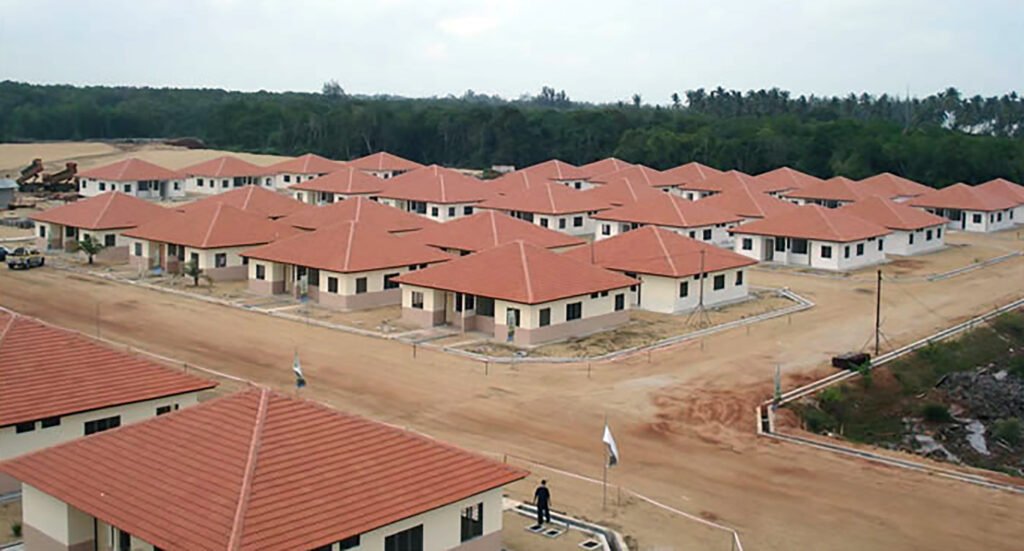
Nigeria’s housing challenge has remained one of the country’s most persistent development setbacks. Rapid urbanisation, population growth, rising construction costs and limited access to affordable housing finance have left millions of Nigerians without decent homes. With the country’s housing shortfall estimated at 17 million units, the search for practical and sustainable solutions has become more urgent than ever.
Recognising that the government alone cannot meet this enormous demand, the Federal Government is increasingly turning to strategic partnerships with credible private investors capable of delivering large-scale housing projects. The approach reflects a growing understanding that addressing Nigeria’s housing crisis requires not only political commitment but also private capital, innovative construction technologies and long-term collaboration.
That commitment was recently reinforced when the Minister of Housing and Urban Development, Engr. Muttaqha Rabe Darma, received a delegation from China Hyway Group Limited, a global infrastructure company seeking to partner with the Federal Government on the development of 10,000 resettlement housing units across Nigeria. The proposal has the potential to become one of the country’s significant public-private housing initiatives if approved.
During the meeting, the minister assured the delegation that the Federal Government is prepared to provide suitable land in the Federal Capital Territory, as well as in states and local government areas across the country, for credible investors willing to undertake mass housing development.
He explained that creating an enabling environment for genuine investors remains a priority of the ministry, adding that access to land and institutional support are essential ingredients for successful housing delivery.
According to Darma, the proposal aligns with President Bola Ahmed Tinubu’s Renewed Hope Agenda, which places affordable, decent and sustainable housing at the centre of its development priorities. He stressed that the ministry remains committed to expanding homeownership opportunities through strategic partnerships capable of accelerating housing delivery across the country.
For China Hyway Group Limited, Nigeria represents one of the world’s most promising housing markets. The company’s Chief Engineer, Lewis Chima, explained that the decision to invest was driven by Nigeria’s enormous housing demand and its vast economic potential. As Africa’s most populous nation and one of the largest populations globally, Nigeria continues to face increasing pressure on its housing infrastructure, making large-scale interventions both necessary and urgent

The company believes the proposed project is more than a housing scheme. It is designed to complement the Federal Government’s Renewed Hope Housing Programme by providing affordable, durable and rapidly deployable housing solutions across the country’s six geopolitical zones while contributing to the development of sustainable communities.
One of the most notable aspects of the proposal is the planned use of advanced prefabricated construction technology under an Engineering, Procurement, Construction and Financing (EPC+F) model. Unlike conventional building methods that often experience delays due to labour shortages, weather conditions and rising material costs, prefabricated construction enables building components to be manufactured off-site before being assembled at the project location. This method significantly shortens construction timelines while improving quality and reducing overall costs.
China Hyway estimates that the proposed technology would enable the delivery of all 10,000 housing units within 30 months. Beyond faster construction, the EPC+F model integrates project financing into the overall delivery framework, reducing financial risks and providing access to international funding support that could improve project sustainability.
If successfully implemented, the initiative could demonstrate how modern construction technology can transform housing delivery in Nigeria, particularly at a time when affordability remains one of the biggest obstacles facing prospective homeowners.
The potential benefits extend beyond the houses themselves. Large-scale housing developments stimulate economic activity by creating employment opportunities for engineers, architects, artisans, technicians and suppliers. They encourage investment in local industries, increase demand for construction materials and provide opportunities for technology transfer that can strengthen Nigeria’s construction sector over the long term.
Sustainable housing developments also contribute to better urban planning by creating organised communities supported by essential infrastructure. Such projects improve living standards while supporting broader economic growth and national development objectives.
However, large housing proposals require careful evaluation to ensure they are financially viable, technically sound and capable of delivering meaningful results. Acknowledging this, the minister directed the constitution of a committee comprising relevant directors within the ministry to undertake a comprehensive review of the proposal before determining the government’s next course of action.
The Permanent Secretary of the Ministry, Dr Shuaib Belgore, also reaffirmed the ministry’s commitment to promoting strategic partnerships that will accelerate the delivery of affordable, quality and sustainable housing across Nigeria under the Renewed Hope Housing Agenda.
Nigeria’s housing challenge cannot be solved through isolated projects alone. Closing a deficit of millions of housing units will require sustained investment, innovative construction methods, supportive government policies and long-term collaboration between the public and private sectors.
The proposed partnership with China Hyway Group reflects an emerging model that combines international investment, modern technology and government support to address one of the country’s most pressing social and economic challenges. While the proposal is still undergoing review, it offers a glimpse into the type of collaborative solutions that could reshape Nigeria’s housing sector in the years ahead.
Ultimately, the success of Nigeria’s housing ambitions will depend not only on the number of homes constructed but also on the strength of the partnerships that make those homes possible. If effectively implemented, initiatives such as this could move the country closer to a future where affordable, quality housing is no longer an aspiration but a reality for millions of Nigerians.
