

By Adaobi Rhema Oguejiofor
Nigeria’s housing crisis transcends mere numbers; affordability is key. Various approaches like incremental, cooperative, and rent-to-own housing, alongside public-private partnerships and local materials, are being explored. However, the challenge remains: how to shift from isolated projects to a consistent system for low- and middle-income households.
Nigeria faces a 14.925 million-unit housing deficit. Affordability hinges on land, infrastructure, costs, incomes, and mortgage access. Incremental housing, where homes expand with income, shows promise. The Millard Fuller Foundation’s Grand Luvu 3B project, with 177 expandable units, demonstrates this. However, affordability isn’t just the initial price; a 2025 study revealed many units were rented, not owner-occupied, despite relatively affordable prices. Samuel Odia, Millard Fuller Foundation CEO, notes insufficient evidence for the best affordable housing model but suggests incremental housing is practical given scarce mortgage finance. Barriers include inconsistent government commitment, inadequate long-term financing, limited land, and cumbersome transactions. Odia also highlights that many new homes remain unaffordable, with households often exceeding recommended housing expenditure. Construction costs have surged by 200% in two years, exacerbating the problem.

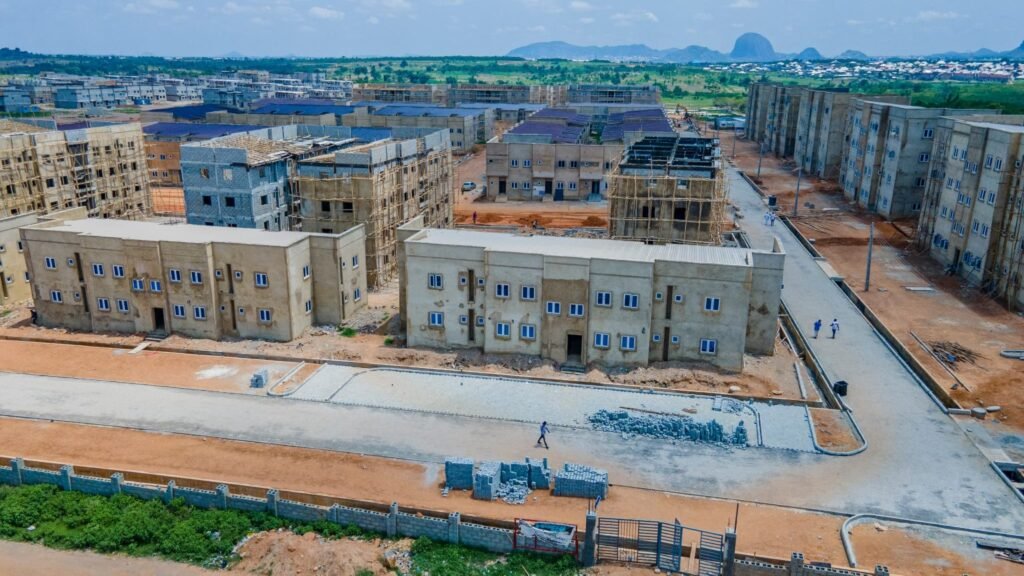
Cooperative housing, supported by the Federal Mortgage Bank of Nigeria, offers another route. WaterLake Estate exemplifies this, allowing members to pool resources and access financing. Yet, cooperatives face land documentation and cost hurdles. Rent-to-own schemes, like Bungalow City, reduce upfront costs but rely on sustainable monthly repayments. The Federal Government’s Renewed Hope Cities and Estates programme targets 50,000 units. Projects like Renewed Hope City in Lagos (2,084 units) and Karsana Renewed Hope City in Abuja (3,112 units) demonstrate large-scale potential. However, infrastructure costs (roads, drainage, electricity) are crucial to true affordability.
Construction material costs, particularly cement and steel, are a major obstacle, driving calls for local and alternative materials like compressed earth bricks. For these to have a national impact, reliable local manufacturing and supply chains are needed. Debo Adejana, Real Estate Developers Association of Nigeria, believes incremental housing delivers most to low-income Nigerians but stresses the need for a functional mortgage system with low interest rates and long repayment periods. He advocates government support, land access reforms, simplified approvals, and building code review. Standardisation could further reduce costs. Dr Yemi Adelakun, NISH Affordable Housing Ltd, argues no single model suffices. He proposes a combination of cooperative, incremental, community-led, and public-private-people partnerships, backed by stronger government policies, financing at not more than 3% interest, land equity, and locally sourced materials. He also suggests a Nigeria Integrated Social Housing Programme focusing on land equity, infrastructure, a housing demand database, and pre-approved finance for first-time homeowners, emphasising low-income households.
Ultimately, solving Nigeria’s housing crisis requires connecting affordable land, efficient approvals, lower construction costs, reliable infrastructure, local materials, and long-term financing aligned with household incomes. Incremental housing, cooperatives, rent-to-own schemes, and public-private partnerships are all viable, but their lasting impact hinges on an effective housing finance system. The goal isn’t just more houses, but houses Nigerians can afford.