By SAIDU AHMED
“Today we see how utterly mistaken was the Milton Friedman notion that a market system can regulate itself”
– Prof. Paul Samuelson
There are moments in the life of a nation when economics ceases to be merely about prices, markets, deficits and fiscal balances. It becomes a question of politics, power and morality. Fuel subsidy in Nigeria is one of those moments. The economics of subsidy may be calculated in naira. The politics of subsidy may be measured in votes, but the morality of subsidy is measured in trust.
Trust is the invisible currency upon which every economic reform ultimately depends. At its deepest level, the fuel subsidy debate is not simply about how much petrol costs at the pump. It is about what citizens believe the state owes them, what government can legitimately ask of citizens and whether difficult economic decisions can be transformed into a shared national sacrifice rather than experienced as an imposed burden.
For decades, fuel subsidy occupied a peculiar place in Nigeria’s political economy. It was presented as social protection: a mechanism through which government could reduce the cost of transportation, food production, household energy and economic activity.
But every subsidy has an opportunity cost. When the state spends enormous resources keeping a commodity artificially cheap, those resources cannot simultaneously be deployed elsewhere. Money spent sustaining consumption subsidies is money that cannot be invested in infrastructure, healthcare, education, public transportation, productive industries or targeted social protection.
The political question, therefore is not simply whether subsidy is good or bad. The deeper question is: Who benefits from the subsidy, who pays for it, and who bears its hidden cost? A policy can be compassionate in intention and regressive in distribution. That is the paradox Nigeria has repeatedly confronted.
The moral economy of subsidy therefore requires moving beyond the emotional politics of the pump price toward a more difficult question of distributive justice, does the policy actually protect the vulnerable or does it merely create the appearance of protection while transferring enormous public resources through an inefficient system?
President Bola Ahmed Tinubu’s decision to remove fuel subsidy fundamentally altered the relationship between government and citizens. The famous declaration that “subsidy is gone” was not merely an economic announcement. It was a rupture in the established social contract.
For many Nigerians, the immediate experience was not abstract fiscal reform. It was higher transportation costs, higher food prices, increased household pressure and uncertainty. This is why economic reform cannot be communicated exclusively through spreadsheets.
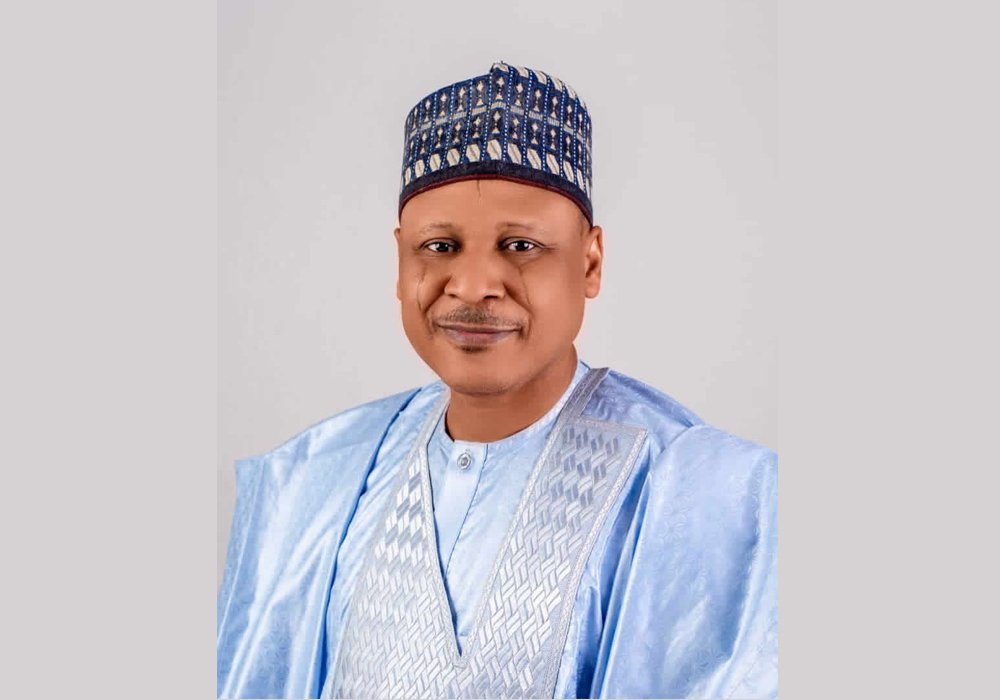
Citizens do not experience GDP. They experience the price of bread. They do not experience fiscal consolidation. They experience transport fares.They do not experience foreign-exchange liquidity. They experience the cost of medicine, school fees and household necessities. This distinction is fundamental to understanding public trust, this is one of the complex responsibilities of Mohammed Idris standing at this time as the Minister of Information & National Orientation.
A government may possess a technically defensible economic argument and still lose the public argument if citizens cannot see the connection between sacrifice today and prosperity tomorrow. The Minister of Information is not the Minister of Finance. He does not set the price of petrol. He does not determine monetary policy. He does not independently control fiscal expenditure.
His power is different. His responsibility is to help society understand the meaning, consequences and direction of government policy. In a democracy, information is not decoration around policy. Information is part of policy infrastructure. A bridge connects two physical locations. Communication connects policy intention with public understanding. When that communication fails, even economically necessary reforms can become politically toxic.
There is a temptation in government communication to communicate only success. But public trust is rarely created by telling citizens that everything is working perfectly when their lived experience tells them otherwise.
Trust is created when government demonstrates that it understands the pain citizens are experiencing and can explain why that pain exists, what is being done about it and what measurable destination lies beyond it.
The citizen does not necessarily demand painless reform. The citizen demands meaningful reform. A population may tolerate sacrifice when it believes the sacrifice is necessary, fairly distributed and honestly managed. But when citizens perceive that sacrifice is being demanded from them while privilege remains protected elsewhere, economic reform becomes a moral crisis.
The central communication challenge, therefore, is not merely: “Why did government remove subsidy?” It is, “Why should an ordinary Nigerian believe that the sacrifice being demanded today will produce a better Nigeria tomorrow?” A false narrative does not remain merely a false narrative when it changes consumer behaviour, increases panic, encourages hoarding, distorts expectations or destroys confidence in institutions. In the end, the most valuable economic asset a government can possess is not oil. It is trust.
SAIDU AHMED is the Technical Assistant, Research & Strategy to the Honourable Minister of Information & National Orientation (27/08/2026)
