Shettima challenges state governments to convert increased FAAC receipts into measurable improvements in electricity access, affordability and economic productivity.
By Anscella Obike
Every day, across Nigeria, the sound of generators tells a familiar story of economic hardship. A barber struggles to keep his clippers running, a frozen-food seller watches generator fuel disappear into dwindling profits, and a small manufacturer calculates whether producing another batch of goods is worth the cost of electricity. In rural communities, children study under inadequate lighting, while health facilities struggle to maintain reliable power for essential services. For these Nigerians, electricity is not an abstract policy debate. It determines how much they spend to survive, whether their businesses remain open and whether their children can study after sunset.
Yet, since the removal of the Premium Motor Spirit subsidy in May 2023, state governments have received substantially increased allocations from the Federation Account Allocation Committee (FAAC). This has raised a fundamental question: can the additional public revenue help end the cycle of unreliable electricity and expensive self-generation that continues to burden households and businesses? The challenge has gained urgency following Vice President Kashim Shettima’s call for states to stop depending exclusively on the Federal Government for electricity supply and begin developing their own power markets. His message challenges governors to demonstrate that increased public revenue can deliver tangible improvements in the lives of citizens.
The Subsidy Windfall and Its Unfinished Promise
Before subsidy removal, petrol subsidy payments significantly reduced the revenues available for distribution among the federal, state and local governments. Ending the arrangement changed the country’s fiscal landscape, although crude oil production, international prices, exchange rates and other deductions continue to influence monthly receipts. The figures provided indicate that total distributable FAAC revenue increased from approximately N8.2 trillion in 2022 to N10.14 trillion in 2023, rising further to N15.26 trillion in 2024. In 2025, distributable revenue reportedly exceeded N18.5 trillion, while aggregate state allocations increased from approximately N2.8 trillion in 2022 to N7.3 trillion in 2025.
These increases represent a significant opportunity for states to strengthen infrastructure investment. However, the difference between higher government receipts and improved living conditions remains a central concern. For a trader whose daily earnings are consumed by generator fuel, additional state revenue has little immediate meaning unless it eventually translates into more reliable electricity. For a young person learning a digital skill, uninterrupted power could mean more productive hours and better employment prospects. For a rural farmer, electricity could make the difference between preserving harvested produce and losing income to spoilage. The additional allocations have also had to support wage adjustments, social interventions, debt obligations and other public expenditure. These competing demands are real, particularly as households struggle with rising living costs. Nevertheless, governments must balance immediate relief with investments capable of reducing the cost of living over time. Reliable electricity is one such investment because it can lower business operating costs, support industrial production, improve public services and expand states’ internally generated revenue.
Shettima’s Challenge to Governors

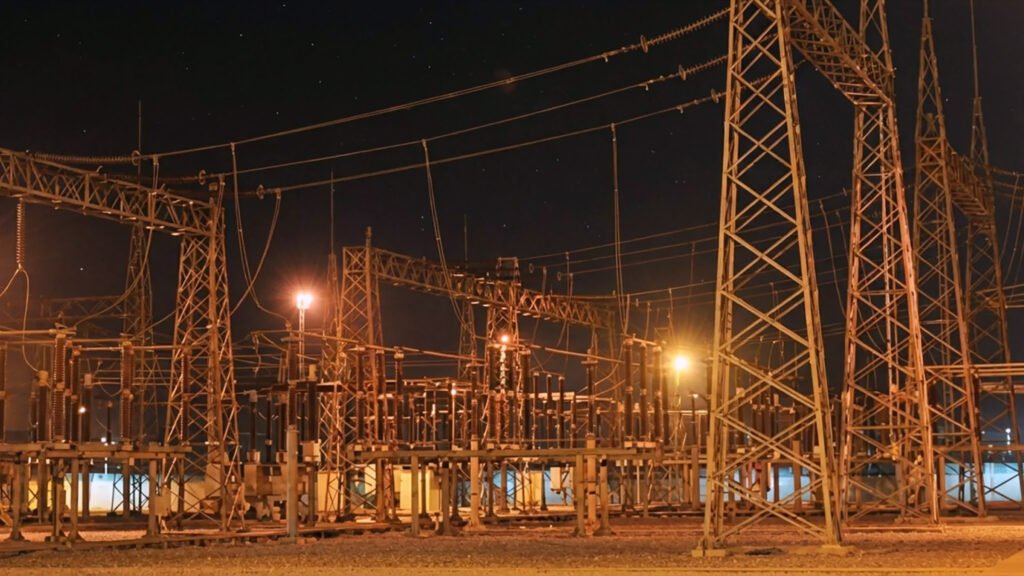
Shettima’s call for state-led electricity development reflects the changing structure of Nigeria’s power sector. States no longer need to depend entirely on the national grid to address every local electricity need. The Electricity Act 2023 provides a legal foundation for states to establish regulatory frameworks for electricity markets within their jurisdictions, subject to applicable constitutional and statutory requirements. This creates opportunities to develop local generation, distribution, and commercial arrangements suited to each state.
However, legal authority alone cannot keep a hospital refrigerator running, power a milling machine or guarantee electricity for a household. States must translate their new responsibilities into workable regulations, credible investment plans and financially sustainable projects. The increased FAAC allocations provide greater fiscal room, but they are not unlimited. Education, healthcare, security, roads, salaries and pensions remain competing priorities. Governors must therefore identify projects that offer measurable economic and social benefits rather than pursue electricity infrastructure merely for political visibility. The real test is whether state governments can move from announcing ambitious plans to delivering electricity that ordinary people can afford and businesses can depend on.
Financing Power Without Breaking State Treasuries
One practical approach is to use a portion of additional allocations to reduce investment risks for private electricity developers rather than requiring governments to finance and operate every power plant. States could establish carefully designed infrastructure credit guarantee schemes to support eligible independent power producers. Partial guarantees for power purchase agreements could improve confidence in payment arrangements and encourage investment in industrial clusters, commercial centres and other locations with identifiable demand. Escrow arrangements backed by predictable revenue commitments could also help secure financing, provided they undergo rigorous financial assessment, appropriate legislative scrutiny and transparent oversight. Governments must avoid creating hidden liabilities that eventually become additional burdens on taxpayers. States could also support embedded generation, which supplies electricity closer to consumers. Gas-connected states could explore appropriately located gas-fired plants serving industrial areas, while northern states with strong solar resources could develop solar-plus-storage projects for agricultural processing, rural communities and public institutions.
The human benefits could be substantial. Reliable electricity could help a cold-room operator preserve fish and vegetables, enable a small factory to increase production, and allow a health centre to keep essential equipment running. Such outcomes, rather than the number of megawatts announced at press conferences, should determine the success of public investment. Every project must nevertheless reflect local demand, fuel availability, operating costs and consumers’ ability to pay.
Why Distribution Matters to the Consumer
Even when electricity is generated, poor distribution infrastructure can prevent it from reaching the people who need it. States must therefore look beyond power plants to substations, distribution lines, metering and revenue collection. Investment in appropriate 33-kilovolt and 11-kilovolt distribution networks, smart meters and other last-mile infrastructure could help connect underserved communities and improve service delivery. Where legally permissible and commercially viable, states could also explore partnerships or equity participation in local electricity distribution businesses.
Better metering can reduce billing disputes, improve transparency and help utilities collect revenue needed to maintain their networks. However, consumers should not be expected to bear the cost of inefficient projects through unaffordable tariffs. Governments and electricity operators must explain how investments will affect prices, service reliability and access for low-income households. A power market that supplies electricity only to wealthy neighbourhoods and large industries would leave many of the people most in need of improvement behind.
Turning Public Revenue into Public Relief
Accountability will determine whether the post-subsidy fiscal opportunity produces lasting results. State governments should publish electricity investment plans, disclose project costs, report expenditure and establish measurable targets for connections, reliability, affordability and economic impact. Independent audits and transparent procurement are essential to prevent public funds from disappearing into poorly executed projects. Governments should also assess whether electricity investments create jobs, reduce business operating costs and improve essential services.
Ultimately, the purpose of state-led power development must extend beyond generating electricity. It should be measured by whether a small business can operate longer without spending much of its earnings on fuel, whether a student can study without interruption and whether a health facility can provide safer and more dependable care. Nigeria’s increased FAAC allocations and the Electricity Act 2023 have created an opportunity for states to take greater responsibility for their energy futures. But additional revenue is only a means to an end. For the Nigerian family buying fuel to power a generator, the trader losing profits to rising energy costs and the young entrepreneur struggling to keep a business alive, the promise of energy autonomy will remain distant until public spending produces visible results. Shettima’s challenge to governors is therefore, ultimately a test of governance: whether states will continue treating increased allocations primarily as money to spend or invest a meaningful share in infrastructure that changes lives. The true measure of a state’s energy ambition will not be the size of its FAAC receipts or the number of power projects it announces. It will be the number of households, businesses and public institutions that can finally depend on affordable, reliable electricity.


