

By Adaobi Rhema Oguejiofor
Owning a home remains a distant dream for many Nigerians as soaring construction costs, expensive land, rising rents and high mortgage interest rates continue to put decent accommodation beyond their reach. For many low-income workers, years of employment often pass without bringing them closer to owning a house.
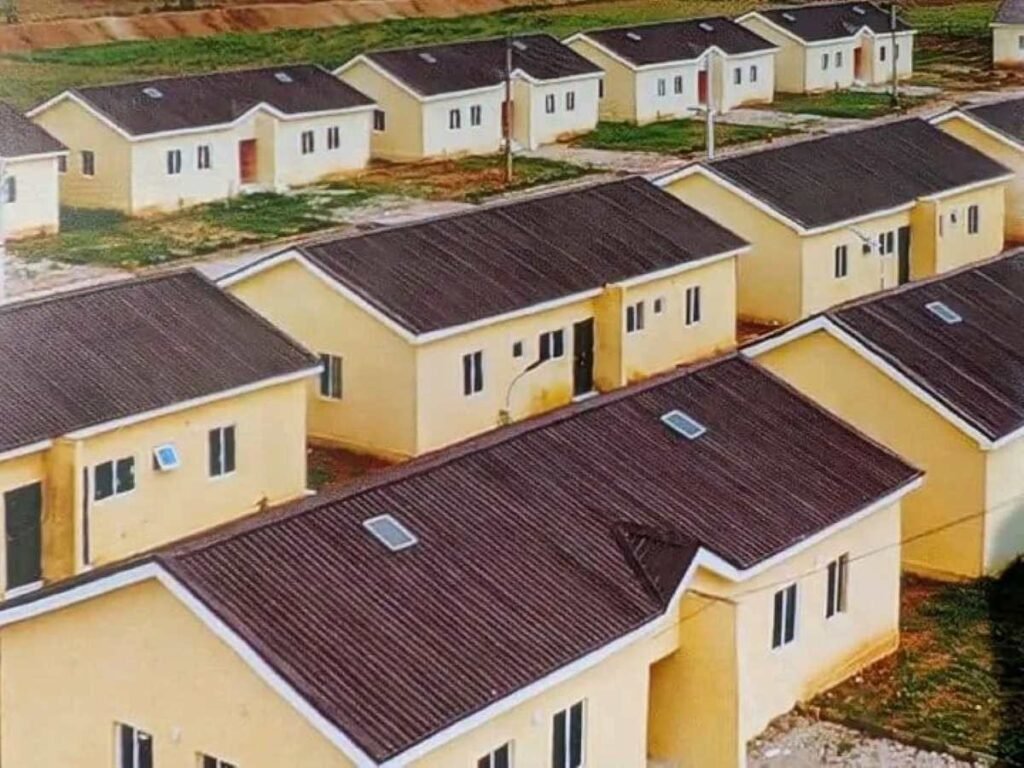
In response to this challenge, the Federal Government has announced plans to construct about 100 social housing units in every local government area across the country. It is considering raising the maximum mortgage financing limit from N50 million to N85 million. The initiative is part of efforts to address Nigeria’s housing crisis and expand access to affordable homeownership, particularly among low-income earners who struggle to build or purchase their own homes.

The Minister of Housing and Urban Development, Muttaka Rabe Darma, disclosed the plans at the closing ceremony of the 15th National Council on Lands, Housing and Urban Development in Sokoto State. Darma said the proposed social housing programme would target Nigerians who cannot afford conventional housing, including primary school teachers and other modestly paid workers who spend much of their working lives in rented accommodation.
If effectively implemented, the initiative could bring affordable housing closer to communities nationwide. However, its impact will depend on adequate funding, access to land, essential infrastructure and transparent allocation processes that ensure the houses reach their intended beneficiaries.
Beyond housing construction, the government is seeking to strengthen mortgage financing to help more Nigerians purchase properties. The proposed increase in the mortgage ceiling to N85 million is intended to reflect rising construction costs and the growing expense of acquiring homes.
However, a higher borrowing limit alone may not resolve the affordability crisis. High interest rates, unstable incomes and demanding repayment conditions remain major barriers for prospective homeowners.
To improve access to housing loans, Darma said the government had directed the Federal Mortgage Bank of Nigeria (FMBN) to disburse at least 70 per cent of its annual collections to support mortgage financing. He also announced plans to establish a National Housing Finance Authority (NHFA) to strengthen regulation, coordination and accountability in the sector.

The minister further emphasised the need to extend mortgage opportunities to informal-sector workers, many of whom earn incomes or own land but struggle to meet conventional lending requirements. A proposed mortgage programme for Nigerians in the diaspora is also expected to enable them to acquire homes in their preferred locations.
Land administration is another area targeted for reform. Darma said the government was developing a centralised land management system that would allow prospective buyers to verify property ownership and check for legal disputes without travelling to the states where the properties are located.
Also at the meeting, the Chairman of the House of Representatives Committee on Housing and Urban Development, Awaji-Inombek Dagomie, called for affordable, long-term mortgage financing at preferably single-digit interest rates to make homeownership more accessible to low- and middle-income Nigerians.
Dagomie also advocated greater investment in high-rise residential buildings, particularly in urban centres where expensive land contributes significantly to housing costs. He argued that distributing land expenses across more housing units could help reduce the cost of individual apartments.
He further proposed digital land registration and a unique national identification number for every building to improve property records, strengthen accountability and provide more reliable housing data.
The lawmaker also urged stricter enforcement of development control regulations, warning that poor urban planning contributed to flooding in cities such as Lagos, Port Harcourt and Abuja. He called for greater use of locally sourced building materials to reduce construction expenses.
Earlier, the Sokoto State Commissioner for Lands and Housing, Nasiru Dantsoho, cited figures indicating that 14.5 million Nigerians lacked shelter, while another 15.5 million lived in unsafe environments, highlighting the urgency of the housing challenge.
Ultimately, the Federal Government’s proposed housing programme and mortgage reforms offer an opportunity to expand access to decent accommodation. But their success will depend on whether the plans translate into completed homes, affordable loan repayments, transparent land transactions and sustainable urban development.
For the teacher paying rent, the trader struggling to secure a family home, and the young worker hoping to own a property, the real test is simply whether these initiatives can turn homeownership from an expensive aspiration into an achievable reality.


