
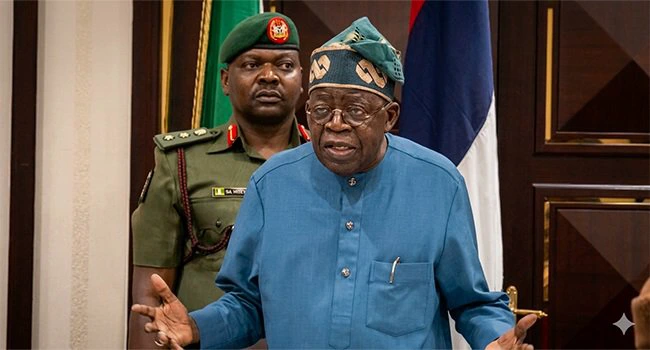
President Bola Tinubu has raised concerns over Nigeria’s growing debt burden, warning that the country could spend as much as $11.6 billion on debt servicing in 2026 if current global financial conditions persist.
Speaking at the Africa Forward Summit held in Nairobi, the president said nearly half of Nigeria’s projected revenue may be used to service debts, leaving the government with limited resources for critical development needs.
Tinubu noted that the rising cost of debt repayment is already placing pressure on the economy and weakening the government’s ability to invest in sectors capable of driving sustainable growth and job creation.
According to him, areas such as agriculture, manufacturing, energy, and technology require stronger financial support if Nigeria is to achieve long-term economic stability.
The president also criticised the structure of the global financial system, arguing that many African nations continue to face unfair treatment in international credit markets despite implementing reforms and improving fiscal discipline.
He said African countries are still widely regarded as high-risk borrowers, a situation that has continued to push borrowing costs higher and slow industrial development across the continent.
Tinubu explained that expensive access to finance remains one of the major obstacles preventing African economies from building competitive industrial value chains and maximising opportunities under the African Continental Free Trade Area framework.
Describing the situation as a major limitation to Africa’s economic advancement, the president called for reforms that would allow developing nations to access fair and affordable financing.

Defending his administration’s economic decisions, Tinubu maintained that policies such as the removal of fuel subsidy, exchange rate unification, banking sector reforms, and Nigeria’s exit from the FATF grey list were difficult but necessary measures aimed at stabilising the economy and rebuilding investor confidence.
SOURCE: National Accord
