From military-era oil commissioner to reform-driven President, Buhari’s five-decade journey helped shape the spine of Nigeria’s energy industry
By William Emmanuel Ukpoju
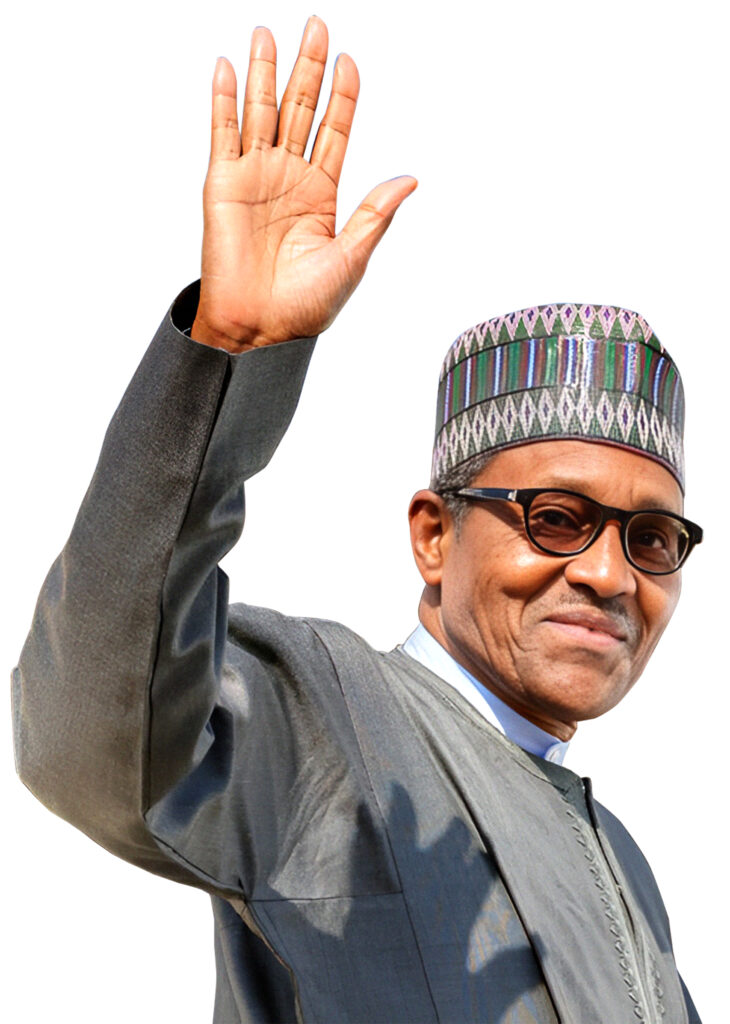
On July 13, 2025, Nigeria mourned the passing of former President Muhammadu Buhari, who died at the age of 82 in London. As the nation reflected on his life and leadership, few sectors elicited as much debate, and acknowledgment as the energy sector.
Over a career spanning five decades, Buhari left an indelible mark on Nigeria’s oil, gas, and power industries, first as military head of state, later as petroleum minister, and finally as a democratically elected president from 2015 to 2023.
Although his energy reforms were often marred by gaps in execution, Buhari laid the legal, institutional, and infrastructural foundation for what may be the most comprehensive restructuring of Nigeria’s energy landscape in modern history.
The Early Years
Buhari’s energy legacy began in earnest in the 1970s, when he was appointed Federal Commissioner for Petroleum and Natural Resources under General Obasanjo’s military regime.
He simultaneously became the first Chairman of the Nigerian National Petroleum Corporation (NNPC) following its establishment in 1977.
Within a remarkably short span, Buhari spearheaded the construction of more than 20 petroleum storage depots across the country, developed thousands of kilometres of pipelines, and signed off on the establishment of refineries in Kaduna and Alesa-Eleme. These projects, foundational to Nigeria’s domestic refining capacity, were aimed at transforming the country from a crude oil exporter to a refining hub.
Buhari also began to institutionalize petroleum governance — an early attempt to bring long-term planning into a sector historically plagued by opacity and patronage.

Presidential Comeback: Petroleum Industry Act and Structural Overhaul
When Buhari returned to power in 2015, he carried with him the legacy of his earlier stewardship and the weighty ambition to reform a sector still mired in inefficiency, subsidy abuse, and revenue leakage. Appointing himself Minister of Petroleum Resources, Buhari signalled that the oil and gas sector would remain the centerpiece of his economic agenda.
The crown jewel of his energy reforms came in August 2021, when Buhari signed into law the Petroleum Industry Act (PIA), ending nearly 20 years of legislative gridlock. The PIA radically transformed Nigeria’s oil governance structure:
It abolished outdated agencies like the DPR, PPPRA, and PEF, replacing them with two new regulators: the Nigerian Upstream Petroleum Regulatory Commission (NUPRC) and the Midstream and Downstream Petroleum Regulatory Authority (NMDPRA).
It transformed NNPC into NNPC Limited, a commercial entity incorporated under CAMA, allowing it to operate transparently and compete globally.
It introduced Host Community Development Trusts and a Frontier Exploration Fund, aimed at redistributing benefits and exploring new oil provinces.
The PIA was widely lauded by analysts as a bold step toward clarity, transparency, and investor confidence. Buhari declared it a “game changer,” and established a steering committee in 2022 to ensure swift implementation.
Yet implementation was slow. Subsidies on petrol remained in place through the end of his tenure, undermining the fiscal goals of the PIA and costing the country trillions in public funds. Host community engagement mechanisms also lagged, raising concerns about inclusiveness and impact.
The Decade of Gas: Ambition Meets Execution Challenges
Buhari’s administration placed natural gas at the centre of its energy transition strategy. In 2021, he declared the “Decade of Gas” (2021–2030), a national initiative to promote gas as both a cleaner alternative and a driver of industrial growth.
Several landmark projects defined this agenda:
The Ajaokuta–Kaduna–Kano (AKK) gas pipeline, a 614 km, 40-inch line capable of transporting up to 3.5 billion cubic feet per day, aimed to power industries across northern Nigeria. Though construction began in 2020, by 2023 the project was still incomplete, with just over two-thirds of the right-of-way cleared.
Buhari promoted the Nigeria–Morocco Gas Pipeline project, a trans-regional corridor to supply Nigerian gas to Europe via West Africa, and approved expansion of LPG production facilities in Edo and other states.
These initiatives reflected Buhari’s strategic vision. However, most of them were either under construction or awaiting financing at the time he left office. Bureaucratic bottlenecks, funding constraints, and project delays diluted their early impact.
Building Indigenous Capacity: Marginal Fields and Modular Refineries
Perhaps one of the most transformative yet understated reforms under Buhari was the push for increased local participation in oil and gas. In 2020, the first Marginal Field Bid Round in nearly 20 years was held, resulting in 161 licenses awarded to Nigerian companies.
This significantly raised indigenous participation from around 2% in 2010 to about 30% by 2023, injecting hundreds of billions of naira into local exploration and refining. Modular refinery projects were also encouraged across the Niger Delta, with facilities like the Waltersmith Refinery in Imo State commissioned to reduce fuel imports.
Still, none of Nigeria’s state-owned refineries — Port Harcourt, Warri, and Kaduna — became operational by the end of Buhari’s administration. Despite rehabilitation contracts worth billions, refinery turnaround proved elusive.
Expanding Nigeria’s Energy Map: Frontier Basin Exploration
Buhari’s exploration ambitions extended beyond the Niger Delta. His administration revived interest in frontier basins, leading to oil discovery in Kolmani (Bauchi/Gombe), and new exploration activities in Nasarawa State and the Lake Chad Basin.
Kolmani River field, discovered in 2019, was Nigeria’s first commercial onshore oil field outside the Delta in decades. A multi-billion-naira integrated development — including a refinery, gas plant, and fertiliser plant — was unveiled there.
In 2023, Buhari flagged off the Ebenyi-A Well in Nasarawa, marking the first exploratory drilling in the Middle Benue Trough.
He also resumed exploration in the Chad Basin after decades of dormancy.
These efforts were enabled by the Frontier Exploration Fund, which allocated 30% of NNPC Limited’s PSC profits toward inland drilling. Critics questioned the viability of some projects, citing high risk and environmental concerns, but supporters argued they were essential for national energy security.
Climate Commitments and Renewable Energy: Symbolism vs Substance
While Buhari’s energy reforms focused heavily on hydrocarbons, his administration also made forays into renewables and climate change. In 2021, he signed the Climate Change Act and committed Nigeria to net-zero emissions by 2060. He also ratified the Paris Agreement and launched the Energy Transition Plan.
In practice, however, these moves were largely symbolic.
Implementation of climate targets lagged, while environmental remediation — especially in the oil-polluted Niger Delta — remained sluggish. The Hydrocarbon Pollution Remediation Project (HYPREP) faced delays, and oil spills, gas flares, and community discontent persisted.
That said, Buhari’s government made visible strides in off-grid solar solutions:
The Solar Power Naija programme aimed to provide 5 million solar connections to rural homes.
The Energising Education and Energising Economies initiatives brought solar mini-grids to universities, hospitals, and market clusters.
Institutions like Bayero University and Abubakar Tafawa Balewa University saw improved power reliability for the first time in decades.
Though small in capacity, these projects had high social impact, offering a glimpse of what decentralised power could achieve.
Power Sector: Progress and Persistent Problems
When Buhari assumed office, Nigeria’s electricity sector was in crisis. Despite an installed capacity of over 13,000MW, available capacity rarely crossed 4,500MW, constrained by poor transmission and distribution.
To address this, Buhari launched the Transmission Rehabilitation and Expansion Programme, resulting in new substations and control centres in Lagos, Ogun, Kaduna, and Kano. The Zungeru Hydropower Plant (700MW) and Afam III Fast Power added generation capacity, while the National Mass Metering Programme (NMMP) distributed over 1 million prepaid meters to reduce estimated billing.
Despite these interventions, problems persisted. DisCos remained financially weak. Grid collapses continued. Electricity access, especially in rural areas, remained poor. While Buhari laid the groundwork for improvement, he fell short of delivering stable, affordable power nationwide.
Transparency and Financial Turnaround: NNPC Limited’s New Face
Perhaps the most measurable success of Buhari’s energy agenda came in the transformation of NNPC into NNPC Limited. With full legal incorporation, the company began publishing audited financial statements — a historic first.
In 2021, NNPC posted a profit of N674 billion, reversing decades of opacity. The company’s new structure gave it autonomy, commercial agility, and investor confidence, positioning it as Africa’s largest and most capitalised energy firm.
Meanwhile, regulatory frameworks such as the Gas Flare Commercialisation Programme and the National Gas Transportation Network Code further increased market discipline and environmental accountability.
Diplomatic Engagement and OPEC Negotiations
On the global stage, Buhari maintained Nigeria’s presence in OPEC and OPEC+, navigating oil price crashes during the COVID-19 pandemic. His administration successfully negotiated quota adjustments, ensuring that Nigeria remained compliant yet competitive within global production caps.
These quiet but strategic moves ensured Nigeria retained its voice in international oil diplomacy — a key pillar in protecting national revenue and influence.
A Legacy of Reform — With Loose Ends
President Muhammadu Buhari’s energy legacy is a tale of two halves — bold vision and foundational reform on one hand, and execution gaps and missed opportunities on the other.
He transformed the legal framework of Nigeria’s oil and gas industry, launched transformative gas infrastructure, and opened up new frontier basins. His reforms led to better corporate governance, increased local participation, and revived investor confidence.
Yet, he failed to eliminate fuel subsidies, revive state-owned refineries, or significantly increase electricity access. His environmental record was mixed, and his climate promises often lacked credible follow-through.
In sum, Buhari rewired the circuitry of Nigeria’s energy future but left much of the implementation to his successors. His energy legacy, like the flickering bulbs in many Nigerian homes, glows with potential — waiting for stable leadership to power it forward.
Late President Muhammadu Buhari’s record in the energy sector mirrors his presidency as a whole, filled with ambition and a few game-changing reforms, but also with gaps in execution and missed opportunities.
His greatest contribution was laying a legal and institutional foundation for transformation.
The Petroleum Industry Act, the unbundling of the NNPC, and the declaration of the Decade of Gas gave Nigeria a strategic direction it had long lacked. Infrastructure investments in power generation, transmission upgrades, and rural electrification helped modernise a crumbling energy architecture.
However, critical failings in refinery rehabilitation, petrol subsidy removal, and power sector efficiency undermined much of the progress made. Buhari took bold steps, but often hesitated at the edge of hard decisions especially those requiring political capital or the dismantling of entrenched interests.
As the nation reflects on his legacy, it becomes clear that Buhari initiated a transition but did not complete it. His successors must now build upon his structural reforms, accelerate implementation, and ensure that energy not only fuels the economy but also lights the homes and hopes of millions of Nigerians.
His energy legacy, like the flickering lightbulbs that still define Nigerian households, burns not brightly but stubbornly, awaiting a stable current of leadership to power it forward. Other major gas infrastructure deals included financial closure for NLNG Train 7, plans for ammonia/fertilizer platform with Morocco, and expansion of domestic LPG production via the NPDC gas facility in Edo State.
Worthy of mention is the Dangote Refinery. Though Buhari’s administration failed to revive state owned refineries, his administration supported the completion of the Dangote Refinery and commissioned the plant at Ibeju-Lekki free trade zone Lagos, on 22 May 2023.
Overall, Buhari’s administration succeeded in laying the legal, regulatory, and institutional groundwork for future progress. The next phase of Nigeria’s energy transformation now rests in the hands of those who will follow — leaders willing to complete what he started, correct what fell short, and finally convert reform into results for the millions still living in energy poverty.
As Nigeria writes its next chapter in energy development, history will remember Muhammadu Buhari as the architect who redrew the blueprint and left the house half-built. Whether it becomes a legacy fulfilled or an opportunity wasted will depend on what comes next.
