Nigeria’s LPG Paradox: Why Cooking Gas Remains Unaffordable in a Gas-Rich Nation
By Silverline Ifeanyi Onyeabor
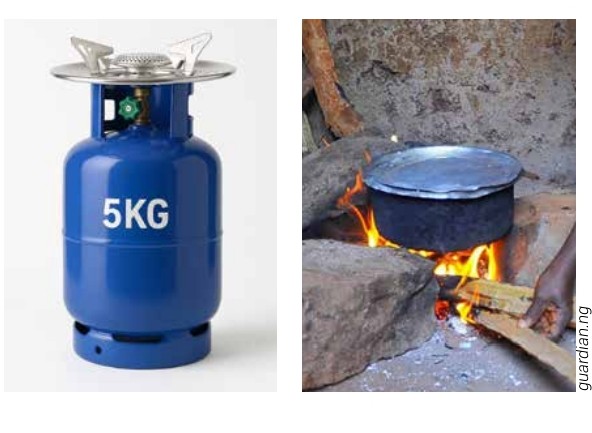
The current surge in Liquefied Petroleum Gas (LPG) prices has become one of the clearest indicators of the economic pressures confronting Nigerian households. Across the country, families that embraced cooking gas as a cleaner and more efficient alternative to kerosene and firewood are finding it increasingly difficult to afford. The situation has become so severe that many households have returned to traditional fuels despite years of government campaigns promoting LPG adoption.
What makes the situation particularly troubling is that Nigeria is not suffering from a lack of natural gas resources. With over 200 trillion cubic feet of proven gas reserves, the country possesses one of the largest gas endowments in the world. Government officials frequently describe Nigeria as the “gas capital of Africa” and have launched ambitious programmes under the Decade of Gas initiative to increase domestic gas utilisation. Yet the average Nigerian is paying unprecedented prices for cooking gas.
Recent disclosures by the Nigerian Midstream and Downstream Petroleum Regulatory Authority (NMDPRA) reveal that the problem extends beyond inflation and exchange-rate volatility. According to the regulator, wholesalers and retailers are charging what it describes as “non-cost reflective prices”, pushing LPG prices as high as N2,100 per kilogram in some locations despite significantly lower indicative pricing benchmarks.
The figures are startling. In the South-West, consumers are paying between N1,600 and N2,100 per kilogram compared with NMDPRA’s indicative price range of N1,018 to N1,177 per kilogram. Similar disparities exist across the North-Central and South-South regions, where actual market prices exceed official benchmarks by hundreds of naira per kilogram.
For households that refill a standard 12.5kg cylinder, the implications are severe. At N2,000 per kilogram, a refill costs approximately N25,000, more than one-third of the newly approved national minimum wage of N70,000. For millions of informal sector workers earning below the minimum wage, cooking gas has effectively become a luxury product.
The NMDPRA’s findings suggest that profiteering within the supply chain is contributing significantly to the crisis. According to the regulator, traders and middlemen have increasingly become dominant buyers of LPG from producers. This development forces terminal operators and distributors with actual storage and distribution infrastructure to purchase products through intermediaries, adding additional layers of cost before the product reaches consumers.
However, profiteering alone does not explain the entire situation. The regulator’s data reveal a more troubling reality: Nigeria is experiencing a genuine LPG supply shortage. Between January 1 and June 18, 2026, the country recorded a supply deficit of 91,966 metric tonnes. Total LPG supply stood at 565,106 metric tonnes against a benchmark requirement of 657,072 metric tonnes. This reduced market coverage efficiency to 86 per cent, down from 88.4 per cent in 2025.
The supply gap raises important questions about the effectiveness of Nigeria’s domestic gas strategy. One of the most controversial revelations from the NMDPRA report concerns the export of locally produced LPG. According to the authority, Chevron Nigeria Limited produced 148,222 metric tonnes of LPG between January and May 2026 but exported the entire volume. The volume represented nearly 23 per cent of Nigeria’s total LPG production during the period.
The revelation has reignited longstanding debates about Nigeria’s energy priorities. Critics argue that it is difficult to justify exporting large volumes of cooking gas while domestic consumers face shortages and escalating prices. The situation mirrors a broader challenge within Nigeria’s hydrocarbon industry, where substantial volumes of oil and gas are exported while domestic energy markets remain underserved.
The issue becomes even more striking when viewed alongside the country’s clean cooking ambitions. For more than a decade, government agencies have promoted LPG adoption as a solution to environmental degradation, public health challenges, and energy poverty. Under the National Gas Expansion Programme and the Decade of Gas initiative, policymakers envisioned a future where LPG would gradually replace firewood and charcoal across Nigerian households.
The strategy was expected to reduce deforestation, improve air quality, and lower the incidence of respiratory diseases associated with biomass cooking fuels. Yet rising LPG prices are undermining these objectives.
Across Nigeria, anecdotal evidence suggests that many households are returning to charcoal and firewood. In urban areas, consumers increasingly buy gas in small quantities worth N1,000 or N2,000 rather than filling entire cylinders. In rural communities, firewood remains the default option because cooking gas is either unavailable or unaffordable.
This trend carries significant public health implications. According to global health studies, indoor air pollution from biomass fuels remains one of the leading environmental health risks in developing countries. Women and children bear the greatest burden because they spend more time around cooking areas.
The environmental consequences are equally concerning. Increased dependence on firewood contributes to deforestation, land degradation, and biodiversity loss. Consequently, the current LPG affordability crisis threatens to reverse years of progress toward cleaner cooking solutions.
Industry experts argue that Nigeria’s LPG paradox stems partly from structural weaknesses within the domestic gas value chain. Although the country possesses enormous gas reserves, investments have historically prioritised exports over domestic utilisation. As a result, local markets remain vulnerable to supply disruptions, foreign exchange pressures, and international price fluctuations.
The regulator’s report highlights another challenge: poor import performance by oil marketing companies. Marketers allocated import quotas totalling 390,000 metric tonnes for the second quarter but reportedly achieved only 4.2 per cent of approved volumes. Such underperformance has exacerbated supply shortages and intensified competition for available products.
If current trends continue, NMDPRA estimates that Nigeria could face a supply gap of approximately 165,000 metric tonnes during the third quarter of 2026.
Against this backdrop, the government’s push to expand domestic gas infrastructure assumes even greater importance.
One potentially significant development is the anticipated contribution of the Anoh Gas Processing Plant to domestic LPG supply beginning in July 2026. The project, developed to monetise Nigeria’s vast gas resources, is expected to increase available volumes and improve supply security.
Similarly, reports indicate that Baker Hughes recently secured a contract related to a major Nigerian gas development project. Such investments underscore growing industry confidence in Nigeria’s gas sector and align with the government’s broader strategy of expanding gas production and processing capacity.
However, major projects alone may not solve the affordability challenge. The experience of the past several years demonstrates that increased production does not automatically translate into lower consumer prices. Without effective domestic supply obligations, efficient distribution networks, adequate storage infrastructure, and strong regulatory oversight, additional production can still be diverted to export markets or absorbed by supply-chain inefficiencies.
The challenge, therefore, extends beyond production to market design. For many analysts, the current crisis represents a test of the Decade of Gas initiative itself. The programme was launched with the promise that Nigeria’s abundant gas resources would drive industrialisation, improve energy access, and enhance living standards. Yet for ordinary citizens, the most visible manifestation of the gas economy is the soaring cost of cooking fuel.
The contradiction is increasingly difficult to ignore. Nigeria is simultaneously expanding gas investments, commissioning new processing facilities, attracting international energy companies, and promoting itself as a future gas powerhouse, while millions of citizens struggle to afford the most basic gas product used in daily life.
The NMDPRA has outlined several interventions, including audits of LPG transactions, direct access initiatives for terminal operators, technology-driven product tracking systems, expanded infrastructure funding through the Midstream and Downstream Gas Infrastructure Fund, and efforts to improve foreign exchange access for imports.
The regulator reports that recent measures have improved LPG stock sufficiency from 11 days to 22 days, with national stock levels reaching 85.87 million kilograms as of June 21. Average daily supply has also increased from 4,262 metric tonnes in May to over 5,000 metric tonnes in June.
While these developments offer some optimism, the ultimate measure of success will not be stock levels or production figures. It will be whether ordinary Nigerians can once again afford cooking gas.
Until that happens, the country’s gas abundance will remain largely theoretical for the millions of households forced to choose between paying for food, transportation, school fees, and the fuel needed to cook their meals. The real challenge facing Nigeria is not simply producing more gas. It is ensuring that the benefits of that gas reach the kitchens of the citizens for whom the Decade of Gas was originally intended.
