

By Anscella Obike
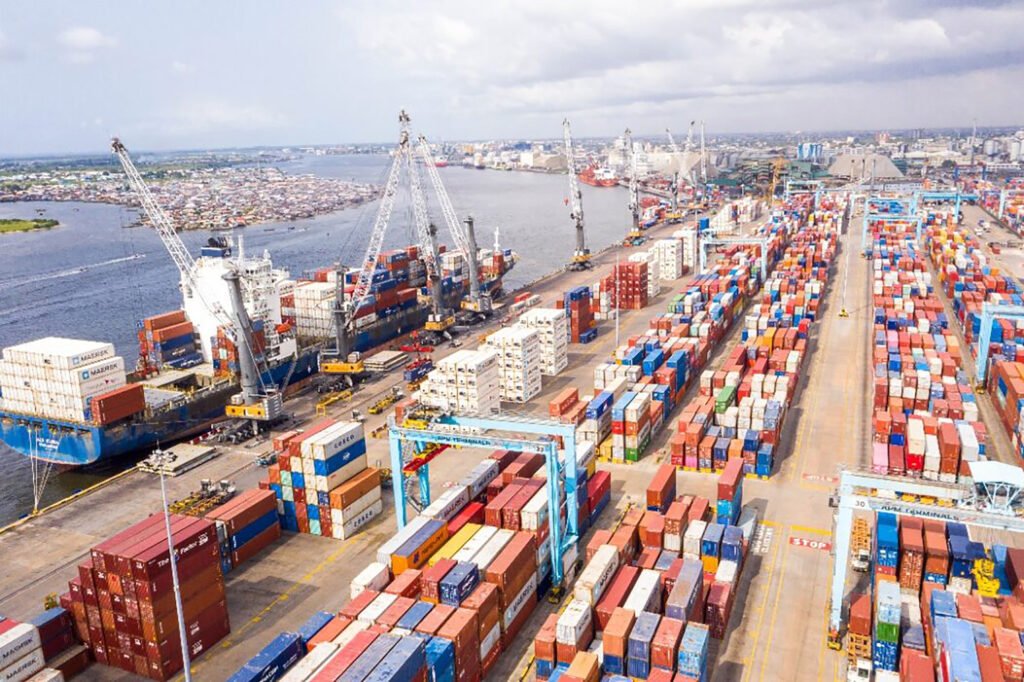
The Federal Government’s approval for the comprehensive modernisation and upgrade of the Onne, Rivers, Delta and Calabar ports marks a potentially important shift in Nigeria’s maritime strategy. For decades, the country’s port economy has remained heavily concentrated around Lagos, even as other coastal corridors possess the geography and commercial potential to serve regional markets. The latest decision therefore goes beyond the rehabilitation of four individual facilities; it raises a broader question about whether Nigeria can finally build a genuinely distributed maritime and logistics network. The Minister of Marine and Blue Economy, Adegboyega Oyetola, said the four-port upgrade would complement the previously approved modernisation of Apapa and Tin Can Island ports. The government’s stated objectives include improving cargo handling, reducing vessel turnaround times, strengthening regional connectivity and making the movement of goods more predictable and cost-effective.
On paper, the logic is compelling. Nigeria is Africa’s largest economy and one of the continent’s largest consumer markets, yet the efficiency of its trade infrastructure has often been constrained by bottlenecks at ports and along the corridors connecting them to markets. Concentrating a disproportionate share of cargo activity around Lagos creates pressure not only on port facilities but also on surrounding roads, warehouses, trucking networks and urban infrastructure.
Spreading maritime activity across the eastern and southern corridors could therefore alter the geography of Nigerian trade. Onne and Rivers ports are strategically positioned within the Niger Delta’s oil, gas and industrial economy. Delta Port provides another gateway to the central-southern commercial belt, while Calabar offers potential access to Cross River, the wider South-East and neighbouring markets. The significance of the decision is particularly evident in the case of Calabar. The port has long faced questions surrounding navigational access and infrastructure, including the unfinished dredging of its channel. The National Assembly had previously raised concerns over the dredging project, underscoring the fact that port modernisation cannot be reduced to upgrading quays, equipment and cargo-handling facilities alone.
This is where the government’s latest announcement will face its first major test. A modern port cannot operate efficiently if cargo leaving the terminal immediately encounters poor roads, inadequate rail connections, weak inland waterways or congested logistics corridors. Oyetola himself has framed the government’s objective around an integrated system in which ports, roads, rail, inland waterways and other transport infrastructure operate together. That integration is critical because the ultimate measure of a port is not simply how much cargo it can receive. It is how quickly, cheaply and predictably cargo can move from vessel to final destination.
Nigeria’s recent port performance suggests there is substantial demand to be served. According to industry data reported by Nairametrics, cargo throughput rose 11.6 per cent year-on-year to 32.38 million metric tonnes in the first quarter of 2026, while second-quarter throughput increased 12.3 per cent to 35.74 million metric tonnes. Container traffic also increased, while vessel calls and vessel tonnage recorded growth.
The numbers indicate that the issue is not necessarily a shortage of maritime demand. Rather, it is whether infrastructure and logistics systems can keep pace with expanding trade.
The government’s simultaneous push for new deep-seaports adds another dimension. The administration has identified projects including the Ibom, Bakassi, Agge, Gateway, Ondo and Bonny deep-sea ports. Combined with the modernisation of existing facilities, these projects represent an attempt to expand Nigeria’s maritime capacity through both rehabilitation and new infrastructure.

However, expansion also introduces the risk of fragmented investment. Building or upgrading multiple ports without establishing clear commercial roles, efficient hinterland connections and competitive operating conditions could leave Nigeria with more infrastructure without a corresponding increase in efficiency.
The government’s own language therefore points to the more important objective: not simply more ports, but stronger economic corridors. For businesses, the potential benefits are straightforward. More efficient ports could reduce cargo delays, transportation costs and uncertainty. Manufacturers could gain easier access to imported inputs, exporters could have more gateways to international markets, while regions outside Lagos could capture a larger share of maritime-related investment, employment and industrial activity. But the transition from approval to impact will depend on execution. Procurement, financing, dredging, terminal investment, customs efficiency, security, road and rail connectivity, and coordination among federal agencies and state governments will determine whether the programme produces measurable economic gains.
The September 2026 approval should therefore be viewed less as the conclusion of Nigeria’s port modernisation story than as the beginning of a much harder phase. The real benchmark will not be the number of ports approved for upgrade, but whether Nigerian businesses eventually spend less time and money moving goods. If that happens, the four-port programme could help reshape Nigeria’s maritime economy from a Lagos-centred system into a more interconnected national logistics network. If the supporting infrastructure and institutional reforms fail to move at the same pace, however, modernised port facilities alone may not deliver the transformation the government envisages.
