
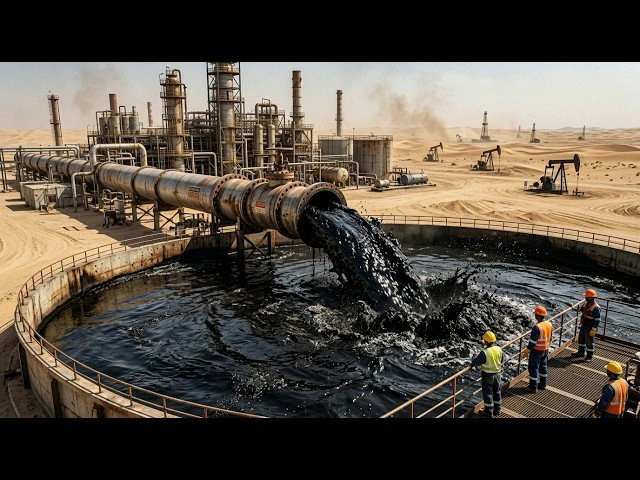
Indigenous oil and gas companies now contribute more than 50 per cent of Nigeria’s crude oil production, the Federal Government has said.
The Minister of State for Petroleum Resources (Oil), Senator Heineken Lokpobiri, disclosed this on Wednesday at the maiden Petroleum Technology Development Fund (PTDF) Journal Summit 2026 in Abuja.
Lokpobiri, who was represented by his Technical Adviser, Engr. Emmanuel Sinime, said the development followed major divestment deals involving international oil companies, which had opened up more opportunities for indigenous firms in the upstream sector.
He said the country had also recorded a rise in crude oil production, from about one million barrels per day in 2023 to over 1.7 million barrels per day.
According to him, the number of active drilling rigs had risen from about 14 to more than 60, while Nigeria had attracted over $10 billion in foreign direct investment in recent years.
“Significant progress has also been made in restructuring the industry by completing major divestment transactions involving international oil companies.
“These transactions are creating great opportunities for indigenous operators who now account for more than 50 per cent of Nigerian crude oil production, a historic milestone for our industry,” he said.
The minister, however, stressed that increased crude production would require corresponding improvements in infrastructure, transportation and storage facilities, refining capacity and market competitiveness.

He said the growth of the Dangote Petroleum Refinery and the expansion of modular refineries, including Waltersmith and Aradel, demonstrated the impact of private investment on the downstream petroleum sector.
Speaking separately, the Minister of State for Petroleum Resources (Gas), Ekperikpe Ekpo, said unlocking the country’s gas potential would depend largely on private capital, technical expertise and innovation.
Ekpo said the federal government was focused on providing an enabling environment for private investment across the petroleum value chain, noting that the Petroleum Industry Act had established a framework for regulatory certainty and institutional governance.
He said the Decade of Gas initiative was designed to reposition Nigeria as a gas-powered industrial economy, with natural gas playing a key role in industrialisation, job creation, energy security and economic diversification.
According to him, the initiative would require sustained investment in gas processing, transportation and distribution infrastructure, as well as liquefied petroleum gas, compressed natural gas, petrochemicals and other gas-based industries.
“The federal government cannot achieve this objective alone. We must continue to deepen collaboration with private investors, financial institutions, technology providers and other stakeholders to mobilise the capital and expertise required to deliver these projects,” Ekpo said.
The minister listed infrastructure deficits, high financing costs, project development risks, regulatory bottlenecks and limited access to reliable energy infrastructure among the challenges affecting private-sector participation in the sector.
He also advocated increased investment in indigenous technology, local manufacturing and skills development to strengthen the country’s capacity across the petroleum value chain.
SOURCE: Leadership
