
By Anscella Obike
For decades, few issues have generated as much frustration among Nigerian electricity consumers as estimated billing. Across homes, businesses and industries, millions of customers have complained about receiving electricity bills that bear little relationship to their actual power consumption. The practice has fuelled distrust between consumers and electricity distribution companies (DisCos), triggered thousands of petitions before the Nigerian Electricity Regulatory Commission (NERC), and contributed to widespread electricity theft, poor revenue collection and chronic underinvestment in the sector.
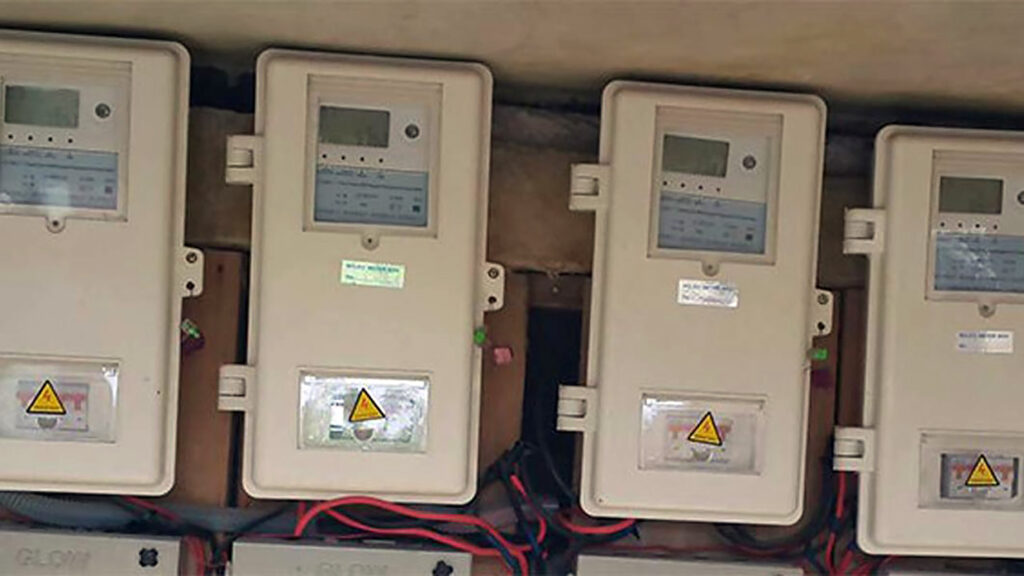
The Federal Government now believes it has found the solution. Through the Presidential Metering Initiative (PMI), the government plans to deploy seven million smart electricity meters across Nigeria, a move that Special Adviser to the President on Energy, Olu Verheijen, says will effectively eliminate estimated billing while strengthening the financial health of the country’s electricity value chain. The initiative forms part of a broader reform agenda aimed at making the power sector commercially viable by improving revenue assurance, clearing legacy debts owed to generation companies (GenCos) and gas suppliers, and compelling distribution companies to improve operational performance. If successfully implemented, the programme could represent one of the most significant reforms in Nigeria’s electricity sector since the privatisation of power assets in 2013.
Why Estimated Billing Has Become Nigeria’s Biggest Electricity Complaint
Nigeria’s electricity market has long struggled with a severe metering deficit. Despite years of reforms, millions of electricity customers remain without prepaid or smart meters, forcing DisCos to estimate monthly consumption.
The consequences have been severe. Customers frequently accuse DisCos of issuing arbitrary bills that often exceed actual electricity consumption. Businesses complain that unpredictable electricity costs undermine planning and competitiveness, while households argue they are paying for power they never receive. The absence of accurate metering has equally hurt electricity distributors. Without precise consumption data, revenue collection becomes inefficient, commercial losses increase, and electricity theft becomes more difficult to detect.
Successive governments have introduced various interventions, including the Meter Asset Provider (MAP) Scheme, the National Mass Metering Programme (NMMP) and the Meter Acquisition Fund, but implementation has consistently fallen short of expectations because of financing constraints, procurement delays and weak institutional coordination. The result is a metering gap that has persisted for years despite repeated promises to eliminate it.
Why Smart Meters Matter
Unlike conventional prepaid meters, smart meters provide real-time information on electricity consumption and can communicate directly with utility operators.

This offers several advantages. Consumers gain confidence that they are paying strictly for the electricity consumed. Utilities obtain accurate consumption data, making billing more transparent while reducing revenue leakages. Smart meters also enable remote monitoring, quicker fault detection and improved network planning.
Globally, smart metering has become an essential component of modern electricity systems because it supports demand management, improves operational efficiency and enables more sophisticated energy planning. For Nigeria, these capabilities could significantly improve both customer satisfaction and sector efficiency.
Fixing the Financial Crisis Behind Nigeria’s Power Problems
The seven-million-metre rollout is not merely about consumer fairness. It also addresses one of the electricity market’s biggest structural weaknesses: poor cash collection. According to Olu Verheijen, the government intends to combine widespread metering with measures to settle legacy debts owed to electricity generation companies and gas suppliers. Those obligations accumulated largely because government subsidies were inadequately funded while electricity distributors struggled to collect sufficient revenues from customers.
By ensuring that virtually every customer pays for actual electricity consumed, the government expects revenue collection to improve substantially. Improved cash flow would enable DisCos to meet market obligations, allowing GenCos to receive timely payments and ensuring gas producers are compensated for fuel supplied to power plants.
In theory, this creates a healthier financial cycle capable of attracting fresh investment into generation, transmission and distribution infrastructure.
Success Depends on the Distribution Companies
Yet metres alone cannot solve Nigeria’s electricity crisis. Consumers ultimately judge electricity reforms by the reliability of supply, not simply by billing accuracy. If customers continue to receive only a few hours of electricity daily, installing smart meters will do little to improve public confidence. Recognising this reality, the government says stronger regulatory oversight will require DisCos to improve technical performance, strengthen corporate governance and invest more aggressively in network expansion. Whether regulators can consistently enforce these standards remains one of the biggest questions surrounding the reform programme.
Learning from Past Failures
Scepticism among Nigerians is understandable. Over the past decade, multiple metering initiatives have been announced with ambitious targets, yet millions remain unmetered. Funding shortages, procurement bottlenecks, exchange-rate pressures, weak local manufacturing capacity and policy inconsistency have repeatedly slowed implementation.
The Presidential Metering Initiative attempts to address some of these weaknesses by combining federal financing with support for domestic meter manufacturers and structured procurement processes. Earlier government plans projected the deployment of up to 10 million metres over five years, while complementary programmes supported by the World Bank are expected to provide millions more. The challenge now is execution. Meeting installation targets will require efficient logistics, transparent procurement, adequate local production capacity and close coordination among NERC, the Ministry of Power, electricity distribution companies and meter manufacturers.
What Success Would Mean
Should the programme achieve its objectives, the impact would extend beyond eliminating estimated billing. Consumers would enjoy greater transparency and stronger confidence in electricity bills. Distribution companies would improve revenue collection while reducing commercial losses. Generation companies and gas suppliers would receive more reliable payments, encouraging additional investment across the electricity value chain.
Government subsidy obligations could also become more targeted because electricity consumption would be measured accurately rather than estimated. Perhaps most importantly, improved commercial viability would increase investor confidence in Nigeria’s power sector, helping unlock capital needed to expand electricity access and improve service reliability.
A Reform Nigerians Will Judge by Results
The Federal Government’s commitment to deploy seven million smart meters represents one of the most ambitious attempts yet to solve Nigeria’s long-standing metering crisis. Its importance extends far beyond replacing estimated bills with accurate ones. It is fundamentally about rebuilding confidence in Nigeria’s electricity market, restoring financial discipline across the power value chain and creating conditions for sustained investment.
However, Nigerians have heard similar promises before. The success of the initiative will therefore not be measured by announcements or procurement contracts but by how many households actually receive functioning smart meters, how quickly estimated billing disappears, and whether improved revenue ultimately translates into more stable and reliable electricity supply.
If these goals are achieved, the seven-million-metre rollout could become the reform that finally begins to bridge the gap between Nigeria’s abundant electricity potential and the dependable power supply its economy has needed for decades.
