

By Anastasia Adaeze
For many people, productivity has become synonymous with being busy. The days are packed with meetings, phone calls, emails, errands, and endless demands for attention. From morning until night, there is always something to do.
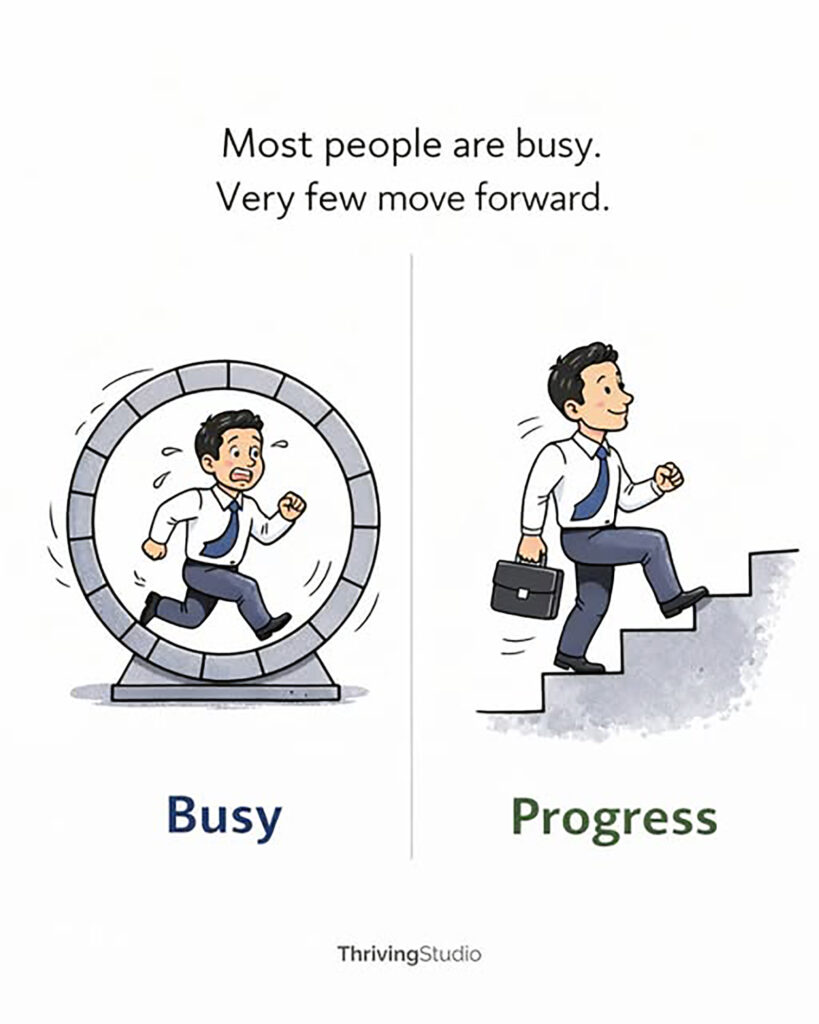
In a culture that celebrates hustle, being constantly occupied often feels like success. People admire those who are always working, always available, always on the move. Yet beneath the appearance of productivity lies an uncomfortable reality: being busy does not necessarily mean making progress. Many people eventually reach a moment of reflection. After weeks, months, or even years of relentless activity, they look at their lives and ask a difficult question: “If I am working this hard, why do I feel like I am standing still?” The answer is often simple but unsettling. We confuse movement with progress.
Modern life encourages this confusion. Checking messages feels productive. Attending every meeting feels productive. Responding instantly to emails feels productive. Being constantly available feels productive. But productivity is not measured by how much we do; it is measured by the value we create. A person can spend ten hours working and accomplish less than someone who spends two hours focused on the right task. The difference is not effort. It is direction. Imagine trying to fill a basket with water. No matter how hard you work, the basket remains empty. The problem is not the amount of effort being applied; it is where that effort is being directed. The same thing happens when we spend our days reacting instead of building, responding instead of creating, and staying busy instead of focusing on what truly matters.
One of the greatest challenges of modern productivity is distraction. Every notification demands attention. Every interruption pulls the mind away from meaningful work. While each distraction may seem small, together they become invisible thieves, stealing focus, creativity, momentum, and the sense of accomplishment that comes from making genuine progress. Researchers often describe attention, not time, as our most valuable resource. Everyone receives the same twenty-four hours in a day, but not everyone invests their attention in the same way. Two people can have identical schedules and achieve vastly different outcomes because of where their focus goes.
Time is equal. Attention is not.
This distinction is particularly relevant across Africa, where many people juggle multiple responsibilities. Entrepreneurs run businesses from smartphones. Students combine academic work with side hustles. Young professionals pursue career growth while supporting family obligations. The demands are real, and so is the pressure to do more.
Unfortunately, productivity is often presented as waking up before dawn, following rigid routines, and squeezing every possible minute for maximum output. In reality, effective productivity is much less dramatic. Sometimes productivity means saying no. Sometimes it means resting. Sometimes it means focusing on one important task while allowing ten less important tasks to wait. Productivity is not a competition to see who can do the most. It is the skill of knowing what deserves your energy.

Energy, after all, is limited. Every morning, we begin the day with a finite amount of mental strength, creativity, focus, and decision-making capacity. When that energy is spent carelessly, even simple tasks become exhausting. When it is invested wisely, remarkable results become possible. This is why rest should not be viewed as laziness. It is maintenance. Sleep is not wasted time; it is preparation. Breaks are not distractions; they are investments in clear thinking and long-term performance.
Interestingly, the most productive people are rarely the busiest people in the room. They are often the clearest. They understand what matters most, what can wait, and where their energy will produce the greatest impact. Success is not built by doing everything. It is built by consistently doing the right things.
Perhaps the most important shift is to stop measuring personal worth by exhaustion. Instead of asking, “How much did I do today?”, a better question may be, “What is the one thing I can do today that will truly move me forward?”
Some days, the answer will be work. Other days it may be learning, reflection, or rest. What matters is that each step contributes to meaningful progress. Being busy is easy. The world will always find ways to keep us occupied. Progress, however, requires intention. So the next time your schedule is overflowing and your day feels crowded, pause for a moment and ask yourself a simple question: Am I merely moving, or am I moving forward? The answer may change not only the way you work, but also the way you define success.
