
By Jauhar Suleiman Salihu
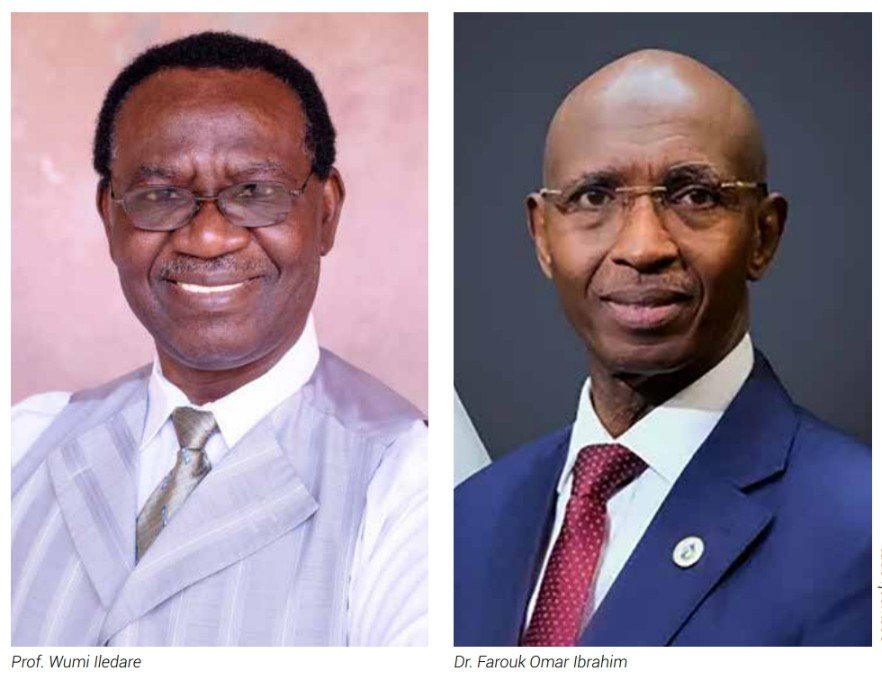
The World Energy Council Nigeria has a new Board, and with it, a new posture. With Valuechain Advisory Board members Prof. Wumi Iledare and Dr. Omar Farouk Ibrahim now on the World Energy Council Nigeria Board, the Council is shifting from energy talk to energy finance, prioritising pragmatism, private capital, and projects that can actually deliver.
Indeed, the inauguration signals less about ceremonial change and more about strategic intent: to position Nigeria as a solutions-driven, not slogans-driven, player in the global energy transition debate.
For stakeholders across oil, gas, power and renewables, the signal was in the mandate language itself: pragmatism, bankability, and private capital. Those three words tell you what this Board was set up to do: move Nigeria from energy dialogue to energy deals.
In this regard, the Board’s composition was deliberate. It draws from the public and private sectors, academia, and international energy institutions. That is by design. Nigeria’s energy value chain is fragmented, but the problems are interconnected. The new structure reflects that reality. Boards don’t deliver results. People do. Consequently, a look at the individuals shows why this iteration of WEC Nigeria could be different.
Most notably, with the inauguration of two members of The Valuechain Energy Magazine Advisory Board, here is what their appointment means for Nigeria’s energy transition. Apparently, these two are no strangers to Valuechain readers.
Prof. Wumi Iledare – The Economist Who Grounds The Argument
Prof. Wumi Iledare, as an Advisory Editorial Board member, has long shaped our thinking on energy economics, and now he brings that same rigour to WEC Nigeria. Nigeria’s energy problem is not just technical; it is economic, and Iledare’s role will be to pressure-test every proposal that comes before the Council. He will ask the hard questions: Are the fiscal terms right? Will the tariff allow cost recovery? Is the ROI there for private capital?

Furthermore, in rooms with DFIs and investors, opinions don’t move; money models do. Under Iledare’s influence, expect WEC Nigeria’s position papers to be heavy on data, covering topics ranging from gas reserve monetisation pathways to power sector liquidity and the impact of subsidy reform. He also brings a consistent energy equity lens. He has long argued that the transition must not leave the poor behind. In effect, that aligns with the Board’s “just and secure” language and will help WEC Nigeria frame access expansion as both a social and commercial imperative. With Iledare on board, the Council gains the ability to translate political goals into bankable economics, which is critical if it wants to be taken seriously by finance ministries and investors.
Dr. Omar Farouk Ibrahim – Africa’s Voice, Nigeria’s Amplifier
Dr. Omar Farouk Ibrahim carries outsized weight. He is Chair for Africa of the World Energy Council, former Secretary General of APPO, and an Advisory Member of Valuechain. His comments at the inauguration framed the entire exercise. “Africa’s energy transitions aren’t about catching up to external measures of progress but instead about leading on developing the energy systems needed to power and support a dynamic continent,” he said. He added that “the addition of Nigeria to the World Energy Council network will bring the vibrant, innovative leadership of Africa’s biggest population to our global critical conversation.”
Beyond this, what Ibrahim brings is continental diplomatic capital. He can take Nigeria’s position to WEC Global, to APPO, and to AU energy forums at a time when the world is debating who gets to define “transition”. He also brings a narrative shift. He rejects the idea that Africa must copy Europe’s decarbonisation timeline. Instead, he argues for a transition defined by Africa’s deficits: 600 million people without electricity, urgent industrialisation needs, and abundant natural resources.
For Nigeria, that means gas is not a compromise; it is a necessity. His APPO background further lends him credibility with producers across the continent, opening doors to regional projects such as the West African Gas Pipeline, cross-border power trade, and shared infrastructure financing. In essence, for WEC Nigeria, Ibrahim is the external-facing engine. While Isa and Wunti work the domestic investment climate, Ibrahim ensures Nigeria’s story is told globally on Nigerian terms.
Mr. Abdulrazaq Isa – The Execution Anchor
Turning to the domestic front, as Chairman, Mr. Abdulrazaq Isa, co-founder and Chairman of Waltersmith Petroman Oil Limited, brings the credibility of an indigenous operator who has actually built. Waltersmith’s modular refinery remains one of the few proof points that Nigerian firms can finance, build and operate complex downstream assets. Isa brings private-sector execution DNA. He understands capex cycles, project risk, and the gap between policy and ground realities. His chairmanship also signals to investors that indigenous companies will not just be vendors in WEC Nigeria’s strategy. They will be drivers, especially in gas monetisation, modular refining, and midstream infrastructure. When the Council speaks on “Nigerian content”, it will be from someone who has lived the capital and regulatory bottlenecks. In short, Isa anchors the Board in commercial reality and will likely push it to focus on projects that can close, not just concepts that can be discussed.
Mr. Bala Wunti – The Bridge to Capital
Complementing this, Mr. Bala Wunti, former Chief HSE Officer of NNPC Ltd and now CEO of WEC Nigeria, comes with deep institutional memory. He was inside NNPC during its most consequential shift in decades: the move to NNPC Ltd as a commercial entity. Wunti understands how government thinks, how approvals move, and where policy friction kills projects. He also sets the Board’s compass with the “investability” frame: Nigeria’s future should be defined “not by ideology, but by investability, delivering prosperity that is bankable, just and secure.” By referencing the energy trilemma of security, equity and sustainability, he positions WEC Nigeria to argue for gas as a transition fuel without apology, while still engaging climate goals. For investors asking, “Can this project get permits? Can it get gas? Can it get paid?” Wunti is the bridge between policy intent and capital deployment.
The Technical-Policy Core
Meanwhile, the rest of the Board provides the depth to speak authoritatively across the value chain. Dr. Ainojie ‘Alex’ Irune, Dr. Mustapha Abdullahi, Dr Victor Ekpenyong, and Dr. Imamuddeen Talba bring industry operations, engineering, and project development experience. Dr. Emmanuel Okon and Ms. Aisha Farida Katagum add policy, governance and development perspectives. Taken together, this mix means WEC Nigeria cannot be boxed as “pro-oil” or “pro-renewables” only. It can speak with weight on gas, power, renewables, and research.
Why This Mandate Matters Now
Against this backdrop, the global energy conversation has shifted. It is less about “what fuel” and more about “what gets funded”. Investors now ask: Is it de-risked? Is it bankable? Is the policy stable? Nigeria’s challenges are well known: gas infrastructure gaps, persistent power deficits, subsidy reform, affordability pressures, and the need to monetise over 200 Tcf of proven gas. At the same time, population growth demands expanded energy access and industrial capacity. The Federal Government is already pushing to reduce reliance on public funding, and WEC Nigeria’s emphasis on mobilising private capital aligns with this. Thus, the Board is positioning itself as the bridge between government policy and private investment and between global climate commitments and Nigeria’s energy poverty reality.
However, diversity of membership is easy; delivery is not. For this board to be more than another platform, three things must happen. First, it must build a bankable project pipeline. Can it identify and package initiatives like CNG rollout, gas-to-power clusters, and distributed renewables for SMEs into projects investors can actually fund? Language must become term sheets. Second, it must produce authoritative research. With Iledare’s input, can the Council deliver credible, data-driven papers that influence fiscal policy, tariff setting, and gas pricing? Investors and government need that. Third, it must exercise convening power. Can the Board bring NNPC, IOCs, indigenous operators, financiers, regulators and civil society to one table to drive consensus on a “Nigerian energy transition pathway”? It is here that Wunti’s and Ibrahim’s networks become critical. If it can, WEC Nigeria evolves from commentator to catalyst.
To this end, the new WEC Nigeria Board is a statement of intent. Isa provides the indigenous operator’s pragmatism. Wunti brings commercial discipline and public-sector insight. Prof. Iledare ensures the economics add up. Dr Ibrahim takes the argument to Africa and the world. Together, they reflect the mandate: pragmatic, bankable, and focused on private capital.
Ultimately, Nigeria does not need another energy manifesto. It needs financed projects, expanded access, and a transition plan that reflects its realities. The question before this Board is simple and demanding: Can it move the conversation from “what should Nigeria’s energy future look like” to “how do we finance, build and sustain it”? That answer will determine whether this Board becomes a footnote or the group that helped u
