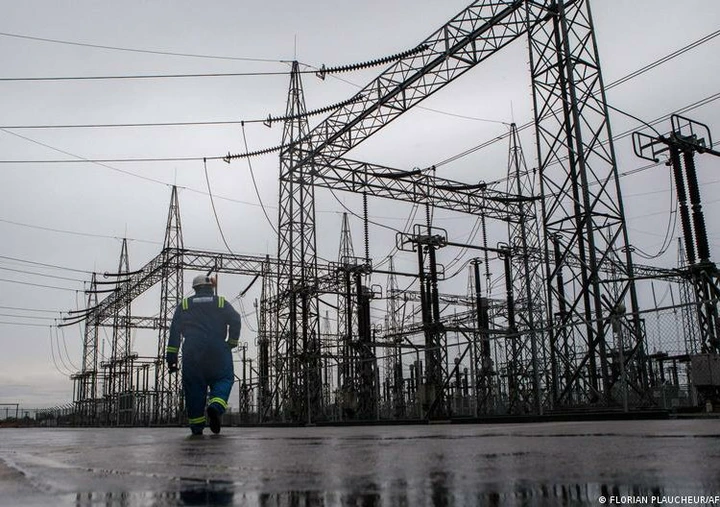
Nigeria’s 11 electricity distribution companies (DisCos) have collected N1.41 trillion from customers in the first seven months of 2026, pushing average collection efficiency above last year’s level, but industry watchers warn that tighter dry-season power supply in the final quarter could erode the gains.
A review of monthly Commercial Performance Factsheets published by the Nigerian Electricity Regulatory Commission (NERC) showed that the figures indicate a potentially stronger full-year collection performance in 2026 than in 2025, when the sector closed with a collection efficiency of 77.60 per cent and total recoveries of N2.32 trillion against N2.99 trillion billed.
Monthly collections and efficiency trends
Between January and July 2026, DisCos collected N204.74 billion, N196.68 billion, N196.13 billion, N203.61 billion, N208.15 billion, N191.68 billion and N205.53 billion, respectively. May recorded the highest monthly collection, while June was the lowest in the period under review.
Billing efficiency – the share of energy received that DisCos successfully billed to customers – opened the year at 79.72 per cent in January, peaked at 87.44 per cent in February, and then declined steadily to 75.10 per cent in July, the lowest reading since January.
Collection efficiency – the proportion of billed amounts actually recovered – was less consistent. It stood at 76.34 per cent in January, rose to 81.17 per cent in February, fluctuated through the following months and closed the seven-month period at 81.95 per cent in July.
Averaged across the seven months, collection efficiency stood at approximately 80.25 per cent, about 2.65 percentage points (or roughly 3.4 per cent) higher than the full-year 2025 average of 77.60 per cent.
Industry watchers say that if this margin is sustained through the remaining five months of the year, DisCos could close 2026 with a higher collection efficiency than in 2025, extending an upward trend that has seen sector revenue rise from about N1 trillion in 2023 to N1.7 trillion in 2024 and N2.31 trillion in 2025.

“The 3.4 per cent improvement in collection efficiency over 2025 is significant, but the real test will be whether DisCos can hold that margin through the dry season, when generation and supply typically tighten,” said a Lagos-based power sector analyst, John Udom, who reviewed the NERC factsheets.
“What we are seeing is a stronger revenue discipline in 2026, helped by stricter ATC&C loss targets, but Q4 has historically been the most volatile period for both billing and recovery,” Udom said.
“If the average collection efficiency of 80.25 per cent is sustained, 2026 could close as the best year yet for DisCo revenue performance, but any sharp drop in supply or spike in estimated billing in the last quarter could pull the full-year average back,” he further said.
However, the projection remains tentative given month-on-month swings of up to six percentage points and the historically tighter dry-season supply in the final quarter.
Revenue recovery and company-level performance
Revenue Recovery Efficiency – NERC’s measure of how much of the approved average tariff DisCos actually realised – started the year at 69.16 per cent in January, rose to a peak of 82.11 per cent in April, and then eased to 74.91 per cent in July.
Meanwhile, Eko and Ikeja DisCos consistently ranked among the strongest performers in revenue recovery. Eko posted recovery efficiencies as high as 102.09 per cent in April, while Ikeja recorded 99.30 per cent in March and 94.63 per cent in May, the two highest single-month readings by any DisCo in the period.
At the other end of the table, Kaduna Disco recorded the weakest performance over the seven months, with recovery efficiencies ranging from 35.65 per cent to 43.15 per cent, keeping it in NERC’s “Red” category throughout.
Jos and Kano DisCos also featured consistently in the bottom bracket, with Kano as low as 43.15 per cent in April and Jos falling to 45.38 per cent in May.
Under NERC’s colour-coded rating system, DisCos with a Recovery Efficiency below 50 per cent are classified “Red”, those between 50 and 80 per cent are “Amber”, and those at 80 per cent and above are “Green”.
SOURCE: Leadership
