News Investigators/ Nigeria has called for urgent reform of the global financial architecture, warning that heavy debt servicing was diverting scarce resources from education, healthcare and infrastructure in developing countries.
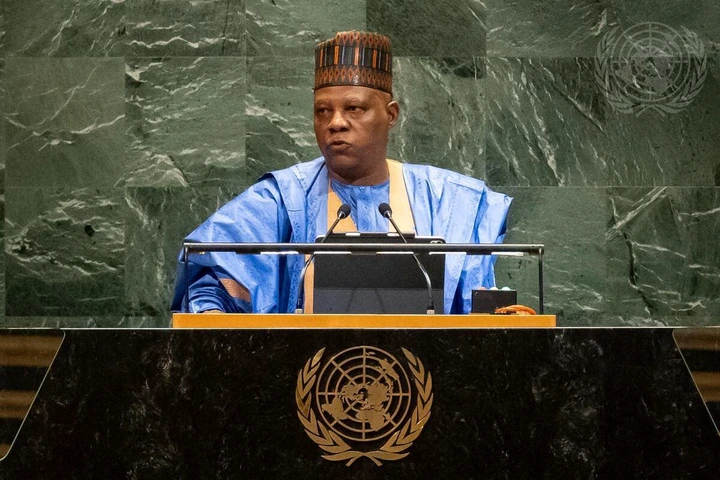
Vice-President Kashim Shettima made the call while delivering President Bola Tinubu’s national statement at the 81st UN General Assembly on Thursday.
Shettima identified inadequate development financing as a major obstacle confronting developing economies.
Nigeria, consequently, called for wider access to concessional financing and more sustainable debt arrangements that recognised the developmental needs of poorer countries.
The Vice-President linked financial reform to climate action, industrialisation, energy access and technological development.
He rejected the notion that developing countries must choose between economic development and responding to climate change.
According to him, developing countries must be allowed to industrialise, eradicate poverty and expand energy access while pursuing lower-carbon development pathways.
Shettima said such a transition required adequate climate financing and technology transfer from countries with greater resources and technological capacity.

He noted that Africa bore a disproportionate burden from climate change despite accounting for less than four per cent of global emissions.
UN assessments similarly put Africa’s contribution below four per cent while noting the continent’s considerable exposure to floods, droughts, extreme temperatures and other climate impacts.
Shettima reaffirmed Nigeria’s commitment to the Paris Agreement and a transition that balanced environmental responsibility with economic and energy realities.
The Vice-President also placed technology at the centre of Nigeria’s development ambitions.
He said Nigeria “will not let fear dictate its technological future.”
He described artificial intelligence as a tool whose outcomes depended on human choices and policies.
According to him, Nigeria is expanding digital public infrastructure, accelerating broadband deployment and supporting technology entrepreneurship to capture opportunities from emerging technologies.
Shettima said economic reform at home was being pursued alongside Nigeria’s demand for changes to global institutions.
He identified disciplined macro-economic management, stronger institutions, private-sector growth and strategic public investment as pillars of the country’s development approach.
The Vice-President maintained that citizens ultimately judged governments by whether policies translated into improvements in their lives.
Nigeria, therefore, called for international financing arrangements that gave developing countries sufficient fiscal space to invest in people and productive infrastructure.
The position formed part of a broader Nigerian agenda at UNGA81 encompassing UN reform, international peace and security, climate action, development financing and emerging technologies.
Shettima also argued that prosperity and global security were interconnected, warning that growing inequality and underdevelopment could reinforce instability.
Shettima called for an international system capable of combining technological progress, sustainable development and greater economic inclusion.
He said Nigeria remained committed to multilateral cooperation in pursuing peace, development and human rights.
The official UN General Debate portal confirms Shettima delivered Nigeria’s statement as the fourth speaker in the Sept. 24 afternoon session.
SOURCE: newsinvestigatorsng.com
