By Our Special Correspondent,
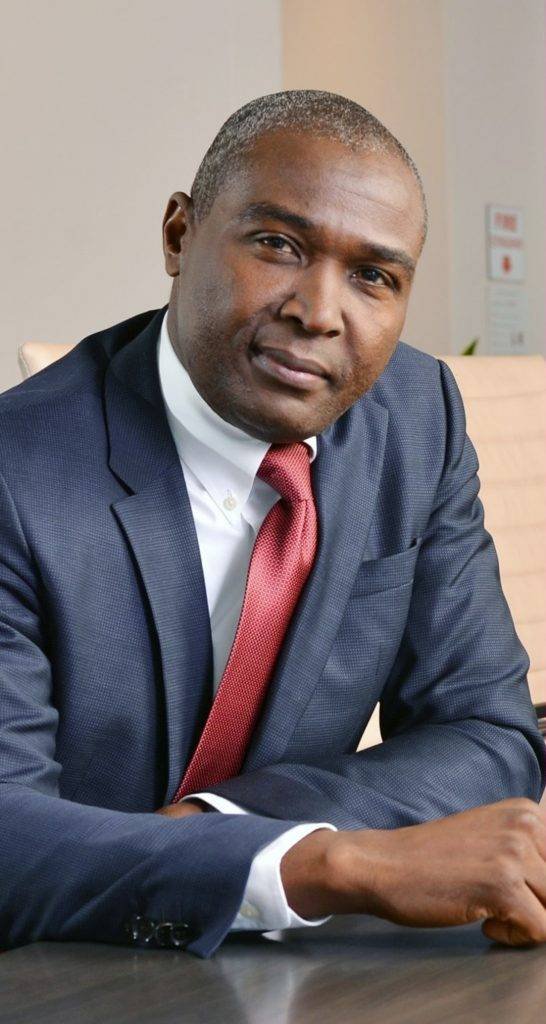
The Secretary General of the Gas Exporting Countries Forum (GECF), His Excellency Dr. Philip Mshelbila has said that African continent holds more than 15 trillion cubic metres of natural gas – over 8% of global reserves. He made the assertion today while delivering a keynote Speech at the ongoing African Energy Week in Cape Town, South Africa.
“These resources offer substantial opportunities to meet domestic and regional needs, anchor local export-oriented industries and supply international gas markets,” he said in the speech.
According to Dr. Mshelbila, today, nearly one in five people on earth lives in Africa, yet the continent accounts for less than 6% of global energy use. “By 2050, Africa will add another billion people to become home to one in four people on the planet, but on current trends, will still consume less than one-tenth of the world’s energy. A growing share of humanity, with a persistently unequal share of energy – this is the gap we must close.”
Below is the full text of the speech:
Being A Keynote Speech by HE Dr. Philip Mshelbila, Secretary General, GECF At The AEW2026 in Cape Town on 13th October, 2026
Your Excellencies,
Distinguished delegates,
Ladies and gentlemen,
It is a great pleasure to attend Africa Energy Week for the first time as GECF Secretary General. I sincerely thank our host, the African Energy Chamber, for the invitation and their warm hospitality.
The theme of this year’s Africa Energy Week – “Invest in African Energies: Affordable and Abundant Energy Additions” – sets a clear priority: turn Africa’s resources into energy that its people can access, afford and depend upon. The whole world needs more energy that is both reliable and cleaner. Nowhere is this need greater than in Africa.
Today, nearly one in five people on earth lives in Africa, yet the continent accounts for less than 6% of global energy use. By 2050, Africa will add another billion people to become home to one in four people on the planet, but on current trends, will still consume less than one-tenth of the world’s energy. A growing share of humanity, with a persistently unequal share of energy – this is the gap we must close.
This gap places a profound constraint on development. Even as Africa’s energy demand grows by nearly 80% by 2050, energy consumption per person will remain far below the global average. Meeting basic human development needs requires a much greater expansion of the supply of affordable energy – and it requires investment that delivers tangible improvements in living standards.
The current geopolitical crisis has brought this challenge into sharper focus. It is a structural stress test, exposing vulnerabilities that affect energy security, food security and economic resilience.
We define energy security as the sustained ability of the entire energy system to deliver affordable and reliable energy under normal conditions, during crises and as future needs evolve. Energy security must therefore be dynamic, not static, in a fast-changing world. But it starts with access to affordable energy.
The continent holds more than 15 trillion cubic metres of natural gas – over 8% of global reserves. These resources offer substantial opportunities to meet domestic and regional needs, anchor local export-oriented industries and supply international gas markets.
Natural gas is therefore more than a fuel, and certainly more than a foreign exchange earner. For Africa, gas is not merely a transition fuel. It is a transformation fuel. It is a strategic enabler of development and resilience. It provides both base load and flexible and dispatchable electricity that stabilizes grids and complements renewables. It can displace costly imported oil products and carbon-intensive coal, while supporting industrial growth. It supplies feedstock for fertilizers that strengthen food security, as well as other petrochemical products essential to life as we know it, while gas processing can provide LPG for cleaner cooking.
Developed strategically, natural gas can strengthen domestic and regional energy value chains, create jobs and improve Africa’s capacity to manage volatility and external shocks. But resources become development only when investment connects them to people.
Ladies and gentlemen,
Allow me to highlight five priorities for natural gas in Africa.
- Increase upstream production – undeveloped reserves mean nothing until they are monetized. Sustained investment is needed to not only backfill natural decline (80% of annual capital expenditure since 2019) but investment to meet the growing global demand for natural gas of 31% by 2055, as 86% of gas production by then will be from currently undeveloped resources.
- Build-out infrastructure and interconnectivity at domestic and regional levels, to create and improve access to both molecules and electrons across the continent. In addition to projects like the Trans-Sahara Gas Pipeline, the Africa Atlantic Gas Pipeline, connections between South Africa with Namibia and Mozambique, many others will be necessary to create a pan-African natural gas network and power pool.
- Domestic and regional value addition – while international pipeline and LNG exports are great for generating much-needed revenue in foreign currency, the true economic value and multiplier effect of natural gas comes when it is processed locally into value-added products like fertilizer, petrochemical products like plastics and fabrics or converted into electrons for power generation. This must be a priority for gas resource holders.
- Financing – Africa needs innovative financing options that cater to its unique needs. Understanding the value chain economics of all investment streams and establishing balanced risk-reward sharing between resource holders, investors and operators will unleash currently inaccessible financing. Key to this critical developmental objective is resolving domestic gas pricing in a manner that sustains holistic value chain investment.
- Cooperation and partnership – much closer cross-border cooperation is needed to realize these ambitions. Aligned regulatory, legal and fiscal frameworks are needed to support both domestic and regional development, by lowering the barriers to investment in regional projects and infrastructure.
These priorities give practical expression to the ambitions of Agenda 2063, the African Continental Free Trade Area and Mission 300 – which all pertain to greater access, regional integration and inclusive prosperity.
The GECF is proud to support this vision. Nine of our twenty member countries are African – nearly half of the GECF family. Africa’s priorities are therefore our priorities.
Ladies and gentlemen,
Africa’s energy future will be built here, by Africans, with partners who share that vision. Africa has the resources. Its people have the ambition. Our collective responsibility is to connect the two through investment, infrastructure and cooperation.
Thank you.
