

By Ese Ufuoma
For decades, Nigeria occupied a familiar place in the global energy story. It was a nation that pumped millions of barrels of crude oil from its soil, loaded them onto tankers and watched as the real value creation happened elsewhere. The crude left Nigerian shores. The refined products returned, often at a premium. It was a paradox that frustrated economists, embarrassed policymakers and drained the country’s foreign exchange reserves. Despite being Africa’s largest oil producer for many years, Nigeria relied heavily on imports to meet its domestic fuel needs.
Today, however, an unexpected product is beginning to alter that narrative. Not petrol, not diesel, but jet fuel. What was once a peripheral segment of Nigeria’s downstream industry is emerging as one of its most strategic assets, quietly positioning the country as an increasingly important player in global refined product markets. The transformation has been swift, and its implications could extend far beyond Nigeria’s aviation sector.
The catalyst for this shift is the rise in large-scale refining capacity, led by the 650,000-barrel-per-day Dangote Petroleum Refinery. Since commencing operations, the facility has fundamentally reshaped discussions about Nigeria’s energy future. Rather than merely asking whether Nigeria can refine enough fuel for domestic consumption, analysts are now asking a different question: Could Nigeria become a significant supplier of aviation fuel to the world?
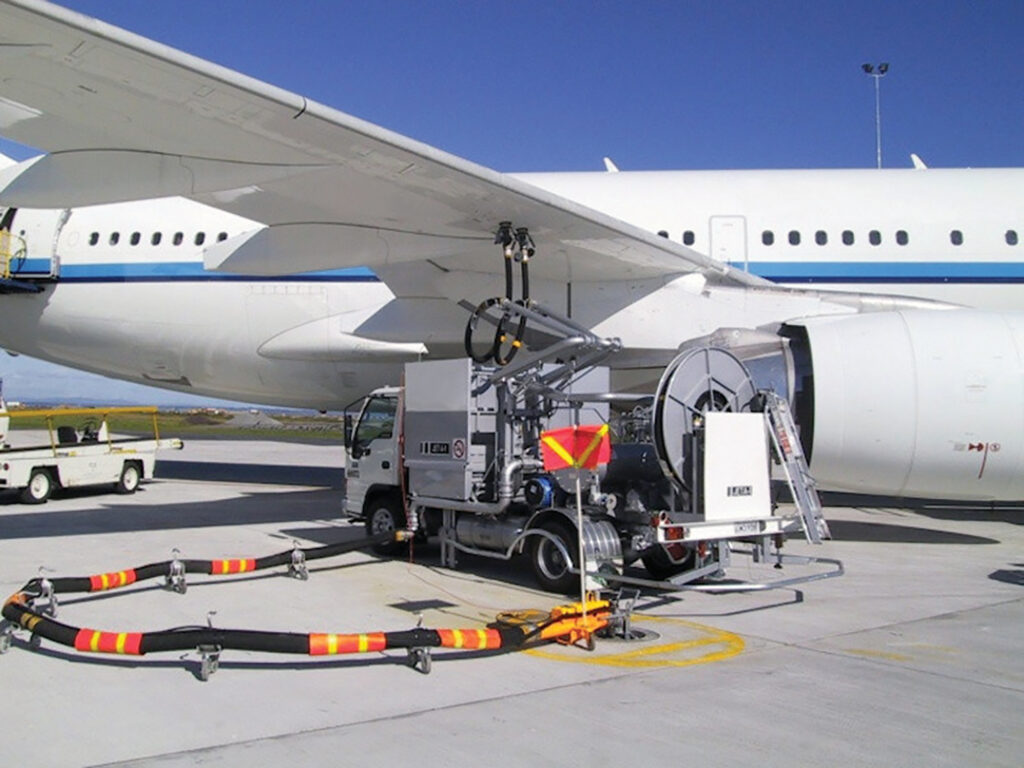
Recent developments suggest that the possibility is no longer far-fetched. According to the Airlines Operators of Nigeria, the Dangote refinery currently supplies more than 95 per cent of the Jet A1 consumed within Nigeria, dramatically reducing dependence on imports. Even more striking is the revelation that the refinery exported approximately 1.1 billion litres of aviation fuel to Europe between March and April 2026.
For a country that spent years importing refined petroleum products despite its abundant crude reserves, the symbolism is profound. Yet symbolism alone does not explain why this development matters. The global jet fuel market has undergone significant disruption in recent years. Geopolitical tensions in the Middle East, changing trade routes and periodic supply shortages have exposed vulnerabilities within international energy supply chains.
Europe, in particular, has faced mounting pressure to secure alternative sources of aviation fuel. Data analysed by Reuters showed that European buyers have increasingly turned to suppliers outside traditional Gulf routes, with Nigeria emerging as one of the beneficiaries of this realignment. Imports from Nigeria formed part of Europe’s efforts to offset disruptions affecting global jet fuel supplies.
In this context, Nigeria’s refining capacity represents more than an industrial achievement; it represents strategic relevance.

David Bird, Chief Executive Officer of the Dangote refinery, recently stated that the facility possesses a substantial surplus of jet fuel and has the capability to supply markets around the world. Speaking at the S and P Global Energy Middle East Petroleum and Gas Conference in London, he described the refinery as a dependable supplier capable of delivering competitively priced products across international markets. His comments reflect a growing confidence within Nigeria’s refining sector.
For years, Nigeria participated in the least profitable stage of the petroleum value chain, exporting crude while importing finished products. Refining changes that equation. It enables countries to capture greater economic value from their natural resources, create industrial jobs and strengthen their position within global energy networks.
Jet fuel, in particular, offers attractive margins and expanding market opportunities. As international travel rebounds and airlines seek reliable supply partners, refiners capable of meeting quality standards stand to benefit significantly. Nigeria appears increasingly determined to seize that opportunity.
Yet the country’s jet fuel success story is not without complications. Ironically, even as Nigeria exports aviation fuel abroad, domestic airlines continue to struggle with elevated operating costs. Reports show that local carriers have struggled with high jet fuel prices despite improved availability, exposing the complex realities of a deregulated market. While refining has improved supply security, it has not automatically translated into affordability. This tension highlights an important truth about energy transitions. Increased production alone cannot solve every challenge.
Questions surrounding pricing, competition and equitable access remain central to determining whether the benefits of Nigeria’s refining boom are broadly shared across the economy.
There are also concerns about feedstock security. Industry executives have repeatedly emphasised the need for more consistent domestic crude supply to sustain refinery operations at optimal levels. A refining revolution cannot endure if crude availability remains uncertain.
Still, these challenges should not obscure the broader significance of what is unfolding. For the first time in decades, Nigeria is beginning to export refined products at scale. Nigeria’s emergence in the jet fuel market also carries important implications for Africa. The continent has historically depended on imported refined products despite possessing vast hydrocarbon reserves. If Nigeria succeeds in building a sustainable refining ecosystem, it could become a regional hub capable of supplying neighbouring markets and reducing Africa’s collective vulnerability to external supply shocks. That prospect would have seemed improbable only a few years ago.
Today, it appears increasingly plausible. The significance of Nigeria’s refining boom, therefore, extends beyond economics. It speaks to a broader redefinition of national identity within the energy landscape.
For decades, Nigeria was viewed primarily as a source of raw materials. The country’s evolving role suggests something different: a producer, a processor and potentially a strategic supplier within global markets.
