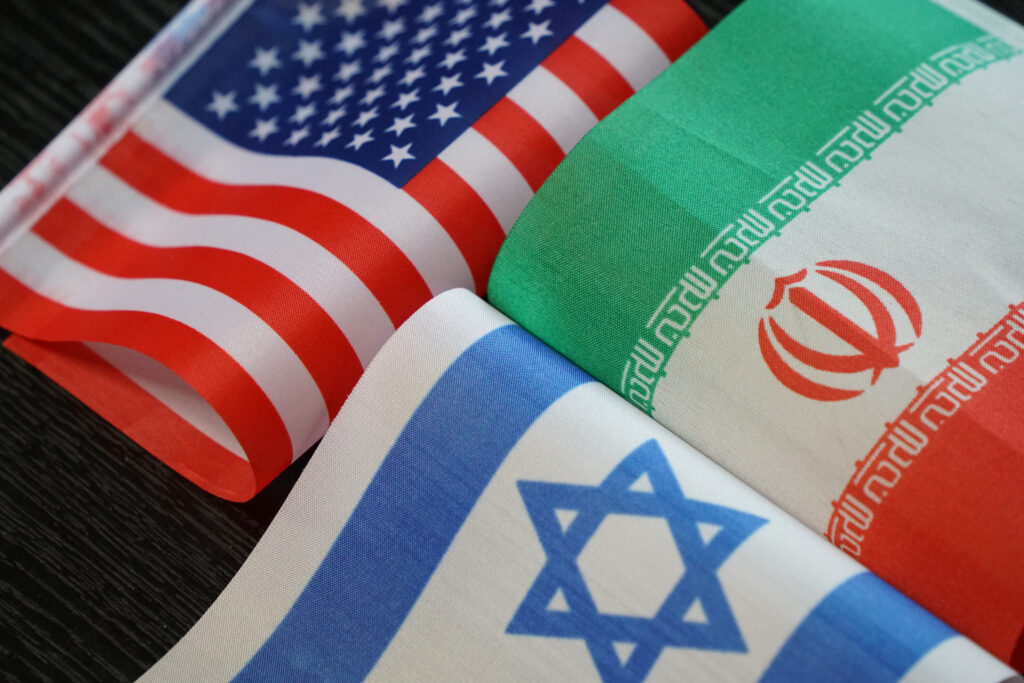
As the US–Israel–Iran crisis drives crude prices higher, African economies face rising inflation and fiscal pressure; yet, as Ngozi Okonjo-Iweala notes, the continent’s 1.4 billion people could transform vulnerability into lasting market power.
By William Emmanuel Ukpoju
Global Crisis, Local Consequences
The shock did not begin in Africa, but it is already being felt across its cities, markets, and households. As tensions escalate in the Middle East following the US–Israel confrontation with Iran, global oil markets have responded with volatility. Prices have surged, supply chains have tightened, and uncertainty has crept back into an already fragile global economy. For Africa, far removed from the theatre of conflict, the consequences are immediate: higher fuel prices, rising transport costs, and renewed pressure on the cost of living.
This is the paradox of modern geopolitics. Wars may be fought thousands of kilometres away, but their economic aftershocks travel quickly through energy markets, trade routes, and financial systems. In much of Africa, where economies remain heavily dependent on imported refined petroleum products, the link between global crude prices and daily survival is direct. A spike in the barrel price quickly results in higher pump prices and, from there, affects the cost of food, goods, and basic services.
While Africa may avoid direct geopolitical consequences from great power rivalry, it remains vulnerable to economic aftershocks, particularly regarding energy prices, inflation, and trade weaknesses, according to Dr Ngozi Okonjo-Iweala on BBC Focus on Africa. However, this crisis also presents an opportunity for Africa to emerge as a major consumer market. Dr Okonjo-Iweala challenges conventional assumptions, noting Africa’s limited entanglement in strategic rivalries and trade exposure to major powers, which partially insulates it from tariff wars and political fragmentation. But that same insulation also reveals a deeper structural challenge. Africa is not as integrated into the global economy as it could be and, crucially, not as integrated within itself. This dual reality of relative protection and persistent underperformance defines the continent’s current moment. As oil prices rise and global tensions mount, Africa finds itself at a crossroads: exposed to external shocks, yet uniquely positioned to rethink its economic trajectory and harness the full potential of its vast and rapidly growing market.
Crude Gains, Domestic Pain: Nigeria and Africa’s Oil Producers at a Crossroads
For Africa’s oil-producing nations, the surge in global crude prices presents what appears, at first glance, to be a welcome reprieve. Countries like Nigeria, Angola, and Algeria stand to benefit from higher export revenues as international markets scramble for supply amid uncertainty in the Gulf. In theory, this should translate into stronger fiscal buffers, improved foreign exchange earnings, and renewed momentum for public investment. But the reality, as always, is more complicated.
Nigeria, the continent’s largest oil producer, captures this contradiction more vividly than most. While higher crude prices boost government revenues, the domestic economy often tells a different story. Years of underinvestment in refining capacity mean that the country still relies heavily on imported petroleum products. As global prices rise, so too does the cost of importing fuel, placing renewed pressure on public finances and, ultimately, on consumers.
The result is a familiar but troubling cycle: crude oil gains at the export level are offset by rising costs at home. Transport fares increase, food prices follow, and inflation tightens its grip on already strained households. For many Nigerians, the benefits of higher oil prices remain abstract, felt more in government balance sheets than in daily life.
This tension underscores a broader structural issue across the continent. Africa exports crude but imports value. Until that equation changes through investments in refining, storage, and integrated energy systems, the continent will continue to experience global oil shocks not as opportunities to consolidate growth, but as disruptions that expose its deepest economic fault lines.
Inflation’s Second Wave: Food, Fertiliser, and Fragile Supply Chains
If rising fuel prices are the first wave of impact, food inflation is the second and often more devastating shock. Across Africa, agriculture remains both a critical employer and the backbone of food security. Yet it is also highly exposed to global disruptions, particularly in the supply of key inputs such as fertilisers and energy.
The Middle East crisis is already straining these supply chains. Higher energy costs push up the price of fertiliser production and transportation, while broader trade disruptions add layers of uncertainty. For African farmers, this translates into higher input costs and, in many cases, reduced usage. The downstream effect is predictable: lower yields, a tighter food supply, and rising market prices.
For households, the consequences are severe. Food accounts for a significant share of consumer spending across much of the continent. Even modest increases in staple prices can push vulnerable populations closer to food insecurity. In urban centres, especially, where incomes are fixed and food is entirely market-dependent, the pressure builds quickly.
Governments, once again, are caught in a bind, balancing fiscal prudence against the need to shield citizens from rising costs. Subsidies, import waivers, and emergency interventions may offer temporary relief, but they do little to address the structural exposure that makes such crises recurring rather than exceptional.
From Fragmentation to Scale: Reimagining Africa as a Global Market
Even amid these pressures, Dr Okonjo-Iweala urges a shift in perspective, away from crisis management and toward long-term transformation.
Her argument is both simple and profound: Africa’s greatest strength lies not beneath its soil but within its population.
“Africa has the good luck that it is not dependent too much on the US or China at this moment. Six per cent of Africa’s exports go to the US, and four per cent of our imports come from there. So we don’t have any fear of being dependent; actually, it is the other way,” she explains.
This relative independence offers the continent a degree of strategic flexibility. Yet she is quick to point out the other side of the equation. Limited integration into global trade and even within the continent itself has constrained Africa’s economic potential.
“On the one hand, that’s a good thing, because all the tariff wars that have been going on have not impacted Africa as much. But it’s also bad news because our trade with the rest of the world… is not as much as we would like. We need to change the story on the continent. We need to present ourselves as the market we are. Here is Africa’s highest asset. Africa is 1.4 billion people. It is one of the biggest markets in the world. 800 million people by 2050 will be middle class. So Africa is a big market now; it will be a bigger market in the future.”
Framed this way, Africa is no longer merely a price taker in global commodity markets; it is a future centre of demand, capable of shaping trade flows, attracting investment, and driving industrial growth from within.
Turning Crisis into Opportunity: Africa at a Crossroads
The US–Israel–Iran conflict may be thousands of kilometres away, but its economic aftershocks are already reverberating across African economies. Rising fuel prices, soaring transport costs, and inflation in food and industrial goods are immediate realities for millions of households. Governments face difficult trade-offs, balancing fiscal constraints with the urgent need to shield citizens from economic pain.
Yet, as Ngozi Okonjo-Iweala emphasises, Africa’s position is not solely defined by vulnerability. The continent’s relative independence from major power trade dependencies offers a unique buffer, while its population of 1.4 billion people represents an unparalleled long-term asset. By embracing strategic integration, both within Africa and in global trade, the continent can turn recurring shocks into catalysts for economic transformation.
Key imperatives are already clear: invest in local energy infrastructure and refining capacity, strengthen agricultural and industrial supply chains, and accelerate intra-African trade under frameworks such as the AfCFTA. Doing so would reduce exposure to external price shocks, foster resilience, and allow Africa to capture more of the value it currently exports as raw commodities.
Ultimately, the question is not whether Africa will be affected by global crises—they will. The real challenge lies in how the continent responds. By leveraging its demographic weight, growing middle class, and strategic independence, Africa has the chance to shift from being a passive participant in global markets to a proactive driver of its own economic destiny. In Okonjo-Iweala’s words:
“Africa is a big market now; it will be a bigger market in the future.”
