
By Ese Ufuoma
Nigeria’s food inflation crisis has become a central concern for policymakers, agribusiness investors and ordinary consumers alike, and although a range of factors from exchange rate volatility to supply chain inefficiencies drive the persistent rise in food prices, there is growing optimism that strategic expansion of the livestock and dairy sectors could help restrain inflationary pressures while strengthening national food security. Food inflation in recent years has repeatedly outpaced headline inflation, pushing staple proteins, dairy products and animal source foods beyond the reach of many households, and prompting government officials to look beyond conventional crop production solutions toward under-leveraged segments of the agricultural economy that have both nutritional and economic potential.
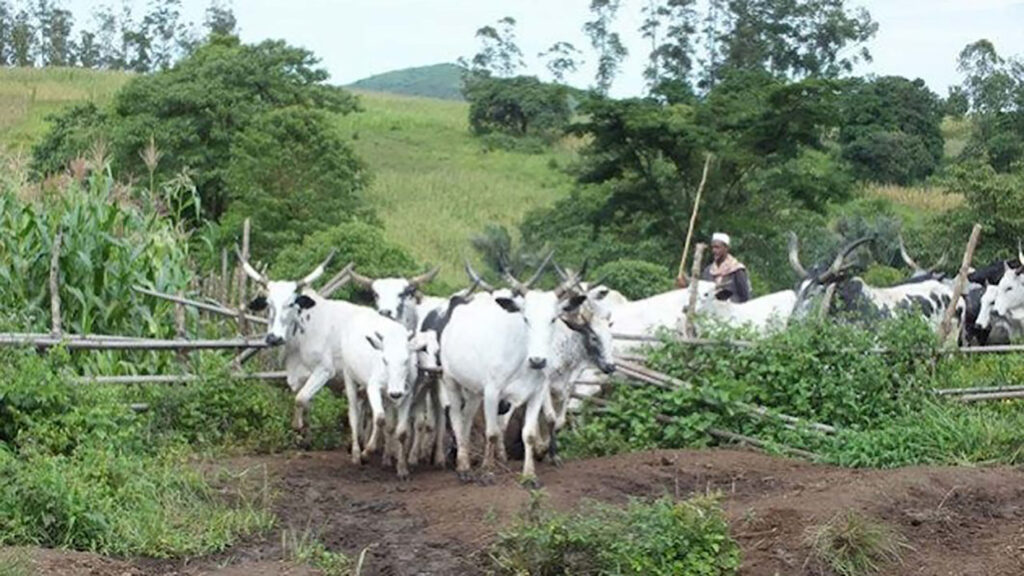
The livestock sector historically contributes meaningfully to Nigeria’s agricultural GDP and rural livelihoods, supplying meat, milk and by-products that account for a significant share of household protein intake, yet despite the country’s large cattle, sheep and goat populations, domestic production falls far short of demand, and the sector remains largely informal and undercapitalised. Analysts note that Nigeria produces roughly 600,000–700,000 metric tonnes of milk annually, a figure that meets only about 40 per cent of domestic requirement and forces the nation to spend upwards of US$1.5 billion each year on imported dairy products, a drain on foreign exchange and a contributor to food price instability.
This paradox, where a country with one of West Africa’s largest cattle populations still cannot satisfy its own dairy demand, speaks to structural weaknesses that go beyond mere herd size and into deeper production inefficiencies, breed limitations and value chain gaps. Local cattle frequently yield only small volumes of milk per head under traditional pastoralist systems, and Nigeria’s indigenous breeds rarely perform like specialised dairy breeds found in other parts of the world. These biological and management constraints are compounded by inadequate feed resources, weak veterinary services, and an absence of modern milk collection, chilling and processing infrastructure, all of which limit the sector’s capacity to supply consistent, affordable milk and dairy products to consumers.
Recognising this reality, the federal government has intensified efforts to catalyse livestock and dairy transformation through policy, investment and institutional reforms, and in 2025, the launch of the National Livestock Growth Acceleration Program marked a significant pivot toward sector mainstreaming with an eye on food prices, import substitution and economic inclusion. Under this initiative, livestock authorities and industry partners are promoting genetic improvement, expanded nutrition and feed programs, animal health services, and greater private sector collaboration, all aimed at boosting productivity across cattle, sheep and goat populations and raising milk output to levels that meaningfully reduce market dependence on imports.
The strategy also acknowledges the need for modern dairy management and technology, including the importation of higher-yielding dairy cattle from Denmark and other markets to strengthen herd performance, which is expected to gradually improve local milk supply and dampen upward pressure on retail dairy prices. Such investments in breeding and genetics are vital if the sector is to transition from reliance on smallholder pastoralist systems toward more productive semi-intensive and intensive production models capable of serving urban and peri-urban demand.
If successful, higher local milk production could have cascading impacts on food inflation. Nigeria’s high dairy import bill not only strains foreign exchange reserves but also exposes domestic dairy pricing to external shocks, exchange rate fluctuations and international commodity cycles, all of which feed into the cost of milk and dairy products on local shelves. Substituting imported dairy with locally produced milk would help stabilise pricing by shortening supply chains, reducing freight costs, preserving foreign currency and allowing domestic players greater influence over their own pricing structures.
Beyond dairy itself, a revitalised livestock sector can strengthen broader food price stability by encouraging value chain integration, feeding into meat supply and enhancing protein availability at a time when other sources, such as fish and poultry, are facing their own supply constraints due to input cost spikes and infrastructure bottlenecks. The livestock sector, if modernised and scaled, also provides employment opportunities across rural economies, fosters youth and women participation in agribusiness, and generates ancillary demand for feed, veterinary services and cold chain logistics that can strengthen overall agricultural productivity.

But optimism must be tempered with realism, because structural transformation of livestock and dairy markets is neither quick nor automatic, and the success of these strategies depends on consistent policy implementation, secure access to finance for farmers and processors, and improved infrastructure that connects production zones with consumption centres. Challenges such as poor road networks, inadequate animal feed systems, insecurity in grazing regions and persistent gaps in cold chain logistics continue to raise the cost of production and distribution, diluting potential gains from expanded output. Without addressing such structural bottlenecks, increased production alone may do little to drive down retail prices in a sustained way.
Moreover, experts stress that doubling milk output to around 1.4 million tonnes, as targeted by the livestock ministry within five years, will require coordinated investment, technical capacity building and strong private sector engagement in a landscape where cultural livestock practices and pastoralist norms have long prevailed. This transformation is possible but hinges on enabling environments that support ranching systems, feed improvement, disease control and market access, and without these enablers, the gap between production and consumption may persist, limiting the sector’s ability to influence food inflation materially.
Consumer habits and nutritional trends also shape outcomes. Per capita milk consumption in Nigeria remains very low, around 8–10 litres per year, compared to global averages and even lower than other African markets, indicating that demand stimulation will be part of any strategy aiming to embed dairy into mainstream diets and to justify investments in processing capacity. If increased production is matched with better market linkages and affordability gains, consumers will benefit not only from price relief but also from improved nutrition profiles at the household level.
At the intersection of livestock and food inflation, therefore, lies both opportunity and challenge: expanding livestock and dairy output offers a plausible pathway to cushioning Nigeria’s food price pressures, but it also requires systemic reforms that bring production efficiency, market infrastructure and enabling policies together in a coherent delivery framework. Achieving this balance will not only help tame dairy price inflation but could also catalyse wider agricultural resilience, rural prosperity and long-term food security for Africa’s most populous nation, a prospect that, if realised, would reposition livestock agriculture from perennial underachiever to a cornerstone of national food strategy.
