
By William Emmanuel Ukpoju
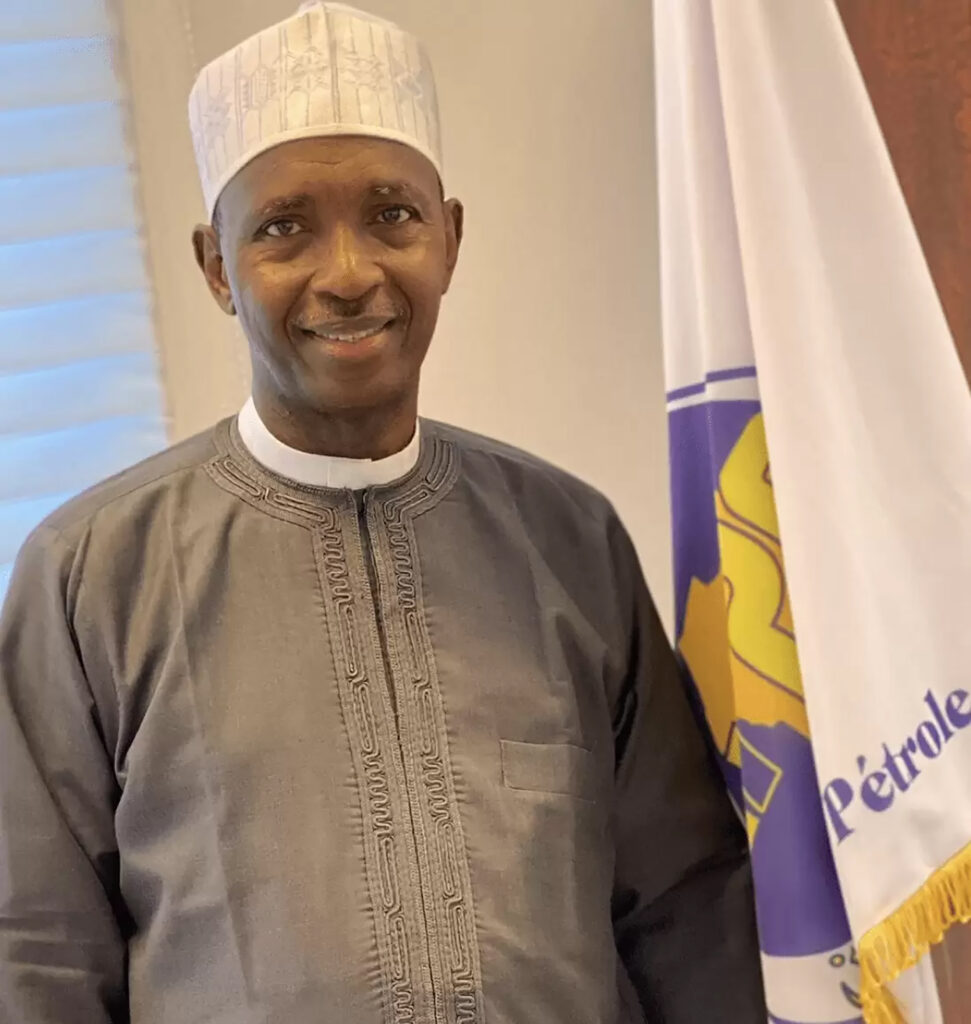
In the dynamic and politically charged world of global energy diplomacy, few African figures have demonstrated the extent of intellectual breadth, institutional resilience, strategic leadership, and unwavering commitment to continental progress like H.E. Dr. Omar Farouk Ibrahim, Secretary General of the African Petroleum Producers’ Organization (APPO). From the lecture halls of Nigerian universities to the editorial corridors of the Daily Times, and ultimately to the pinnacle of global oil policy at the OPEC Secretariat in Vienna, Dr. Ibrahim’s journey is deeply intertwined with Africa’s complex fight for energy sovereignty and development.
Today, as he approaches the conclusion of his tenure at APPO, he stands as a transformative actor whose ideas and reforms have fundamentally shifted the direction of African energy politics. His leadership has repositioned APPO not merely as a political bloc of oil-producing nations but as a forward-looking institution redefining how Africa funds, develops, and governs its hydrocarbon and energy future. Central to his legacy is the establishment of the groundbreaking Africa Energy Bank, a bold financing platform designed to unlock billions for infrastructure, technology and investment; ensuring that Africa does not enter the energy transition as a victim but as a player of strategic consequence.
This is the story of how a scholar-journalist evolved into one of Africa’s most influential energy diplomats and why his ideas may determine whether Africa rises together or falls apart in the global energy transition era.
Early Life and the Journey into Journalism
Born and raised in Kano, Nigeria, Dr. Omar Farouk Ibrahim’s early years gave little indication that he would one day sit at the helm of one of Africa’s most important multilateral institutions. He attended Government College Kano (now Rumfa College), where he distinguished himself as head student.
A gifted academic, he completed his first degree in Political Science at Ahmadu Bello University in 1980, followed by a second degree at Bayero University Kano in 1983, and ultimately a PhD from Rutgers University, New Jersey, USA.
His entry into journalism was serendipitous rather than intentional. While writing his first-degree dissertation on Nigerian press and political partisanship during the 1979 elections, he developed a sharp analytical understanding of media power, political messaging and national perception; skills that would later prove invaluable at OPEC.
In 1990, during a period of reform at the Daily Times, he was recruited onto the editorial board, not through formal interviews but purely on the strength of his intellect and clarity of thought, demonstrated spontaneously during a heated editorial meeting on national policy.
From that moment, he rose rapidly through editorial leadership, becoming Area Manager for the Northern states, Group Controller of Administration, and eventually Managing Director of the New Nigerian Newspapers under President Olusegun Obasanjo.
Journalism refined his communication skills, sharpened his capacity for critical reasoning, and exposed him to national decision-makers. But destiny was preparing him for a much larger stage.
The OPEC Years: Entering The World Of Global Energy Diplomacy
In 2003, Dr. Ibrahim was appointed Head of Information and Public Relations at the OPEC Secretariat in Vienna, a position he initially felt unprepared for because he “knew next to nothing about the oil industry.” Determined not to remain a technical outsider, he embarked on an aggressive learning journey, attending technical research meetings, engaging economists and engineers, and training internationally.
Dr. Ibrahim’s philosophy was simple: “To be an effective spokesperson and leader, I had to understand the industry inside out. I committed to learning, attending training programs at Oxford and other institutions, and immersing myself in research.”
This combination of technical mastery and strategic communication would later define his approach at APPO.
Within two years, he had transformed from a journalist into a respected oil and gas authority, eventually serving as Editor-in-Chief of the OPEC Energy Review and the OPEC Bulletin, while also advising the organisation on communications strategy. During his tenure, OPEC’s most pressing challenge was public misperception, especially in Europe and the United States, where it was widely portrayed as a manipulative cartel driving oil prices. His strategy reshaped global narratives, projected OPEC as a stabilising actor rather than a villain, and strengthened the organisation’s global standing.
One of his most defining moments came when he approved the publication of a research paper initially rejected by the OPEC Director. Within a quarter, it became the most cited publication across multiple journal editions, proof that intellectual conviction must sometimes challenge institutional conservatism.
After seven years in Vienna, he returned to Nigeria in 2009 at the request of Dr. Rilwanu Lukman, then Minister of Petroleum Resources, to serve as a senior strategic advisor. He would go on to advise four successive ministers: Lukman, Diezani Alison-Madueke, Dr. Ibe Kachikwu and Chief Timipre Silva, while also serving as OPEC Governor for Nigeria, Executive Board Member of the Gas Exporting Countries Forum (GECF) in Doha and a representative at the International Energy Forum (IEF). “While I could not compare the package offered in OPEC with what I received in Nigeria, I felt a duty to contribute. I came back to serve, not for compensation, but because I believed in Nigeria and Africa,” he notes.
His advisory roles allowed him to bridge global insights with local implementation, setting the stage for his transformative work at APPO.
His years in global diplomacy prepared him for the challenge that would define his legacy: reforming and repositioning the African Petroleum Producers’ Organization.
Transforming APA into APPO: A Visionary Reform
When Dr. Ibrahim assumed the role of Secretary General, APPO (then APPA) was a loosely coordinated platform with declining relevance. Member states operated as individual markets, energy development was fragmented, and Africa lacked a unified position in global energy negotiations.
Meanwhile, in 2015, following the global shift toward renewable energy and climate-conscious policies, African leaders recognized the need to reform the African Petroleum Producers Association (APA). The challenge was clear: Africa’s oil and gas sector faced funding gaps, technological dependence, and limited market access. Dr. Ibrahim was appointed chair of the reform team. His mandate: create a professional, sustainable, and effective institution to serve the continent’s energy interests.
The reform process identified three existential threats to Africa’s energy future:
Funding:
Africa lacked access to capital to sustain oil and gas development, particularly as Western banks withdrew funding due to ESG pressures.
Technology:
After almost a century of oil production, Africa still depended on foreign technology, foreign research, foreign fabrication and foreign technical expertise.
Markets:
Over 75% of African crude and nearly half of its gas are exported, leaving the continent vulnerable to global market volatility while hundreds of millions of Africans remain without energy access.
These findings shaped a reform agenda that would give birth to one of the most ambitious financial institutions in African history.
The Africa Energy Bank: A Visionary Response to a Continental Crisis
Recognising that no major energy infrastructure could be built without independent financing capacity, Dr. Ibrahim championed the creation of the Africa Energy Bank, a joint venture between APPO and Afreximbank. Designed to mobilise an initial capital structure of $5 billion, the bank aims to fund oil, gas and energy-related projects across the continent, strengthening Africa’s control over its natural resources.
The decision was bold. Western lenders were exiting fossil fuel investment. Africa was facing shrinking financing windows. But rather than retreat defensively, APPO, under his leadership, made a historic power move.
After intense negotiations and diplomatic mobilisation, the bank was finalised in 2024, with Nigeria emerging victorious over seven competing host nations to secure the headquarters location. Today, the bank stands ready to finance strategic pipelines, gas commercialisation projects, refining expansion, petrochemicals, and energy security programmes, ushering in what could become Africa’s most significant industrialisation phase since independence.
A Vision Of Collaboration — “Africa Will Rise Or Fall Together”
Dr. Ibrahim rejects the solitary national economic model common across Africa. He argues forcefully that no African state, Egypt, Algeria, Angola, or even Nigeria, possesses the financial, technical or market capacity to independently master the oil and gas industry. He cites the example of multinational oil companies, whose shareholder structures transcend national borders.
For Africa, he says, unity is existential:
“Our salvation in the industry really lies in togetherness. I don’t think that individually any of our member countries has all that it takes to fully master this industry.”
His proposed model for collaboration includes:
* Continental energy infrastructure interconnection
* Regional centres of excellence specialising in upstream, midstream, downstream and new energy technologies
* Shared funding and risk pooling
* Cross-border markets for gas and petroleum products
* Institutional culture reforms prioritising professionalism over entitlement
Among his visionary projects is the CAPS (Central Africa Pipeline System), massive crude, product and gas pipeline corridor spanning 11 Central African states, designed to unlock markets and reinforce continental energy security.
Leadership Legacy — Rebuilding An Institution From Scratch
When he assumed office, APPO had effectively withered. Staff were dismissed, morale was low, and systems were fragmented. He rebuilt the Secretariat from a single employee—himself—through a meticulously phased recruitment strategy that emphasised professionalism and institutional culture. Contracts became performance-based, not automatic. Teamwork became essential. Capacity building became mandatory.
Today, APPO stands transformed into a structured, respected, technically grounded and diplomatically relevant continental institution.
He considers this institutional rebirth one of his greatest legacies, alongside the Africa Energy Bank and the policy positioning of APPO as the continental voice on the energy transition.
Looking Ahead: A Ten-Year Vision For Africa
Dr. Ibrahim imagines a future where:
* Africa stops importing technology, equipment and refined products.
* Local energy solutions drive continental industrialisation.
* African research institutions become knowledge exporters.
* The energy transition becomes an opportunity rather than a threat.
* Africans reclaim confidence in their own capabilities.
His message is blunt:
“We have lost confidence in our ability to do things. We feel like we are second-class. Without the West, we can’t get there. Sometimes I wish our countries would be put under sanctions so we are forced to look inward.”
As his term draws to a close, he hopes history will record him as the man who turned a weak organisation into a capable institution:
“I want to make sure I have established an institution that is very professional.”
A Pan-African Energy Visionary
In a moment where global institutions are scripting Africa’s future through climate finance, ESG restrictions and energy transition pressures, Dr. Omar Farouk Ibrahim represents a radically different voice: a voice insisting that Africa must shape its own destiny, not inherit a future designed elsewhere.
His work echoes a deeper ideological legacy, one rooted in the spirit of Nkrumah, Senghor, Nyerere and Mandela: Africa’s power lies not in individual nations but in collective purpose.
His journey, from academia to journalism to global energy diplomacy, illustrates a life committed to public service, continental development, intellectual courage and unapologetic defence of African interests.
Whether history remembers him as a reformer, strategist, iconoclast, or nation-builder, one thing remains certain: Dr. Omar Farouk Ibrahim has redrawn the blueprint of Africa’s energy future, leaving behind a legacy defined by bold ideas and institutional transformation. And the choice now lies with African leaders: Collaborate, or collapse.
As the continent navigates the twin challenges of energy transition and economic diversification, Dr. Ibrahim’s leadership serves as a guiding light, reminding Africa that collaboration, professionalism, and foresight are the pillars of sustainable development.
H.E. Dr. Omar Farouk Ibrahim’s tenure at APPO exemplifies strategic vision, transformative leadership, and Pan-African dedication.
Through institutional reforms, visionary projects, and mentorship, he has strengthened Africa’s voice in the global energy landscape and laid the groundwork for sustainable energy development for generations to come.
In a sector often defined by volatility and geopolitical complexities, Dr. Ibrahim’s approach offers a blueprint for success: learn, collaborate, innovate, and lead with integrity. His story is not just one of personal achievement but a roadmap for Africa’s energy independence, economic growth, and technological mastery.
“Our greatest strength lies in togetherness. Africa must unite its resources, knowledge, and ambitions to secure its energy future. This is the legacy we aim to build.”
