From transparency in bid rounds to $39.9 billion in new investments, the Nigerian Upstream Petroleum Regulatory Commission is shaping a new era of confidence, accountability, and growth
By Gideon Osaka
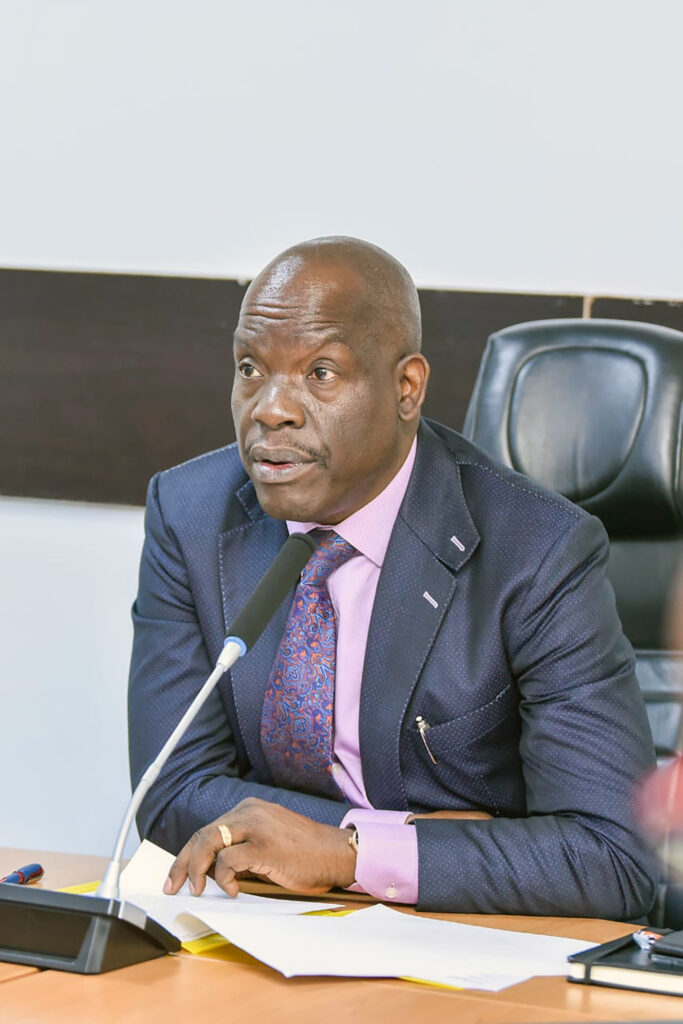
Four years after its establishment, the Nigerian Upstream Petroleum Regulatory Commission (NUPRC) stands as one of Nigeria’s most transformative public institutions. Through decisive reforms, digital transparency, and an investor-driven approach, the Commission, under the leadership of Engr. Gbenga Komolafe has not only restored confidence in Nigeria’s upstream petroleum sector but has also repositioned the country as a competitive player in the global energy landscape.
A New Regulatory Era
When the Nigerian Upstream Petroleum Regulatory Commission (NUPRC) was established following the enactment of the Petroleum Industry Act (PIA) 2021, expectations were high but tempered by the sector’s long history of opacity, underperformance, and bureaucratic bottlenecks. The Commission inherited legacy challenges: weak institutional coordination, declining crude production, and an investment climate burdened by uncertainty.
Four years later, the results are both measurable and monumental. With clear performance metrics, data-backed regulation, and a commitment to transparency, the NUPRC has achieved what many thought impossible: a sector rebirth grounded in accountability and innovation.
The Commission recently outlined 16 high-impact achievements, a record that underscores how reform-driven leadership and sound regulatory design can transform one of the nation’s most complex sectors.
Exceeding Revenue Targets: Delivering Economic Value
Fiscal efficiency has been at the centre of NUPRC’s achievements. In 2022, 2023, and 2024, the Commission exceeded its annual revenue targets by 18.3%, 14.65%, and 84.2% respectively, an impressive performance against the backdrop of volatile global oil prices and production fluctuations.
These results signify more than strong numbers. They reflect the successful deployment of data-driven monitoring, streamlined fiscal frameworks, and improved compliance enforcement. In practical terms, NUPRC’s approach has strengthened Nigeria’s fiscal resilience, ensuring that upstream revenues contribute more directly to national growth and budgetary stability.
The Commission’s emphasis on operational efficiency has also improved remittance transparency, ensuring that every barrel produced translates to value for the Nigerian state.
Unlocking $39.98 Billion in Field Development Investments
Between 2024 and 2025, NUPRC approved 79 Field Development Plans (FDPs), comprising 41 in 2024 and 38 as of 2025, with a potential investment portfolio of $39.98 billion.
This massive injection of capital represents one of the largest waves of upstream investment in the country’s recent history. It underscores Nigeria’s renewed attractiveness to global investors following the Commission’s implementation of PIA provisions, which have simplified approval cycles and clarified fiscal terms.
Each FDP approval translates into tangible value: new jobs, increased production capacity, expanded domestic gas availability, and greater local content participation. Collectively, they also reaffirm President Bola Tinubu’s “Nigeria is open for business” agenda, an ethos NUPRC has operationalised with quiet efficiency.
Rising Crude Production and the Project 1Mbopd Initiative
Nigeria’s crude oil production, long plagued by disruptions and decline, is on the rise again. The Commission reports an average production of 1.65 million barrels per day (Mbopd), a marked recovery from pandemic-era lows.
Looking ahead, the NUPRC’s Project 1Mbopd Initiative aims to achieve a production capacity of 2.5 Mbopd by 2027. The initiative focuses on reactivating shut-in wells, optimising existing assets, encouraging new drilling campaigns, and leveraging modern monitoring technology to minimise downtime and theft.
This forward momentum reflects a strategic shift from reactive regulation to proactive asset management, where data, accountability, and performance metrics drive outcomes.
Restoring Transparency in Bid Rounds
Few areas better illustrate NUPRC’s transformative approach than the licensing bid rounds. Historically, Nigeria’s oil block allocations were fraught with opacity and political interference.
The NUPRC, with the strong backing of President Bola Tinubu, has turned this around. Through full digitalisation, it delivered what has been hailed as the most transparent bid round in Nigeria’s upstream history.
The entire process, from application to evaluation and award, was conducted through a digital platform devoid of human interference. The Nigeria Extractive Industries Transparency Initiative (NEITI) publicly endorsed the process as a model of integrity and global best practice.
This reform restored credibility to Nigeria’s licensing framework and sent a powerful signal to investors: transparency is now standard, not the exception.
“Drill or Drop”: Optimising Dormant Assets
The Commission’s implementation of the “Drill or Drop” policy, rooted in the PIA 2021, has injected new discipline into Nigeria’s asset management landscape. The policy requires that oil companies either develop allocated acreages or relinquish them for reallocation.
This bold approach has already identified over 400 dormant fields, compelling complacent operators to act. The objective is clear: optimise the nation’s hydrocarbon reserves and ensure that every asset contributes to national production.
In an industry long characterised by speculative hoarding of licences, the “Drill or Drop” rule marks a defining shift toward productivity and accountability.
A Record-Breaking Rise in Rig Count
In less than four years, Nigeria’s rig count has climbed from 8 in 2021 to 69 in 2025, a staggering 762% increase.
The breakdown, 40 active rigs, 8 on standby, 5 on warm stack, 4 on cold stack, and 12 on the move, reflects a revitalised upstream sector pulsing with renewed activity.
This unprecedented growth in rig activity mirrors the confidence investors have regained in Nigeria’s upstream regulatory environment. It also validates the Commission’s reforms that have cut red tape, simplified contracting, and improved project approval timelines.
As Engr. Komolafe often emphasises, “Data doesn’t lie.” The numbers tell the story of a sector reborn.
Billion-Dollar Divestments and Portfolio Realignment
The NUPRC’s proactive oversight of multi-billion-dollar divestments between 2024 and 2025 marks another milestone in Nigeria’s upstream evolution. Major transactions, including NAOC to Oando, Equinor to Chappal Energies, Mobil to Seplat, and Shell to Renaissance Africa Energy, represent a wave of portfolio optimisation designed to deepen indigenous participation and focus international oil companies (IOCs) on deepwater developments.
By ensuring regulatory integrity and fair value in these transitions, the Commission has reinforced Nigeria’s reputation as a predictable, rules-based jurisdiction. These divestments are not exits, they are reconfigurations aligned with global energy transition trends and national priorities.
Regulatory Frameworks that Drive Clarity
To operationalise the intent of the PIA, the NUPRC has developed 24 forward-thinking Regulations, 19 already gazetted and five awaiting gazetting.
These frameworks address critical areas such as upstream measurement, asset divestment, flaring reduction, host community management, and environmental compliance.
By establishing predictable rules, the Commission has built an enabling environment where investors can plan long-term, confident that the regulatory goalposts will not shift arbitrarily.
Each regulation represents an anchor of stability in a sector that previously suffered from frequent policy reversals.
Gas Flare Commercialisation: Turning Waste into Wealth
The Nigerian Gas Flare Commercialisation Programme (NGFCP) has entered its implementation phase under NUPRC supervision. The Commission completed the award of flare sites to successful bidders, unlocking at least $2.5 billion in new investments.
This initiative tackles one of Nigeria’s most persistent environmental challenges, routine gas flaring, by converting wasted gas into feedstock for power generation, LPG, and petrochemical industries.
It aligns with Nigeria’s Zero Routine Flaring by 2030 commitment, and reinforces the NUPRC’s role in balancing environmental stewardship with economic opportunity.
Excellence in Public Service and Recognition
NUPRC’s transformation has not gone unnoticed. In 2024, it won the Overall Best Performing Parastatal SERVICOM Award, as well as the Best Performing SERVICOM Team B Award.
In 2025, it was named Best Regulator in Nigeria’s Energy Sector by the Nigerian Energy Correspondents Association, alongside over 60 other institutional recognitions.
Such accolades highlight not only performance but also cultural change; an organisation built around service, efficiency, and accountability.
Empowering Host Communities: N358.67 Billion and 536 Projects
One of the most powerful success stories of the NUPRC era lies in the implementation of the Host Community Development Trusts (HCDTs) provisions under the PIA.
As of October 2025, HCDTs have received ₦122.34 billion and $168.91 million, a combined value of over ₦358.67 billion, channelled directly into community development projects across the Niger Delta and beyond.
The Commission is currently overseeing 536 ongoing projects, including schools, hospitals, roads, and vocational centres, tangible infrastructure that has already curbed vandalism and crude theft.
This framework institutionalises the principle of shared prosperity, ensuring that oil-producing communities benefit directly from upstream operations.
Boosting Development Wells and Data Modernisation
Between 2022 and 2025, the NUPRC has recorded 306 new development wells, a reflection of growing exploration and drilling momentum.
In addition, the Commission has issued Nigeria’s first Petroleum Exploration Licence (PEL) for a major offshore geophysical survey covering 56,000 km² of 3D seismic and gravity data.
Complementing this are 17,000 km of reprocessed 2D and 28,000 km² of 3D seismic data, producing higher-resolution subsurface images and reducing exploration risks.
This renewed data-driven approach has eliminated much of the uncertainty that once discouraged exploration, unlocking frontier basins and derisking future investments.
Curtailing Crude Oil Theft: A 90% Reduction
Crude oil theft, long Nigeria’s Achilles heel, has been drastically curtailed. From a staggering 102,900 barrels per day in 2021, losses have fallen by 90% to just 9,600 barrels per day as of September 2025.
This achievement results from joint operations involving the security agencies, private contractors like Tantita Security Services, and the Commission’s robust monitoring framework.
Two critical regulatory innovations, the Upstream Measurement Regulation and the Advanced Cargo Declaration Regulation, have strengthened hydrocarbon accounting, ensuring that every molecule produced is tracked and verified. In effect, NUPRC has turned transparency into a weapon against theft.
Leadership Beyond Borders: The AFRIPERF Legacy
The NUPRC’s influence now extends beyond Nigeria’s borders. Under the leadership of Engr. Gbenga Komolafe, the Commission championed the establishment of the African Petroleum Regulators Forum (AFRIPERF), a continental platform that brings together regulators from 16 African countries to harmonise oil and gas policies.
AFRIPERF’s mandate is visionary: to strengthen cross-border cooperation, standardise fiscal regimes, promote infrastructure development, and present a unified African voice in global energy advocacy.
By leading AFRIPERF, Nigeria has positioned itself not only as a regulatory benchmark but also as a continental thought leader in upstream governance.
Institutional Legacy and the Road Ahead
Four years on, the NUPRC’s legacy is defined by data, delivery, and direction. From restoring investor confidence to empowering communities and modernising exploration data systems, the Commission has set a new standard for public sector performance.
The task ahead remains vast, sustaining gains, scaling transparency reforms, and ensuring full PIA implementation. But the foundation is firm.
Under Engr. Komolafe’s steady leadership, the Commission continues to prove that regulatory agencies can be both business enablers and guardians of national interest.
From Regulation to Transformation
The story of the Nigerian Upstream Petroleum Regulatory Commission is, at its core, a story of reform done right. It shows that with clear laws, digital transparency, and visionary leadership, even the most complex institutions can evolve into engines of growth and credibility.
As Nigeria navigates the twin challenges of global energy transition and domestic economic renewal, NUPRC’s model, anchored in facts, driven by technology, and accountable to the people, offers a roadmap for how governance can translate into tangible national value.
Four years on, the Commission has not just regulated the upstream sector; it has redefined it.
