
By Danlami N. Isah and Emmanuel Peter
The 48th Nigeria Annual International Conference & Exhibition (NAICE), organised by the Society of Petroleum Engineers (SPE) Nigeria Council, convened under a banner as inspiring as it is urgent: “Building a Sustainable Energy Future: Leveraging Technology, Supply Chain, Human Resources, and Policy.”
Held from August 4–6 at Eko Hotels & Suites, Victoria Island, the conference brought together policymakers, industry captains, innovators, academics, and young professionals. More than a technical meeting, NAICE 2025 became a stage where Nigeria’s energy industry reflected on its future, its people, and its role in shaping a sustainable global energy order.
Technology: Powering Smarter and Greener Operations
The conference spotlighted the transformative power of technology. From artificial intelligence and big data to digital twins and robotics, experts demonstrated how digital tools can optimise petroleum operations, cut emissions, and improve safety. The consensus was clear: the energy industry must embrace digital innovation not only to remain competitive but also to achieve sustainability goals.
Supply Chain: Localising for Resilience and Value
Delegates underscored the urgency of strengthening local supply chains. Heavy reliance on foreign goods and services, they argued, exposes the industry to vulnerabilities. Discussions emphasised developing domestic manufacturing, logistics, and engineering capacities that could keep value creation within Nigeria, create jobs, and bolster energy sovereignty.
Human Resources: Nurturing the Next Generation
Human capital development took centre stage. Panels stressed that the future lies in equipping today’s workforce with new skills for a changing energy landscape—digital literacy, sustainability expertise, and cross-disciplinary innovation. SPE Nigeria also showcased its mentorship programmes, innovation challenges, and the Women-in-Energy platform, all designed to bridge the gap between classroom knowledge and industry practice.
Policy: Cultivating a Balanced Regulatory Landscape
Policy was recognised as the glue holding the transformation together. SPE Nigeria Chairperson, Engr. Amina Danmadami, called for regulatory frameworks that encourage investment and align with Nigeria’s ambition to build a $1 trillion economy by 2030.
The Nigerian Upstream Petroleum Regulatory Commission (NUPRC) reinforced this point by presenting its achievements since the enactment of the Petroleum Industry Act in 2021, including the gazetting of 21 upstream regulations, digitised regulatory processes, and industry-wide decarbonisation initiatives.
Interviews: Perspectives from the Conference
The Nigerian Navy – Security Meets Energy
Rear Admiral B. Iyalla, Chief of Naval Engineering at Naval Headquarters, spoke to Valuechain Energy Magazine, highlighting the Navy’s role in energy security and industrial collaboration:
“Coming here has been a very eye-opening experience for me. One of the things we are taking away from this conference is the need to start looking at renewable energy. That’s the way the world is going.”
He revealed the Navy’s shipbuilding and engineering expertise could directly support the oil and gas industry:
“We have naval architects who have constructed warships that are fully functional, and our dockyards have the capacity to build houseboats, smaller boats, and ferries. Additionally, the Navy has established engineering maintenance and management infrastructure for both ships and helicopters. These capacities can be relevant to the oil and gas sector.”
On pipeline security, Iyalla added:
“The Navy is part of the success story as far as the reduction in crude oil theft is concerned. Recent reports show losses reduced by almost 98%, which is a significant step toward Mr. President’s target of raising oil production to 3 million barrels per day by 2030.”
The Student Voice – A Bridge to Industry
For Samuel Uko, Vice President of the University of Lagos SPE Student Chapter and an intern at Schlumberger, NAICE was transformative:
“NAICE has been wonderful. I saw indigenous companies making an impact, connected with CEOs, and even presented a technical paper alongside professors. Opportunities for direct internships were offered to students, something you rarely get elsewhere. Meeting the SPE International President, Mr. Olivier, was inspiring. NAICE is more than a conference; it’s a launchpad for young professionals like me to connect, learn, and contribute to the industry’s future.”
His testimony underscored NAICE’s role as a bridge between academia, young talents, and global industry leaders.
A Young Professional’s Inspiration
Temitope Asimi, a petroleum engineer with Ajivin Group of Companies, found motivation in the diversity of the event and in Danmadami’s leadership
“It has been a lovely experience meeting people from Ghana, Uganda, and other countries during the YP Away Day. The diversity of the conference shows how far SPE Nigeria has come, thanks to leaders like Madam Amina Danmadami, who inspired me personally as the first female Council Chair. As a young female professional, her story motivates me to believe that I, too, can reach those heights.”
Her reflections reinforced the role of representation, diversity, and inclusion in shaping the next generation of African energy leaders.
Awards and Recognition: A Night of Excellence
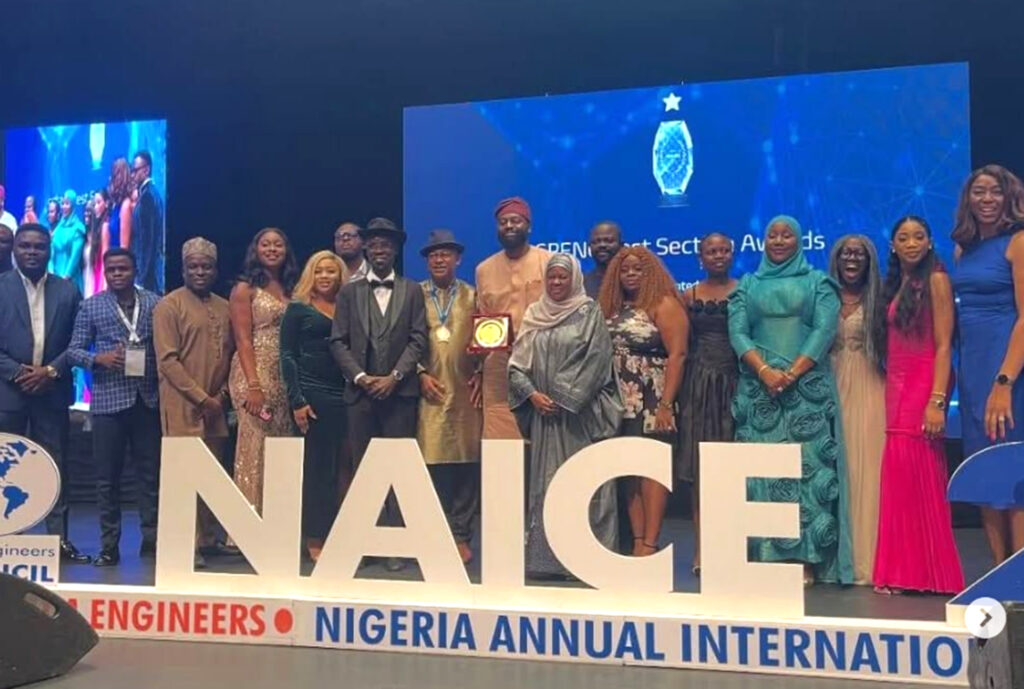
The NAICE Annual Banquet and Awards Night crowned the week with celebration. In her remarks, Engr. Danmadami reminded attendees that while technical sessions drive knowledge, awards honour the people and partnerships that make progress possible:
“These awards reflect the depth of talent, the breadth of contributions, and the spirit of community that define the SPE family. They are a celebration of excellence in its many forms; technical, organisational, professional, and voluntary.”
Awards included the Best Technical Paper, Best Exhibitor, the Council Chairman Medallion, and the Best African Young Professionals Section Award. The evening reaffirmed that building a sustainable energy future is not only about policy and systems but also about recognising individuals and teams who embody excellence.
Why NAICE 2025 Matters
• A Defining Chapter – NAICE 2025 marked a pivotal moment in Nigeria’s energy story, aligning with global climate imperatives while tackling local energy security needs.
• Path to a $1 Trillion Economy – Conversations linked energy transformation with Nigeria’s wider economic ambition.
• Local Content Momentum – With reforms, digitalisation, and supply chain localisation, Nigeria is positioning itself for greater self-reliance.
• Inclusive Leadership – From the Navy to young students and women professionals, the diversity of voices emphasised that the energy future must be collaborative and inclusive.
Closing Reflection
NAICE 2025 was more than a technical conference; it was a strategic convergence point. It highlighted how technology, supply chains, human resources, security, and policy must be interwoven to secure Nigeria’s energy future.
From naval architects building vessels to students securing mentorships to young women drawing inspiration from trailblazing leaders, NAICE 2025 demonstrated that sustainability is about systems but also about people.
As Engr. Danmadami reminded participants, “Excellence is not a destination but a journey.” That journey now continues, as Nigeria positions itself not just as Africa’s energy powerhouse but as a partner in the global movement toward a cleaner, smarter, and more inclusive energy future.
