
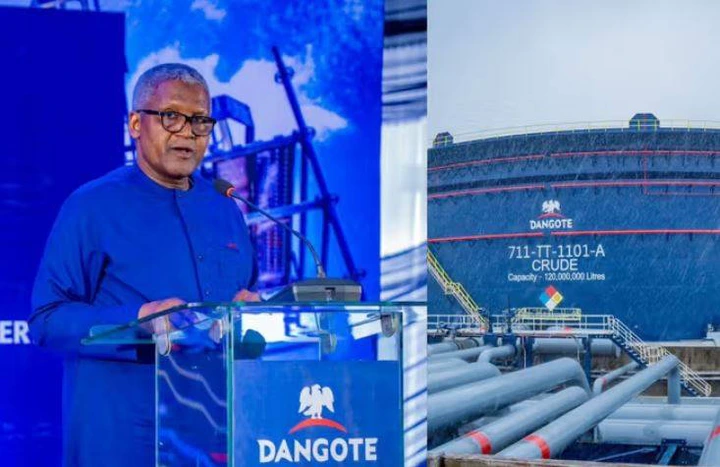
The Dangote Petroleum Refinery has announced the suspension of its discounted fuel supply scheme after discovering a diversion racket.
The Dangote Refinery announced this on Thursday night in a circular signed by Fatima Dangote, the Group Executive Director of Commercial Operations.
The company in the circular said it uncovered a widespread product diversion racket involving its affiliate marketers and strategic partners.
According to the management of the Dangote Refinery, certain partners had been reselling refined products originally meant to be sold at subsidised rates through their retail outlets to unregistered marketers for profit.
The abuses, thereafter, led to a swift suspension of the fuel discount scheme on July 13, 2025.
Dangote, according to the circular said that the discount initiative was designed to lend support to registered marketers by offering refined petroleum products at below-market rates, aiming to maintain competitive pricing and steady supply nationwide.
However, following its investigations, the company discovered that marketers gave room for unregistered third parties to use their loading tickets, known as Authority To Collect (ATC), to lift products, bypassing retail operations and reaping profits without incurring operational costs.
The Dangote Petroleum Refinery in the circular described the abuse as threatening its operations and market stability.

“Over the last few months, DPRP has been receiving unprecedented complaints of strategic partners selling their ATCs at the refinery below the prevailing PMS gantry product price,” the circular read in part.
“A key element of the malpractice was the resale of discounted products at market prices higher than the refinery’s subsidised rate, with profits made from the price gap.
“For example, while Dangote was offering premium motor spirit (PMS) to its affiliates at ₦815 per litre, marketers were reportedly selling the same product at ₦819 to unregistered marketers just below the official price of ₦825 thereby making an instant profit of ₦4 per litre.”
SOURCE: witnessngr.com
