
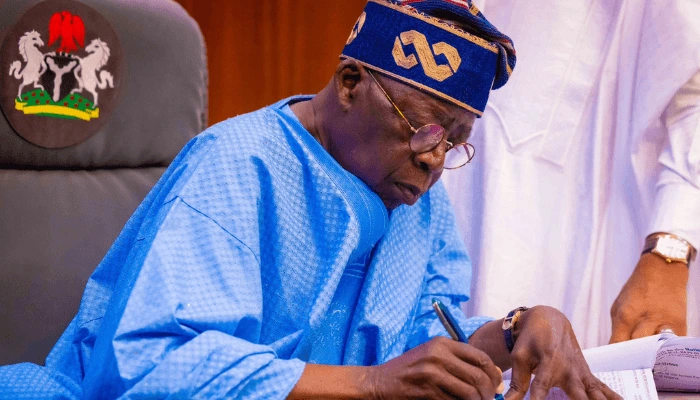
President Bola Tinubu has signed four landmark tax bills into law, in a move aimed at reshaping Nigeria’s economic landscape.
The reforms, part of a broader fiscal transformation agenda, are expected to unlock billions of dollars in new investments and bring long-term certainty to key sectors of the economy, especially oil and gas.
Among the newly codified measures are the Presidential Directive 40, which provides fiscal incentives for Upstream, Midstream Gas, and Deep Offshore projects, the 2024 VAT Modification Order, which exempts Compressed Natural Gas (CNG), Liquefied Petroleum Gas (LPG), and other clean energy products from value-added tax, and the 2025 Upstream Petroleum Cost Efficiency Order, designed to streamline operational costs in the upstream petroleum sector.

These policies have now been officially incorporated into the Nigeria Tax Act, giving them the force of law and insulating them from potential reversals by future administrations. This step, experts say, sends a strong message to both local and foreign investors that Nigeria is serious about creating a stable and predictable business environment.
According to Olu Verheijen, special adviser to the President on Energy, the reforms have already catalysed over $6 billion in new investments within the oil and gas sector.
“With their codification, the administration has delivered long-term certainty and regulatory clarity, ensuring these critical incentives are protected from future policy reversals,” she stated in a social media post after the signing ceremony. “It was a privilege to witness this historic moment, another bold step toward sustainable growth and shared prosperity for all Nigerians.”
The new laws represent a strategic pivot toward a cleaner, more diversified energy mix. The exemption of CNG and LPG from VAT is especially significant amid Nigeria’s push to reduce dependency on diesel and petrol while expanding access to cleaner and more affordable alternatives.
Analysts suggest that this could help accelerate the adoption of gas-powered vehicles and improve energy affordability for millions.
The government’s renewed focus on deep offshore and midstream investments also aims to tap into underutilised reserves and boost domestic processing capacity, critical steps for reducing Nigeria’s reliance on petroleum imports and expanding value chains within the country.
Oladehinde Oladipo
Dipo Oladehinde is a skilled energy analyst with experience across Nigeria’s energy sector alongside relevant know-how about Nigeria’s macro economy. He provides a blend of market intelligence, financial analysis, industry insight, micro and macro-level analysis of a wide range of local and international issues as well as informed technical rudiments for policy-making and private directions.
SOURCE: businessday.ng
