

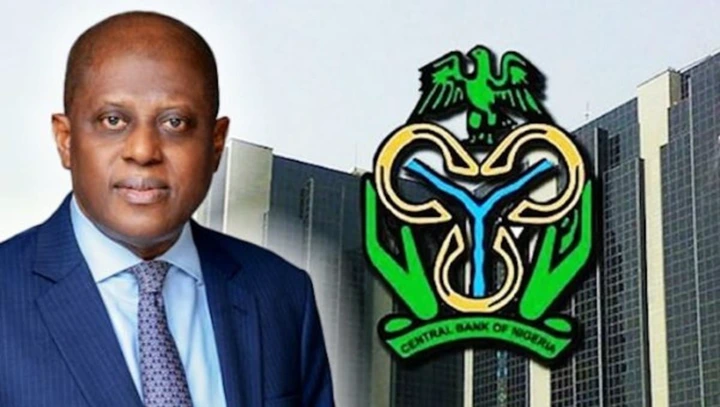
Since assuming office as Governor of the Central Bank of Nigeria on 22 September 2023, Olayemi Cardoso has steered the institution through one of the most consequential periods of reform in its recent history.
The mandate was clear: restore credibility, rebuild buffers, strengthen the banking system, deepen market transparency, and modernise the payments and financial infrastructure that underpins Africa’s largest economy.
What has followed is a sequence of deliberate, data-anchored interventions that have begun to reshape Nigeria’s monetary and financial landscape.
The results are measurable. External reserves have climbed above US$50 billion for the first time in roughly 17 years. Payments vision documents, agent-banking rules, cybersecurity tools, and foreign-exchange market reforms have been rolled out in rapid succession. These steps have drawn public commendation from President Bola Tinubu and, most recently, the Central Bank of the Year Award from Central Banking in London.
Commenting on the reforms, Mr. Bismarck Rewane, renowned economist and CEO of Financial Derivatives Company, declared that Nigeria is fast emerging from the throes of economic instability. He attributed this turnaround to the bold monetary policy reforms and transparency introduced by the Central Bank of Nigeria (CBN) under the current administration.
The currency has strengthened because of the discipline in the monetary policy framework, explicit inflation targeting, and a more transparent foreign exchange market,” Mr. Rewane explained.
In recent months, the naira has shown remarkable resilience, appreciating against major global currencies – a marked shift from the volatility of previous years. As of June 2025, inflation dropped to 22.22%, a significant improvement from the spikes seen throughout 2023 and early 2024.
Mr. Rewane credits this progress to a consistent and coherent macroeconomic strategy, particularly in tightening fiscal leaks and restoring investor confidence.

Resilient banking system
The most capital-intensive reform has been the banking-sector recapitalisation. By 31 March 2026 the exercise was complete: 33 banks had met the revised minimum capital requirements after raising roughly N4.65 trillion. Critically, about 72.55 percent of that capital was sourced domestically. The domestic share is significant. It reduced reliance on external funding at a time of global monetary tightening and demonstrated that Nigerian investors retained confidence in the sector’s long-term prospects.
In September 2025 the CBN introduced a Domestic Systemically Important Bank (DSIB) succession framework. The new rules require orderly, pre-approved succession planning for chief executives of banks whose failure would pose systemic risk. The measure closes a governance gap that had long worried supervisors and rating agencies. Continuity of leadership at the largest institutions is now subject to clearer regulatory expectations.
Inclusion was not neglected. In February 2026 the CBN approved a Non-Interest Banking Window for the Bank of Industry. The decision expands the range of Sharia-compliant financing options available to enterprises that prefer or require non-interest products, widening the formal financial net without diluting prudential standards.
Collectively analysts said these steps have thickened the capital and governance buffers of the banking system. Higher capital ratios improve loss-absorbing capacity; clearer succession rules reduce key-person risk; and the non-interest window brings previously underserved segments into regulated channels.
Clarifying the foreign-exchange market
Centre for the Promotion of Private Enterprise (CPPE) recently praised the CBN Cardoso’s transformative leadership over the past years, highlighting significant gains in transparency, credibility, and financial system stability.
CPPE’s Chief Executive Officer, Dr Muda Yusuf, noted that the CBN under Cardoso had successfully addressed longstanding challenges, including foreign exchange market distortions, weak corporate governance, and excessive monetary financing that had contributed to macroeconomic instability.
Few areas of Nigerian economic policy have been more contentious than the foreign-exchange market. Cardoso’s tenure has been marked by successive moves toward greater transparency, liberalisation and market-driven pricing.
On 15 May 2026 the CBN released the fourth edition of the Foreign Exchange Manual. The updated manual codifies operational rules intended to strengthen credibility, efficiency and market-based determination of the exchange rate. Parallel reforms in the Bureau de Change (BDC) segment gave licensed BDCs structured access to foreign exchange through authorised dealer banks.
A dedicated FX BDC Purchase Tracker was introduced to provide real-time oversight, improving compliance and reducing opportunities for opacity.
Two further liberalisation measures arrived in late March 2026. On 24 March new naira-settlement requirements were imposed on International Money Transfer Operators, enhancing the traceability of diaspora remittance flows.
The following day, 25 March, International Oil Companies were permitted to repatriate 100 percent of their export proceeds through authorised dealer banks. The IOC reform removed a long-standing restriction that had encouraged parallel-market activity and complicated corporate treasury management.
Complementing these market-access reforms, the CBN strengthened monitoring of crude-oil export terminals. Additional terminals were allocated for closer oversight, tightening compliance across the oil-and-gas value chain that remains Nigeria’s primary source of foreign-exchange earnings.
The cumulative effect has been a more transparent, more accessible and more rule-based FX market.
While challenges remain, the direction of travel—toward greater convertibility, clearer rules and better data—is unmistakable.
Transforming the Payments Ecosystem
Nigeria’s payments infrastructure has long been a source of both pride and frustration: high mobile-money and instant-payment volumes coexist with persistent concerns about agent reliability, fraud and interoperability. The Cardoso-era response has been a comprehensive strategic reset.
On September 9, 2025 the CBN inaugurated the Payments System Vision 2028 Project Committee. The committee’s work culminated in the formal launch of Payments System Vision 2028 on June 1, 2026. The new roadmap is organised around six pillars—Interoperability, Security, Inclusion, Innovation, Trust and Collaboration—and is explicitly designed to position Nigeria’s payments system for a more secure, inclusive and globally integrated digital economy.
Operational rules followed. Revised Agent Banking Guidelines issued on October 6, 2025 tightened consumer-protection standards, agent oversight, transaction controls and geo-location requirements, while introducing clearer sanctions for non-compliance. In 2026 further measures were added: geo-fencing and dual-connectivity requirements for point-of-sale terminals to improve traceability and resilience, and, from July 1, 2026, enhanced instant-payment security controls. Customers gained greater ability to set preferences and transaction limits; device authentication, identity verification and real-time fraud monitoring were strengthened.
These reforms recognise that the volume of digital transactions is rising rapidly. The policy response has been to harden the rails, rather than slow the growth.
Consumer Protection
Consumer trust is the foundation of financial intermediation. Several measures have targeted the practical points of friction and risk that ordinary users encounter.
A revised cash policy announced on December 2, 2025 adjusted withdrawal thresholds while removing restrictions and charges on cash deposits. The change supports more efficient cash management and removes a disincentive that had previously discouraged formal banking of cash.
In November 2025 financial institutions were directed to withdraw misleading or non-compliant advertisements and to strengthen transparency in their public communications. The directive reflects a broader insistence that marketing claims must match product reality.
Fraud-response protocols were tightened in 2026. Banks were instructed to build rapid-response mechanisms capable of significantly reducing the time between detection of electronic fraud and intervention.
On March 12, 2026 the BVN and watch-list framework was strengthened, enhancing identity verification and the ability to flag high-risk accounts. Eighteen days later, on March 30, the CBN deployed a Cybersecurity Self-Assessment Tool (CSAT) that enables regulated institutions to evaluate and improve their own cyber posture. Earlier in the month, on March 10, new automated AML/CFT/CPF standards were introduced to drive real-time monitoring and detection of financial-crime risks.
Taken together, these steps shift the regulatory emphasis from after-the-fact remediation toward continuous, technology-enabled prevention and faster recovery when incidents occur.
Modernising Financial Markets
Monetary-policy transmission and risk management depend on reliable benchmark rates and liquid markets. On April 17, 2026 the CBN introduced the Nigerian Overnight Financing Rate (NOFR), a transaction-based overnight benchmark designed to improve price discovery, transparency, monetary-policy transmission and risk management. The move replaces or supplements less robust reference rates and aligns Nigerian practice more closely with international standards.
Between 2025 and 2026 the Bank also moved to strengthen its direct oversight of fixed-income trading and settlement infrastructure. Parallel reviews of the discount window and liquidity-market arrangements aimed to improve the efficiency of liquidity management and the responsiveness of short-term rates to policy signals.
These technical reforms are less visible to the general public than reserve numbers or exchange-rate movements, yet they form the plumbing of a modern financial system. Better benchmarks and clearer market infrastructure reduce friction, lower uncertainty premiums and support more accurate pricing of risk.
Rebuilding external buffers
The most headline-friendly achievement under Cardoso has been the recovery of external reserves. In 2026 Nigeria’s external reserves crossed the $50 billion threshold—the highest level in approximately 17 years. The improvement reflects a combination of higher oil receipts, tighter FX-market management, improved remittance flows and greater confidence that has encouraged capital retention.
Diversification of the reserve portfolio advanced in parallel. Locally sourced gold, refined to London Bullion Market Association Good Delivery standards, was added to the nation’s external assets. The inclusion of gold provides a non-dollar, non-interest-bearing store of value that can act as a partial hedge against currency and geopolitical shocks.
Experts believe that higher reserves and a more diversified composition strengthen the country’s capacity to absorb external shocks, support the exchange rate in periods of pressure, and signal to investors that the authorities have rebuilt policy space.
Looking Forward
“The transparency and credibility gained from these reforms have restored confidence and improved price discovery, allowing for more efficient allocation of FX resources,” the CPPE stated.
The organisation also commended improvements in institutional governance, noting reduced political interference in policy decisions and enhanced operational independence. The CBN’s curtailment of unrestrained monetary financing was highlighted as a key factor in reducing fiscal dominance and macroeconomic distortions
In the banking sector, CPPE praised the introduction of recapitalisation measures to enhance bank soundness and strengthened regulatory frameworks designed to safeguard stability against global and domestic shocks
According to analysts, what is clear is the direction and the tempo. In a little over three years the CBN under Olayemi Cardoso has executed a coherent programme that simultaneously rebuilds capital, clarifies markets, hardens digital rails, protects consumers, modernises benchmarks and restores external buffers. The data—N4.65 trillion in fresh bank capital, reserves above $50 billion, a new overnight financing rate, a comprehensive payments vision, and a suite of operational reforms spanning FX, agent banking, cybersecurity and anti-fraud—provide measurable evidence of progress.
The Central Bank of the Year Award recognises this body of work. Sustaining and extending the gains will require continued discipline, technical competence and institutional independence. For the moment, the timeline of achievements stands as a record of deliberate reform in a complex and demanding environment.
SOURCE: tribuneonlineng.com
