

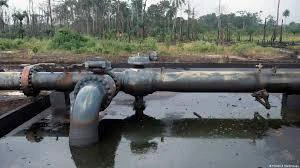
Nigeria’s oil sector may be showing signs of recovery, but the benefits are yet to reflect in the daily realities of citizens, raising fresh concerns about how national revenue is managed and distributed.
Data from the Nigerian National Petroleum Company Limited, Federation Account records, and transparency reports indicate a widening gap between rising oil earnings and the actual impact on the economy.
While higher production and favourable global prices have increased revenue potential, remittances into the Federation Account remain inconsistent. Minister of Finance, Wale Edun, recently stated that increased oil output provides more fiscal space, but available figures suggest a more complex reality.
In 2025, about N604.61B was remitted compared to a projected N4.2T, representing a significant shortfall. In Dec. 2025 alone, remittances dropped to N9.79B, one of the lowest figures recorded within the period.
However, following federal intervention, remittances rose sharply to about N1.804T in Feb. 2026, suggesting that enforcement measures may have a stronger influence on revenue flow than production levels alone.
Despite these inconsistencies, the Federation Account Allocation Committee (FAAC) continues to distribute large sums. About N1.928T was shared in Nov. 2025, while the revenue pool rose to N2.585T in Dec. 2025, with contributions from VAT and Customs offsetting fluctuations in oil revenue.
Major beneficiary states such as Rivers, Delta, and Lagos receive substantial monthly allocations, bolstered by derivation funds and internally generated revenue. Yet, many oil-producing communities continue to face infrastructure deficits, while broader economic indicators show persistent hardship.
Industry sources and analysts point to a structural issue within the revenue framework. According to findings, what is remitted to FAAC is not total oil earnings but what remains after multiple deductions.

Under the current system, gross revenue from crude oil sales is reduced by operational costs, joint venture obligations, debt servicing, taxes, and other statutory expenses. The balance, referred to as net revenue, is what is eventually transferred to the Federation Account.
This “net revenue system” means that government receipts reflect residual funds rather than total earnings, limiting the resources available for distribution.
For instance, if total oil revenue stands at N1T and deductions amount to N600B, only N400B is remitted. Analysts say this structure, though backed by existing legal and fiscal frameworks, reduces transparency and complicates public accountability.
Nigeria’s oil revenue management is guided by constitutional provisions and sector laws, including the Petroleum Industry Act, which allows for multiple deductions before remittance.
In a policy shift, Pres. Bola Tinubu, on Feb. 18, 2026, signed an executive order mandating direct remittance of oil revenues to the Federation Account. The move is seen as an attempt to address gaps created by layers of deductions within the system.
Economist Bismarck Rewane noted that Nigeria’s challenge is less about revenue generation and more about efficiency and distribution. Similarly, the Nigeria Extractive Industries Transparency Initiative has highlighted discrepancies between production data and actual disclosures.
Findings show a recurring pattern: oil is produced, revenue is generated, deductions are applied, reduced funds reach FAAC, allocations are made, yet the impact on citizens remains limited.
This raises a critical question, if trillions of naira are distributed monthly, why do poverty levels remain largely unchanged?
Analysts argue that Nigeria’s challenge is not the volume of oil produced but how much value is retained and effectively utilised. Until transparency improves and leakages are addressed, the country may continue to generate significant revenue without corresponding development outcomes.
SOURCE: Nigerian News Direct
