
Reversal’ll weaken investor confidence –OGUNCCIMA
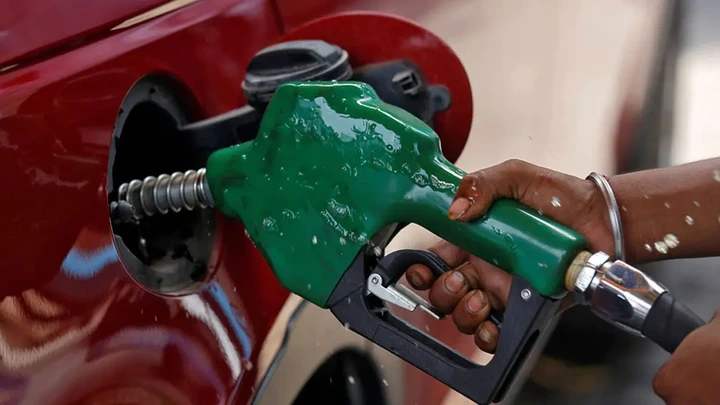
The federal government has backed down on its controversial plan to impose a 15 per cent import tariff on petrol and diesel, a decision that elicited mixed reactions from stakeholders.
While some civil society groups hailed the suspension as they had warned the move would hurt consumers and stifle competition, others have lampooned the government for backtracking.

The Nigerian Midstream and Downstream Petroleum Regulatory Authority (NMDPRA) announced the suspension via a statement signed by George Ene-Ita, Director of the Public Affairs Department on Thursday.
The proposed 15 per cent import duty on petrol and diesel had sparked mixed reactions across Nigeria’s downstream sector. Supporters viewed it as a move to protect local refineries, while critics warned it could push up fuel prices, passing the cost onto consumers.
The president’s approval of the duty was documented in a letter (Ref: PRES8197/HAGF/100/71/FIRS/40/88-2/NMDPRA/2) dated 21 October, addressed to the Attorney General of the Federation and Minister of Justice, the Federal Inland Revenue Service (FIRS), and the Nigerian Midstream and Downstream Petroleum Regulatory Authority (NMDPRA).
Titled “Re: Introduction of a Market-Responsive Import Tariff Framework on Premium Motor Spirit (PMS) & Diesel,” the letter was signed by Damilotun Aderemi, Private Secretary to the President. The approval followed a request from FIRS Chairman Zacch Adedeji, who had urged the government to implement the tariff to align import costs with domestic market realities. Adedeji had estimated that applying the duty to the Cost, Insurance, and Freight (CIF) value could raise petrol prices by around N99.72 per litre.
In response, NMDPRA reassured Nigerians of steady petroleum product supplies nationwide, maintaining volumes within acceptable sufficiency levels during this peak demand period. The Authority urged against hoarding, panic buying, or arbitrary price increases.
“It should also be noted that the implementation of the 15 per cent ad-valorem import duty on imported Premium Motor Spirit and Diesel is no longer in view,” the statement said.
According to NMDPRA, there is robust domestic availability of petroleum products, including PMS, AGO, and Liquefied Petroleum Gas (LPG), sourced from both local refineries and imports, ensuring timely replenishment of stocks at depots and retail outlets across the country.
Reacting to the 15 per cent fuel tax implementation suspension, the National Spokesperson, Nigerian Coalition of Civil Society Organisations (NCCSO), Mustapha Ahmed, said the move was a victory for foreign fuel importers and their local collaborators, whose agendum is to keep Nigeria dependent on imported products and frustrate the growth of local refineries.
Ahmed said: “The NCCSO expresses deep concern over the Federal Government’s decision to defer the commencement of the 15 per cent ad-valorem import duty on Premium Motor Spirit (PMS) and Diesel to the first quarter of 2026, as contained in the memo approved by President Bola Tinubu on November 7, 2025.
“While the decision is presented as an administrative adjustment for “technical alignment,” it is in fact a strategic victory for foreign fuel importers and their local collaborators, whose agenda is to keep Nigeria dependent on imported products and frustrate the growth of local refineries such as Dangote Refinery and other modular plants ready for operation.”
He added that the deferment to Q1 2026 was wrong and should be totally discouraged, with no further extensions.
He told the government to resist pressures from international traders and uphold its commitment to energy independence.
“All relevant agencies should monitor imports to prevent market distortion during the deferment period.
“The deferment is a temporary win for importers but a setback for Nigeria’s refining future. NCCSO urges President Tinubu to remain resolute and protect Nigeria’s local industries from external manipulation,” he said.
SOURCE: thesun.ng
