
… Licensing Reforms, Fiscal Incentives Drive Surge In Upstream Investor Interest
…37 New Evacuation Routes Significantly Curtailed crude theft
Nigeria’s crude oil production has reached 1.83 million barrels per day (mbpd) as of August, showing that the Project One Million Barrels, launched last year, is gaining strong momentum.

Beyond the rise in output, the upstream sector has seen renewed investor interest driven by transparent licensing rounds, fiscal incentives, and sweeping reforms, according to the Nigerian Upstream Petroleum Regulatory Commission (NUPRC).
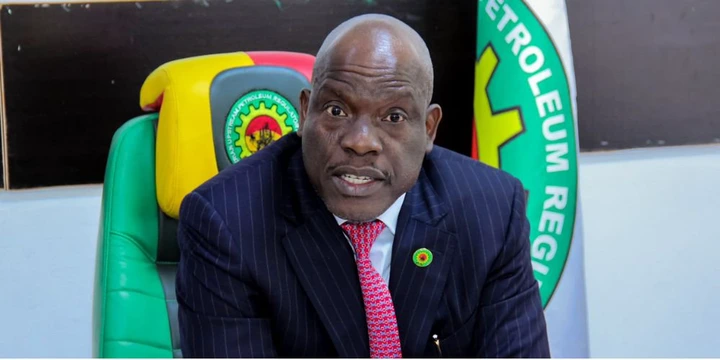
The Commission Chief Executive, Engr. Gbenga Komolafe disclosed this during his address at the 50th Anniversary of the Nigerian Association of Petroleum Explorationists (NAPE), held in Lagos.
The theme of he event is ‘NAPE @ 50: Pioneering the Future of Energy in Africa.’
Speaking on the topic, ‘Evolution of Oil and Gas Regulation in Nigeria: Opportunities, Achievements, and Regulatory Strategies for Upstream Resource Optimisation,’ the CCE said Nigeria’s upstream petroleum sector has evolved through decades of learning which was characterized by operational inefficiencies, overlapping regulations, opaque fiscal structures, and limited investor confidence hindered the sectoral growth.
However, the NUPRC boss said the trajectory changed with the enactment of the Petroleum Industry Act (PIA) in 2021.
Komolafe said the PIA ushered in a new era of governance, fiscal reform, and institutional realignment.
According to him, it represents a paradigm shift from static regulation to dynamic, performance-based governance and investor-centric policies anchored in transparency, clarity, and global competitiveness.
He said in line with the PIA, the NUPRC has embraced its mandate with a clear focus on upstream resource optimisation.
Toc achieve resource optimisation, the CCE said the regulator developed and unveiled a comprehensive Regulatory Action Plan (RAP), signalling to both domestic and international stakeholders that Nigeria is ready to lead with clarity, confidence, and competitiveness.
The NUPRC boss said its targets to raise Nigeria’s crude oil production is yielding results as its initiatives including the Project One Million Barrels Initiative, launched in 2024 has driven oil output to a record 1.83 million barrels per day.
The NUPRC boss said, “Through our Project One Million Barrels Initiative, launched in 2024, Nigeria is actively ramping up crude oil production by reactivating dormant fields, fast-tracking regulatory approvals, and enhancing operational efficiencies across the upstream value chain.
“With a clear target of increasing production from 1.46 million barrels per day (bpd) to 2.5 million bpd by 2026, the initiative has already demonstrated strong momentum with current unreconciled daily production averaging 1.7 – 1.83 million bpd.”
The success is also linked to the protection of hydrocarbon assets in the oil-rich regions.
Komolafe highlighted the impact of the approval of the 37 new evacuation routes, which he said has significantly improved accountability in the industry.
He said the 37 new evacuation points are aimed at expanding evacuation infrastructure in order to secure production volumes.
The CCE said, “The approval of 37 new evacuation routes, coupled with intensified collaboration with national security agencies, has significantly curtailed crude theft and enhanced accountability across the industry.
“At the same time, the enforcement of the Domestic Crude Supply Obligation (DCSO) is securing consistent feedstock to local refineries, strengthening Nigeria’s internal supply chains and building long-term economic resilience.”
Komoafe also noted the success of the 2024 licensing rounds. According to him, the licensing rounds were conducted transparently, with unmatched competitiveness and investor engagement.
He said, “Our recent bid rounds – anchored on quality data access, regulatory certainty, and an investor-centred reform agenda – recorded unprecedented successes.
“These include: the 57 PPL awards of 2022, the 2022 Mini-Bid Round, and the 2024 Licensing Round. Each of these rounds was conducted with unprecedented transparency, unmatched competitiveness, and remarkable investor engagement.
“Fiscal reform has indeed been a key lever. The Commission has implemented competitive royalty regimes, zero hydrocarbon tax for certain projects, and other fiscal’ consolidation mechanisms tailored to support project viability.”
On the socio-developmental front, the CCE said the Host Community Development Trust (HCDT) framework, fully operational through the HostComply digital platform, has created unprecedented transparency and direct community impact, fostering trust, reducing conflict, and reinforcing social licence to operate.
According to him, the Commission is working collaboratively with industry stakeholders to fully monetise Nigeria’s abundant gas resources through strategic LNG expansion, deployment of floating production solutions, and the development of cross-border pipelines.
The CCE added that “The transformative impact has been remarkable. Our oil and gas sector has seen a significant surge in investment.
“New investors, empowered by clarity and quality, have entered our sector, oil and gas reserves and production have increased, while rig counts have surged from 8 in 2021 to 43 currently, with projections to reach 50 by the end of the year.
“This momentum reflects a bold new chapter; one driven by ambition, resilience, and opportunity.”
SOURCE: thewhistler
