
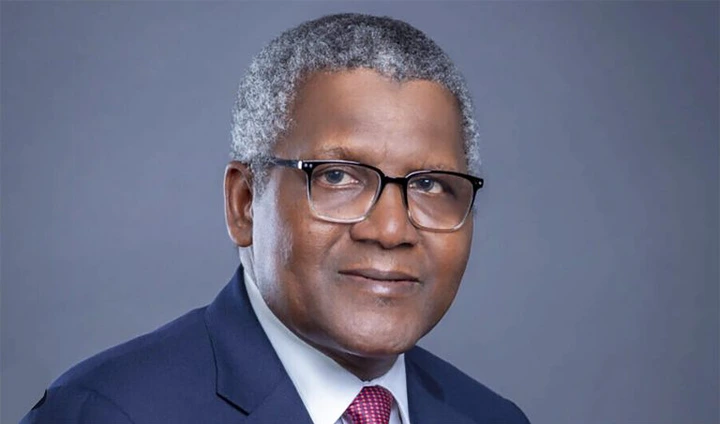
According to a report by This Day Live on Friday, August 22, 2025, Aliko Dangote, the President of Dangote Industries Limited (DIL), has defended his business empire against long-standing allegations of attempting to monopolise key sectors in Nigeria.
He maintained that his investments are focused on strengthening the economy and protecting Africa from becoming a dumping ground for foreign products.
His statement comes at a time when his newly launched $20 billion refinery is attracting attention and sparking renewed debates about his business strategies.
For several years, the Dangote Group has been at the centre of controversies over claims of unfair dominance in industries such as cement, sugar, and other essential commodities.
Critics have often suggested that the group creates a difficult environment for competitors, while supporters see it as a pioneer filling gaps in Nigeria’s struggling industrial base.
The concerns became more pronounced following the commencement of operations at his massive refinery, regarded as the largest in Africa.
Dangote has, however, dismissed the accusations, stressing that he has never prevented other investors from venturing into similar businesses.
He explained that his ventures were not supported by government backing or special incentives, insisting that his achievements were the outcome of perseverance and personal risk.
According to him, investment in infrastructure and heavy industries is open to anyone willing to take the challenge.
In a recent feature article, Bloomberg pointed out that some of Dangote’s biggest business achievements were recorded in sectors where the Nigerian government imposed restrictions on imports.
This included cement and sugar production, where his companies have grown to become major players.
The report noted that these policies played a significant role in shaping the company’s dominance within the local market.
Dangote also reflected on the difficult journey of establishing his refinery, admitting that the challenges were overwhelming.
He revealed that the stress of getting the project off the ground was so intense that if he had foreseen the obstacles, he might have reconsidered starting it.
Despite the struggles, the refinery eventually came to life, promising to address Nigeria’s heavy dependence on imported petroleum products.
The report further highlighted the difficult operating environment in Nigeria, where citizens are left to provide basic needs for themselves.
From unreliable electricity to insufficient water supply, both the wealthy and the poor rely on private solutions such as generators and boreholes.
These conditions, according to the report, make large-scale investments like Dangote’s refinery even more complicated to manage.
Dangote has continued to deny allegations of wrongdoing in relation to the refinery project.
He rejected claims that his company benefited from preferential access to foreign exchange during construction.
He maintained that his businesses were built legitimately, stressing that his focus remains on solving economic challenges rather than engaging in corrupt practices.
He said: No one at the company has been charged. “We have made our money clean. “We are not part of the corruption. We are part of the problem-solving.
SOURCE: Ada_NewsGo
