

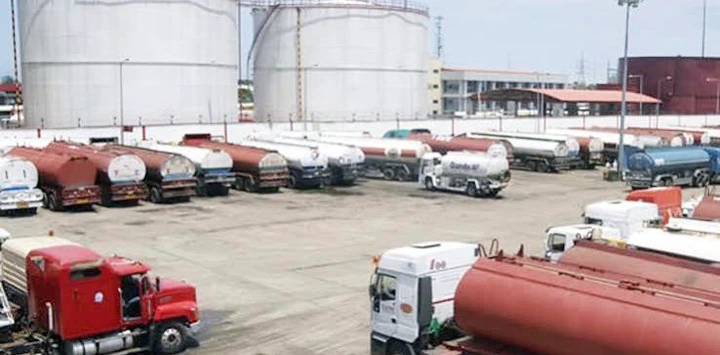
For decades, Nigeria’s paradox in the petroleum sector was difficult to explain: a major crude oil producer that routinely depended on imported petrol to keep its economy moving. That contradiction is now being challenged by the emergence of large-scale domestic refining, particularly the Dangote Petroleum Refinery, but the latest call by the Independent Petroleum Marketers Association of Nigeria (IPMAN) suggests that the transition from import dependence to domestic supply is far from complete.
IPMAN’s National President, Abubakar Shettima, has asked independent petroleum marketers to prioritise products from local refineries and urged the Federal Government to discourage continued petrol importation.
His position goes beyond a call for marketers to change their suppliers. It raises a larger question about whether Nigeria can build a downstream petroleum market in which domestic refining becomes the principal source of supply, while imports are retained only as a genuine market-balancing mechanism.

Shettima said IPMAN, which he described as controlling more than 80 per cent of Nigeria’s downstream retail infrastructure and operating over 150,000 outlets nationwide, had a strategic role to play in the transition. He argued that sourcing more products locally would eliminate some freight and port-related costs, support domestic employment and strengthen the country’s energy security.
His appeal is also linked to a new investment proposition. Rather than remaining merely off-takers of refined petroleum products, Shettima urged independent marketers to become equity owners in refining infrastructure, particularly through the planned public offering of the Dangote refinery.
“The National President of IPMAN therefore calls on her members nationwide to aggressively capitalise on this share sale,” he said, describing it as an opportunity for marketers to evolve from buyers of petroleum products into owners of primary production infrastructure.
The argument comes at a significant point in Nigeria’s downstream evolution. The Dangote refinery, with a nameplate capacity of 650,000 barrels per day, has dramatically altered the country’s refining landscape.
The Economist Intelligence Unit said in an assessment published in May that the refinery’s ramp-up was fundamentally reshaping the downstream sector and had significantly reduced Nigeria’s dependence on imported refined petroleum products. It said the refinery supplied nearly 80 per cent of domestic petrol demand in April as operations approached full capacity.

Yet the figures also show why declaring the end of petrol imports would be premature.
Data from the Nigerian Midstream and Downstream Petroleum Regulatory Authority (NMDPRA), as reported from its July 2026 sector factsheet, showed that domestic petrol supply fell to 25.8 million litres per day in July from 32.5 million litres per day in June. Imports, meanwhile, rose from 18.1 million litres per day to 19.7 million litres per day. Total petrol supply consequently declined from 50.6 million litres per day in June to 45.5 million litres per day in July.
The figures illustrate the central difficulty confronting policymakers: Nigeria now has substantial domestic refining capacity, but capacity alone does not guarantee uninterrupted supply.
Indeed, domestic refineries supplied about 75 per cent of Nigeria’s petrol in the first seven months of 2026, according to an analysis of NMDPRA data. Domestic supply was estimated at about 7.41 billion litres between January and July, compared with about 4.27 billion litres in the corresponding period of 2025.
The first quarter was even more encouraging. Local refineries supplied 3.18 billion litres of petrol between January and March, accounting for 76.7 per cent of total supply, while imports fell to about 965.52 million litres. Petrol imports were down by 60.2 per cent from the corresponding period of 2025.
But Professor Wumi Iledare, an energy economist and petroleum policy expert, has cautioned against interpreting the decline in imports as evidence that Nigeria has permanently eliminated its dependence on foreign supplies.
Iledare argues that Dangote’s contribution is substantial but that the downstream market remains influenced by import parity. In his assessment, the mere absence of an imported cargo does not mean imports have ceased to influence prices and supply decisions.
“Even when no petrol cargoes are landing, the credible threat of imports remains the market anchor,” Iledare said, arguing that imports also remain a risk-management tool against stock shortages, demand surges, logistics disruptions and refinery operational problems.
That position provides an important counterweight to IPMAN’s call for stringent measures against petrol imports. Completely shutting the door to imports without ensuring adequate and consistent domestic supply could create another problem: shortages.
Professor Adeola Adenikinju of the University of Ibadan has similarly argued that the debate should ultimately be judged from the standpoint of consumers and competition. In his view, marketers will naturally favour imported products if locally refined petrol is more expensive or if domestic producers cannot supply the quantities required.
“At the end of the day, it is the consumers that we have to think about,” Adenikinju said, stressing the need to preserve competition.
This is where the disagreement over imports becomes more complex. IPMAN sees imports as a drain on foreign exchange and a threat to domestic industry. Economists, however, warn that restricting imports administratively without fixing the underlying cost structure could simply transfer inefficiencies to consumers.
Energy lawyer Ayodele Oni has pointed to one of the less obvious complications: local refining does not mean that every input into the Nigerian refining process is necessarily local or cheap.
Oni said Dangote had faced challenges obtaining sufficient domestic crude and therefore had to import crude for processing. The implication is that some of the foreign-exchange and international-price exposure Nigeria hoped to eliminate through domestic refining can remain embedded in the production chain.
Oni has also cautioned against assuming that more refining capacity automatically means dramatically cheaper petrol. While domestic refining can reduce certain logistics costs, he noted that crude remains an internationally priced commodity and that the cost of crude, exchange rates and other market factors continue to influence the price of refined products.
The crude supply question is therefore critical. The Federal Government’s decision to support crude sales in naira to local refineries was partly designed to reduce foreign-exchange pressure and make domestic refining more commercially viable. Earlier government calculations indicated that the arrangement could significantly reduce the monthly dollar demand associated with supplying local refineries.
But the Dangote refinery’s experience shows that crude availability remains an important constraint. In July, the company moved to dollar-based pricing for its domestic fuel sales, citing difficulty obtaining sufficient crude through the naira-for-crude arrangement. Dangote said it required roughly 13 to 15 crude cargoes monthly but was receiving only seven from NNPC at the time, forcing it to source the balance internationally.
That development matters because Nigeria’s ambition is not merely to refine crude domestically, but to establish an integrated petroleum value chain in which Nigerian crude feeds Nigerian refineries, refined products serve Nigerian consumers and surplus products generate export earnings.
The International Monetary Fund had earlier estimated that full operation of the Dangote refinery could improve Nigeria’s current account and foreign reserves through lower refined-fuel imports and higher refined-product exports. Its modelling projected an annual improvement of about $5.5 billion in the current account and official reserves under its assumptions.
There are already signs that this export potential is becoming real. Dangote exported substantial volumes of petrol in 2026, including shipments to markets outside Nigeria, while the refinery has increasingly positioned itself as a regional refining hub. Its management has also announced plans to expand capacity further. Reuters reported this week that Dangote intends to double the refinery’s current 700,000-barrel-per-day capacity by 2029, alongside broader investments in refining and petrochemicals.
SOURCE: Independent
