
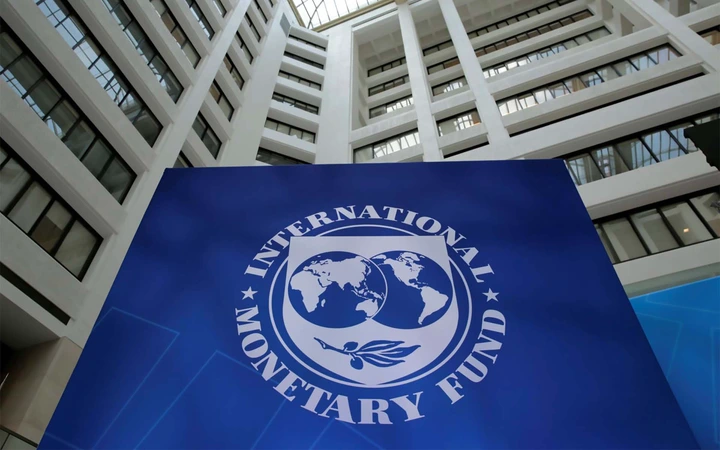
Nigeria’s exclusion from the International Monetary Fund’s (IMF) list of Africa’s fastest-growing economies has again questioned the policies of President Bola Tinubu-led administration, economic analysts have said.
The IMF, in its Regional Economic Outlook report for sub-Saharan Africa, launched on Thursday, October 16, in Washington, DC. excluded Nigeria from the list of Africa’s fastest-growing economies, and listed Benin, Côte d’Ivoire, Ethiopia, Rwanda, and Uganda as the fastest-growing economies on the continent
The report, launched at the ongoing annual meetings of the IMF and World Bank, said the region had demonstrated remarkable resilience to “a series of major shocks over the past several years.
“It features several of the world’s fastest-growing economies, including Benin, Côte d’Ivoire, Ethiopia, Rwanda, and Uganda. However, economic performance remains markedly weaker in resource-intensive countries and in several conflict-affected states.
“In these economies, which represent most of the region’s population, gains in income per capita remain modest—around one per cent a year on average, and less in the poorest countries,” part of the report read.
Reacting to this, economists questioned the reforms and policies of the current administration, arguing that they further impoverished many Nigerians.
The Tinubu administration has made the removal of petroleum subsidy and naira devaluation its core policy, which analysts said had impoverished more Nigerians and eroded the middle class.
Human rights lawyer Femi Falana is among eminent Nigerians who believe the policies have decimated Nigerian middle class, further worsening the living conditions of millions of citizens.

“Most Nigerians cannot afford three square meals a day. The neoliberal policies of the government have wiped out the middle class.
“The government must go back to the drawing board and review each of these policies, especially those pushed by the IMF and World Bank, in the interest of Nigerians. It is in the interest of the government to review its policies as soon as possible,” Falana stated.
A Development Economist, Celestine Okeke, said the removal of petroleum subsidy and floating of the exchange rate are not enough. He stressed the need for specific policies in agriculture, trade and investments and other specific sectors of the economy.
“What is the economic policy of the current administration in specifics? For instance, the specific policies on agriculture, transport, goods production, trade and investment. This is why we are having these issues. So, when you implement World Bank reforms on fuel subsidy removal, it is not an economic development policy, rather foreign policy reforms,” Okeke told The ICIR.
Commenting in a similar vein, the Chief Executive Officer of CFG Advisory, Tilewa Adebajo, said Nigeria’s currency devaluation had given more opportunities to its West African neighbours, which favours them to buy up Nigerian grains and other agricultural commodities.
“In terms of pricing, because of the way currency has been devalued, we’ll still keep having issues with lower pricing because it’s favouring our West African neighbours more than those doing agri-business in Nigeria.
“We need to take a look at our agricultural policies, which have a lot of role to play in pruning down inflation, while the food belt is under the siege of insecurity.”
He added that the government needed to focus on core inflation even when it’s recording disinflation in the economy.
The government needs to secure the farming belts and ensure that farmers in IDP camps return to work to lessen food inflation, he added.
Furthermore, the IMF said economic growth in sub-Saharan Africa was projected to remain at 4.1 per cent in 2025 — the same rate as in 2024 — with a modest increase expected in 2026.
Tinubu introduced sweeping reforms on assuming office on May 29, 2023, including currency liberalisation and fuel subsidy removal.
The two policies have triggered a high cost-of-living crisis, with energy costs, food prices and other household commodities on the rise, pushing the poverty levels to alarming heights.
The removal of fuel subsidies, in particular, caused petrol prices to soar, triggering ripple effects across the economy, from rising transport fares to soaring food prices and general inflation.
SOURCE: icirnigeria.org
