

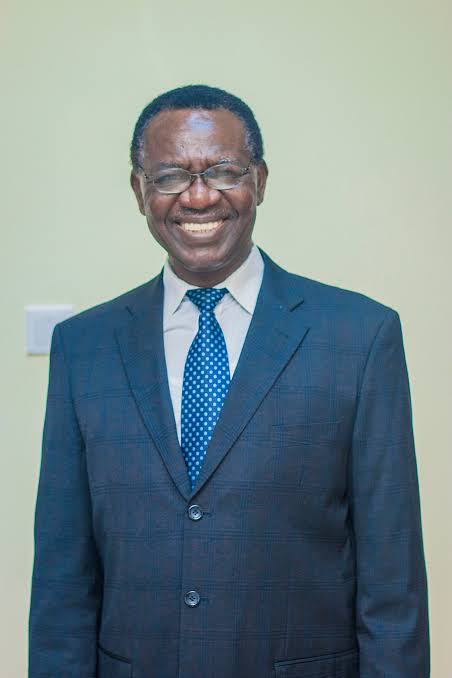
By Saidu Abubakar
When Dr. Ibe Kachikwu, former Minister of State for Petroleum Resources, spoke recently at the NCDMB Business Mentorship Series, his central message was simple but sobering: political interference continues to cripple Nigeria’s oil and gas institutions.
His call to insulate NNPC Limited, NUPRC, and NMDPRA from politics is not new, but it is a reminder worth heeding at a time when Nigeria urgently needs efficiency, investor confidence, and energy security.
Lending his weight behind Kachikwu’s call, Valuechain reports, Professor Emeritus of Petroleum Economics, Wumi Iledare, stressed that the former minister was also right to spotlight Nigeria’s unusually high production costs, inflated project expenses, and the burden of multiple taxation, adding that “these are not merely technical inefficiencies; they represent governance failures that erode value for the nation.
“When procurement lacks transparency and costs spiral unnecessarily, citizens lose the dividends that oil wealth ought to bring. Cost efficiency, transparency, and accountability are not optional; they are the lifeblood of a viable petroleum economy”.
Iledare also said that the truth is that Nigeria’s petroleum sector has never been short of resources; what it lacks is governance. Institutions established to drive policy, regulation, and commerce have been entangled in overlapping mandates, political patronage, and fiscal instability. When leadership appointments are shaped more by loyalty than competence, regulators become weak, operators uncertain, and investment confidence fades.
Kachikwu’s argument, Iledare noted further, aligns with the spirit of the Petroleum Industry Act (PIA), which sought to create clarity of roles: policy at the Ministry of Petroleum Resources, regulation through NUPRC and NMDPRA, and commercial operations under NNPC Limited. But in practice, these lines have blurred. The result is what feels like new wine poured into old wineskins — a structure that cannot sustain the weight of reform.
“Equally important was his emphasis on technology adoption. Real-time pipeline monitoring, predictive maintenance, automation, and artificial intelligence can indeed revolutionize exploration and production. Yet, technology cannot substitute for discipline in execution. Without governance integrity, even the most advanced tools will be undermined by theft, vandalism, and institutional inertia.
“On the Niger Delta question, Kachikwu underscored the need to engage host communities sincerely and manage the Host Community Development Fund (HCDF) transparently. This is not charity — it is equity. Genuine engagement builds trust, reduces militancy, and creates a stable foundation for long-term operations. Without it, the cycle of grievance and disruption will continue.
Still, his speech, Iledare recalls, was more diagnostic than prescriptive. He rightly identified the illness — political interference, regulatory uncertainty, chronic underinvestment, and weak execution — but he offered few concrete remedies for restructuring institutions to deliver better outcomes. Calling for bigger intervention funds, tax holidays, or co-investments is valid, but without governance reform, such measures risk being captured by the same inefficiencies he condemned.
“The larger point is clear: Nigeria’s problem is not oil scarcity but governance scarcity. Hydrocarbons can translate into jobs, foreign exchange, power, and prosperity, but only if managed with efficiency, effectiveness, equity, and ethics. The PIA provides the framework. What remains is the political will to uphold it, free from interference and expediency”.
Perhaps the way forward lies in returning to the basics: respecting institutional boundaries, curbing cost inefficiencies, embracing transparency, and embedding ethics in decision-making, Iledare opined.
He added that “these are not abstract ideals; they are the practical steps needed to convert diagnosis into cure. If Nigeria embraces them with discipline, the petroleum sector can move from paradox to performance, and hydrocarbons can finally serve as a bridge to sustainable prosperity,” Valuechain reports Iledare as inferring.
