

By Ese Ufuoma
The nude protest by women in Rivers State over the new refinery agreement between the NNPC Limited and two Chinese firms is more than a local grievance. It reflects a growing national frustration over Nigeria’s troubled refinery rehabilitation programme, the lack of transparency surrounding billions of dollars spent on repairs by past administrations, and the exclusion of host communities from decisions that directly affect them.
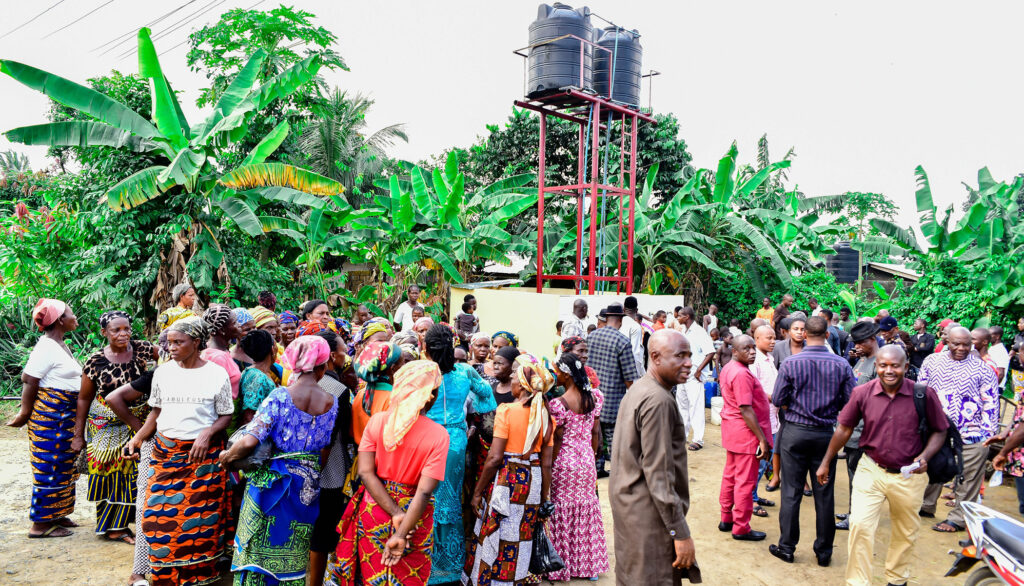
Women from the Alesa community in Eleme Local Government Area barricaded the gate of the Port Harcourt refinery, accusing the Federal Government and NNPC of sidelining host communities in negotiations concerning the future of the facility. The protesters argued that despite decades of oil exploration on their land, poverty, unemployment and environmental degradation remain their reality.
The immediate trigger was the Memorandum of Understanding signed between NNPC and two Chinese firms, Sanjiang Chemical Company Limited and Xingcheng Industrial Park Operation and Management Co. Ltd, for the completion, operation and possible expansion of the Port Harcourt and Warri refineries.
While NNPC described the deal as part of efforts to achieve “best-in-class sustainable performance” and revive Nigeria’s refining sector, critics say the secrecy surrounding the agreement has fuelled suspicion.
The protesters’ concerns are not isolated. Nigeria has spent billions of dollars rehabilitating refineries in the past, yet many still struggle to operate consistently. The Port Harcourt refinery alone reportedly received about $1.5 billion in rehabilitation funding under former President Muhammadu Buhari’s administration, yet public confidence in its operation remains weak.
This history explains why many Nigerians are questioning why another agreement is being signed before the results of previous investments are fully explained. Civil society groups have also demanded greater accountability, arguing that repeated rehabilitation announcements have not translated into reliable domestic refining capacity.
Beyond transparency concerns, the protest also exposes a deeper Niger Delta problem: the feeling of exclusion among oil-producing communities. For decades, host communities have argued that they bear the environmental and social costs of oil operations while receiving limited economic benefits in return. The women protesters openly complained about unemployment, loss of farmland and worsening hardship despite living beside one of Nigeria’s most strategic energy assets.

The symbolism of elderly women staging a nude protest is particularly significant in the Niger Delta, where such demonstrations traditionally signal deep anger and desperation. It suggests that local patience with government promises is wearing thin.
Yet, despite the controversy, the refinery partnership could still offer opportunities if properly managed. Nigeria desperately needs functioning refineries to reduce fuel imports, conserve foreign exchange and strengthen energy security. Technical partnerships with experienced foreign firms may help revive ageing infrastructure and improve operational efficiency.
However, the success of any refinery revival plan will depend not only on engineering expertise but also on public trust. Without transparency, community engagement and visible economic benefits for host communities, even well-intentioned reforms risk facing resistance.
The Rivers protest therefore sends a broader warning to policymakers: energy reforms in Nigeria can no longer succeed through closed-door agreements alone. In an oil-producing region already burdened by decades of distrust, inclusion may prove just as important as investment.
