
By William Emmanuel Ukpoju
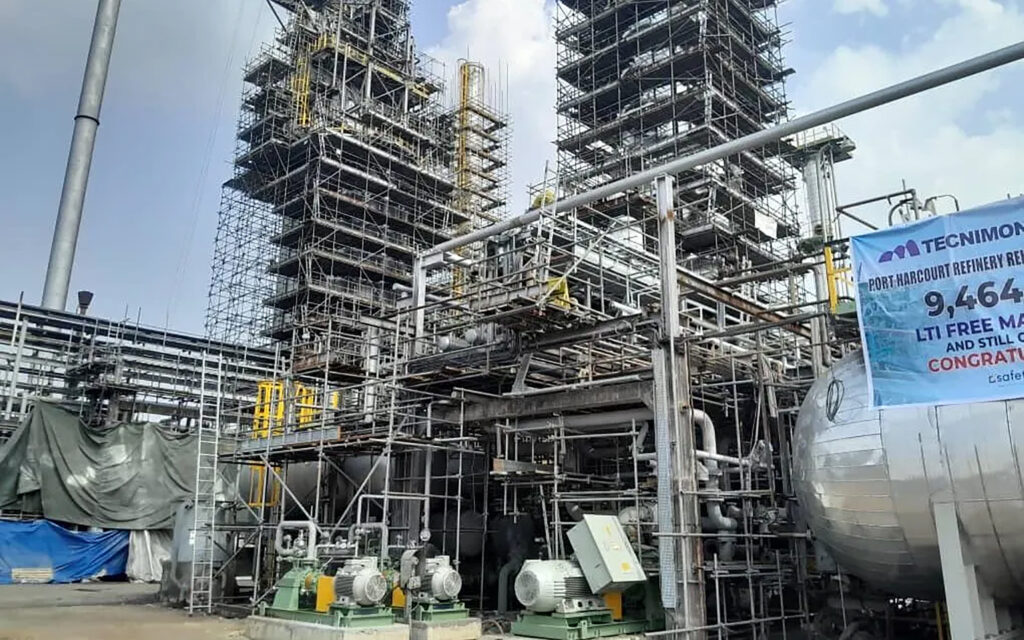
For decades, Nigeria’s state-owned refineries have stood as monuments to waste, policy inconsistency, and broken promises. Built with the ambition of making Africa’s largest crude producer self-sufficient in refined petroleum products, the facilities in Port Harcourt, Warri, and Kaduna have instead consumed billions of dollars in rehabilitation costs while operating far below their combined installed capacity of 445,000 barrels per day.
Now, the Nigerian National Petroleum Company Limited (NNPC Ltd) is once again attempting to revive the country’s troubled refining sector through a fresh Memorandum of Understanding with Chinese firms, Sanjiang Chemical Company Limited and Xingcheng Industrial Park Operation and Management Company. The deal, which centres on restarting and expanding the Port Harcourt and Warri refineries, is being presented as a new technical equity partnership capable of succeeding where previous interventions failed. But across the industry, scepticism remains widespread.
Critics argue that Nigeria has walked this path too many times before. Over the years, successive governments signed multiple MoUs with China, India, Saudi Arabia, and Russia to rehabilitate or build refineries, yet most of those agreements never translated into tangible results. In one of the most ambitious cases, Nigeria entered a proposed $23 billion refinery partnership with Chinese financiers, expected to boost domestic refining capacity, but years later, investigations found little or no meaningful progress on the project sites.
Industry concerns have also intensified because of the nature of the latest partners. Questions are being raised over whether firms associated primarily with chemicals and industrial park operations possess the technical depth required to rehabilitate ageing and highly complex refinery infrastructure. Recent criticism from stakeholders described the companies as having “nothing to offer our refineries,” while others insist the country risks repeating another expensive cycle of failed refinery promises.
The doubts are understandable. Nigeria has reportedly spent billions of dollars on turnaround maintenance projects over the years, yet the refineries repeatedly shut down shortly after being declared operational. In the case of the Warri Refinery alone, reports emerged that nearly $900 million was spent on rehabilitation, only for the facility to suffer another shutdown within months over technical and safety concerns.
Against this backdrop, the latest Chinese refinery deal is more than another energy agreement. It is a major test of transparency, accountability, and whether NNPC has genuinely learned from decades of costly failures. Can this new model finally deliver functional refineries that meet Nigeria’s energy needs, reduce dependence on imported fuel, and restore confidence in public sector energy investments? Or is the country heading into yet another cycle of huge spending, opaque agreements, and disappointing outcomes? This feature examines the history, the politics, the economics, and the hard questions surrounding Nigeria’s latest refinery gamble.
A Familiar Promise, A New Structure

Nigeria’s refining story has long been defined by ambition repeatedly undermined by execution failures. The latest move by the Nigerian National Petroleum Company Limited (NNPC Ltd) to enter into a new partnership with Chinese firms to rehabilitate and operate its refineries once again places the country at a crossroads. On the surface, the deal appears to signal a shift in strategy, from government-funded repairs to a performance-driven technical equity model. But beneath the optimism lies a deeper question that has trailed Nigeria’s refining sector for decades: what makes this time different?
This is not merely a question of engineering or financing. It is a test of governance, institutional discipline, and whether Nigeria has truly learned from the billions of dollars previously spent with little or no return.
To understand the significance of the New Deal, one must first confront the scale of past failures. Nigeria’s state-owned refineries, located in Port Harcourt, Warri, and Kaduna, were once envisioned as the backbone of domestic energy security. Instead, they have become enduring symbols of inefficiency and fiscal waste.
Over the past decade alone, successive administrations approved multiple turnaround maintenance (TAM) projects, often involving foreign contractors and substantial public funding. Estimates suggest that between $25 billion and $27 billion has been spent on refinery rehabilitation efforts since 2013. Yet despite these enormous investments, output has remained inconsistent at best and, at times, nonexistent.
The pattern has been depressingly predictable. Funds are approved, contracts are awarded, work is declared completed, and operations briefly resume, only for the facilities to shut down again within months. Fresh allocations and renewed promises of revival follow each cycle.
This history has understandably eroded public trust. It has also raised serious concerns among investors about the credibility of Nigeria’s downstream oil sector. Against this backdrop, any new deal is bound to be met with scepticism.
Why NNPC Is Trying Again
Despite this troubled past, NNPC’s decision to pursue another refinery rehabilitation strategy is not entirely surprising. Several structural and strategic pressures are converging to force action.
First is the issue of energy security. Nigeria, Africa’s largest crude oil producer, remains heavily dependent on imported refined petroleum products. This paradox has significant economic consequences, including pressure on foreign exchange reserves and vulnerability to global supply disruptions.
Second is the changing competitive landscape. The emergence of large-scale private refining capacity, most notably the Dangote Refinery, has fundamentally altered the dynamics of the sector. For the first time, Nigeria has a domestic player capable of meeting a substantial portion, if not all, of the country’s fuel demand.
This development presents both an opportunity and a challenge for NNPC. On one hand, it reduces the urgency of fixing state-owned refineries purely for supply reasons. On the other hand, it raises existential questions about NNPC’s role in the downstream market. If private operators can deliver efficiency and scale, what justification remains for continued state participation in refining?
Third is the transformation of NNPC itself. Following the enactment of the Petroleum Industry Act (PIA), the company has been repositioned as a commercial entity expected to operate profitably. This shift imposes new expectations. NNPC can no longer function as a conduit for government spending without delivering returns. Its investments must now be economically justified. It is within this context that the new partnership model must be understood.
A Different Model on Paper
At the heart of the new deal is a technical equity partnership structure. Unlike previous arrangements where contractors were paid upfront to carry out repairs, this model seeks to align incentives by tying returns to performance.
Under this framework, the Chinese partners are expected to invest capital, bring technical expertise, and participate in the operation of the refineries. Their returns will depend on the facilities achieving and sustaining production targets.
This represents a significant conceptual shift. In theory, it addresses one of the key weaknesses of past efforts: the lack of accountability for outcomes. When contractors are paid regardless of performance, there is little incentive to ensure long-term operational success. By contrast, an equity-based approach encourages partners to prioritise efficiency, maintenance, and profitability.
The deal also appears to adopt a broader industrial perspective. Rather than focusing solely on fuel production, it envisions the development of integrated energy and petrochemical hubs. This could enhance value addition and create new revenue streams beyond refined products.
Yet, while these features are promising, they remain theoretical advantages. The real test lies in implementation.
The Governance Question
If there is one issue that will ultimately determine the fate of this deal, it is governance. Nigeria’s oil sector has long struggled with transparency and accountability. From opaque contracting processes to unclear financial flows, these challenges have undermined both performance and public confidence.
For the new refinery partnership to succeed, it must break decisively from this past. This means more than simply signing agreements with credible partners. It requires full disclosure of the terms of the deal, including equity structures, financing arrangements, and revenue-sharing mechanisms.
Stakeholders, including the National Assembly, civil society, and industry experts, must have access to sufficient information to assess whether the agreement serves the national interest. Without such transparency, suspicions of mismanagement or undue advantage will persist, regardless of the deal’s actual merits.
Moreover, robust oversight mechanisms must be put in place to monitor implementation. This includes clear performance benchmarks, regular reporting, and independent audits. Without these safeguards, even a well-structured agreement can quickly unravel.
Institutional Discipline and the Human Factor
Beyond governance, there is the question of institutional capacity. Nigeria’s refining challenges have not been purely technical; they have also been managerial.
Past failures have often been attributed to poor maintenance culture, weak operational discipline, and political interference. Equipment may be repaired, but without consistent upkeep and professional management, breakdowns are inevitable.
The new partnership model seeks to address this by involving experienced international operators. However, their effectiveness will depend on the extent to which they are allowed to function without undue interference.
If decision-making remains subject to political considerations such as employment pressures, pricing controls, or contract variations, the benefits of technical expertise may be diluted. For the partnership to deliver results, it must be insulated from the kinds of disruptions that have plagued previous efforts.
This is perhaps one of the most difficult reforms to achieve, as it requires a fundamental shift in how state-owned enterprises are managed in Nigeria.
Market Realities and Economic Viability
Even if the refineries are successfully rehabilitated, another critical question remains: will they be economically viable?
The global refining industry is highly competitive, with margins often determined by efficiency, scale, and access to markets. Nigeria’s refineries will have to compete not only with imports but also with modern, privately owned facilities that are designed for optimal performance.
The Dangote Refinery, for instance, represents a new benchmark in terms of capacity and efficiency. Its ability to produce a wide range of refined products at scale could significantly influence market pricing and supply dynamics.
In this environment, NNPC’s refineries must operate at high utilisation rates and maintain cost competitiveness. Any inefficiencies, whether due to outdated technology, operational delays, or administrative overhead, could quickly erode profitability.
There is also the issue of pricing policy. If government interventions distort market prices, it could undermine the commercial viability of the refineries. Conversely, fully deregulated pricing could expose inefficiencies and make it difficult for state-owned facilities to compete. Balancing these factors will be crucial to the long-term success of the project.
Lessons from the Past
The history of refinery rehabilitation in Nigeria offers several lessons that should inform current efforts.
First, funding alone is not sufficient. The billions spent on previous turnaround maintenance projects demonstrate that financial resources, in the absence of accountability, can be easily wasted.
Second, technical fixes cannot substitute for systemic reform. Even the best engineering solutions will fail if underlying governance and management issues are not addressed.
Third, transparency is essential for building trust. Public scepticism is not merely a perception problem; it is rooted in a long record of unfulfilled promises.
Finally, there must be a clear strategic vision. Rehabilitating refineries should not be an end in itself but part of a broader plan for the downstream sector. This includes defining the role of state-owned assets in a market increasingly driven by private investment.
Should NNPC Remain in Refining?
The new deal also reignites a broader debate about the role of government in the downstream oil sector.
Some analysts argue that Nigeria should exit refinery ownership altogether, focusing instead on regulation and upstream production. They contend that private sector participation is more likely to deliver efficiency and innovation.
Others maintain that retaining some level of state involvement is important for energy security and strategic control. They point to the risks of relying entirely on private operators, particularly in times of market volatility.
The truth likely lies somewhere in between. While private investment is essential, there may still be a role for state-owned assets, provided they are managed commercially and transparently.
The success or failure of the current partnership could therefore have implications beyond the immediate project. It may shape the future direction of Nigeria’s downstream sector for years to come.
Ultimately, the significance of this deal extends beyond the technical details of refinery rehabilitation. It is a test of credibility for NNPC, for the government, and for Nigeria’s broader reform agenda.
After decades of missed opportunities, there is a pressing need to demonstrate that change is possible. This requires not only delivering on promises but also doing so in a way that builds confidence among citizens and investors alike.
If the new partnership succeeds, it could mark a turning point. It could show that Nigeria is capable of managing complex industrial projects effectively and transparently. It could also help restore faith in public institutions.
However, if it fails, if it becomes another cycle of spending without results, the consequences will be far-reaching. It will reinforce existing doubts and make it even more difficult to attract investment in the future.
Between Hope and History
Nigeria’s latest refinery deal sits at the intersection of hope and history. On one hand, it offers a new approach, grounded in performance-based partnerships and broader industrial integration. On the other hand, it is burdened by a legacy of failed reforms and squandered resources.
Whether it succeeds will depend not on the promises contained in the agreement but on the discipline applied in its execution. Transparency, accountability, and institutional reform will be the decisive factors.
For a country that has spent billions chasing the dream of self-sufficiency in refining, the stakes could not be higher. This is more than just another deal; it is an opportunity to finally break a cycle that has defined Nigeria’s energy sector for far too long. The question now is whether that opportunity will be seized or squandered once again.
