
By William Emmanuel Ukpoju
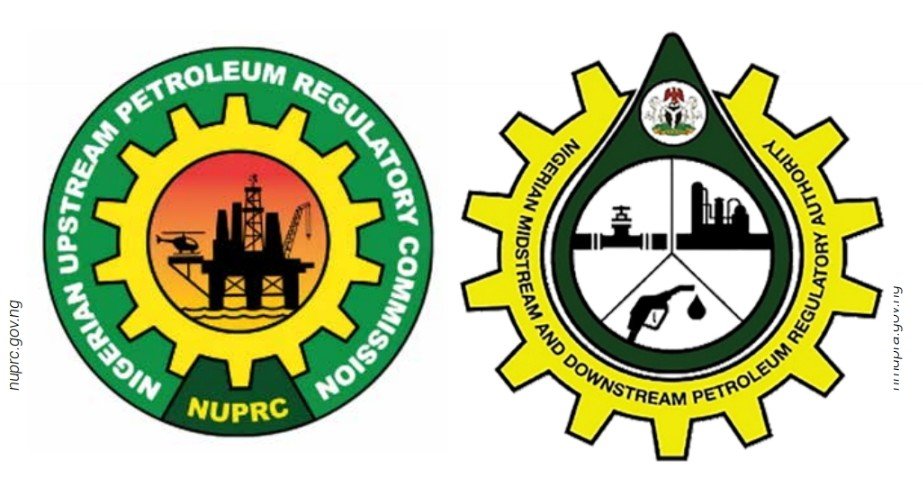
When Nigeria enacted the Petroleum Industry Act (PIA) in 2021, one of its most consequential institutional reforms was the dismantling of the former Department of Petroleum Resources (DPR) and the creation of two specialised regulators: the Nigerian Upstream Petroleum Regulatory Commission (NUPRC) and the Nigerian Midstream and Downstream Petroleum Regulatory Authority (NMDPRA). The logic was straightforward. A sector as large and complex as Nigeria’s petroleum industry required regulators with clearly defined mandates, specialised expertise, and modern processes that reduce uncertainty and attract investment. Five years into the PIA era, however, questions remain over whether the regulatory architecture has delivered the predictability and ease of doing business operators expected. Across the upstream, midstream and downstream segments, the central issue is increasingly less about whether Nigeria has regulatory institutions and more about how those institutions exercise their powers. Industry operators, legal advisers, and compliance professionals continue to point to administrative delays, overlapping requirements, unpredictable enforcement, and the growing financial burden of regulatory compliance. For investors weighing Nigeria against competing petroleum jurisdictions, these issues matter because regulatory certainty can be as important as geology, reserves or market size. The experience of NUPRC and NMDPRA offers two different windows into the same challenge.
The licensing test
Licensing is perhaps the clearest point at which regulatory efficiency meets investment reality. NUPRC has made visible progress in digitising aspects of upstream licensing and has used structured processes in marginal field, mini-bid and deep offshore licensing activities. These initiatives provide investors with greater visibility over acreage opportunities and represent a departure from some of the opacity historically associated with upstream licensing. Yet digitisation has not eliminated the bottlenecks that emerge after an application enters the technical and regulatory assessment stages. Operators and compliance professionals say technical evaluations, work-programme reviews, acreage commitments and approvals for revised field development plans can take considerably longer than the initial digital application process suggests. The Commission’s increasingly assertive enforcement of “drill-or-drop” obligations also reflects a determination to prevent operators from sitting on dormant acreage. But for indigenous companies, particularly those facing constrained access to capital, the challenge is finding a regulatory balance between enforcing contractual commitments and creating an environment in which operators can mobilise the capital necessary to meet those commitments.
NMDPRA faces a different licensing challenge. Its electronic licensing platform, the Midstream and Downstream Gas Infrastructure and Services Portal (MDOGISP), was designed to simplify regulatory applications and improve processing efficiency. Basic categories can move relatively quickly through the system. Complex facilities, however, present a different picture. Refinery operations, depots, gas infrastructure and other specialised permits can require extensive technical verification and documentation. Operators have complained that digital applications can still lead to manual processes, repeated documentation and extended waiting periods. The distinction is important. A regulator can be digital without necessarily being efficient. On licensing, therefore, the two agencies appear to have made progress, but neither has fully resolved the problem of end-to-end turnaround time.
When regulation becomes revenue collection
The more fundamental question concerns the relationship between regulation and revenue. NUPRC’s statutory responsibility goes beyond collecting regulatory fees. Its mandate includes the promotion of exploration and production, efficient development of upstream petroleum resources, technical regulation and the management of upstream activities. Yet operators increasingly focus on the financial dimension of regulatory interaction, including signature bonuses, levies, penalties and other statutory payments. The enforcement of financial and contractual obligations is, of course, an essential part of regulation. The problem emerges when compliance becomes perceived primarily as a financial transaction rather than part of a broader framework for expanding production and investment. This is particularly significant for smaller indigenous producers and marginal field operators, whose financing constraints can be considerably different from those of international oil companies.
NMDPRA faces a comparable perception challenge in the midstream and downstream space. The Authority’s mandate includes promoting investment, ensuring efficient commercial activities, facilitating open access to infrastructure and supporting domestic gas utilisation. It also regulates a vast ecosystem spanning petroleum products, gas, processing, storage, transportation and related infrastructure. Operators nevertheless complain about the cumulative burden of fees, levies, penalties and administrative requirements. For investors, the concern is not necessarily the existence of regulation or payment obligations. It is the cumulative cost and uncertainty created when multiple regulatory requirements are layered onto projects that are already dealing with foreign-exchange risk, financing costs, infrastructure constraints and market volatility. In that environment, the regulator’s role becomes crucial. The question is whether regulation merely enforces compliance or actively helps make projects commercially viable.

The culture of regulation
Perhaps the most difficult issue to quantify is regulatory culture. The PIA was intended to create a more transparent and commercially oriented petroleum industry. That objective requires regulators to behave not merely as enforcement institutions but also as facilitators of investment. Operators and their legal and compliance teams frequently describe interactions with regulators as highly hierarchical. Where investors expect problem-solving engagement, they can instead encounter multiple layers of approvals, documentation and enforcement. This perception matters because investors do not assess a regulatory system only by reading legislation. They assess it through their experience of obtaining permits, modifying projects, meeting officials, responding to compliance notices and resolving disputes. A regulatory framework can therefore be legally sound while still producing an unpredictable investment experience.
Leadership continuity is another concern. Changes in leadership and internal restructuring can affect the implementation of guidelines, stakeholder agreements and policy roadmaps. Where projects take years to develop, regulatory consistency becomes particularly important. An upstream field development plan, gas processing facility or pipeline project can outlive several leadership cycles. If each transition effectively resets regulatory expectations, project developers face additional uncertainty.
The problem between the lines
The separation of the former DPR into NUPRC and NMDPRA was designed to establish clearer institutional responsibilities. Yet petroleum operations do not always fit neatly into organisational boundaries. A project can move from exploration and production into gathering, processing, transportation, storage and marketing. Infrastructure at the intersection of these activities can therefore attract regulatory interest from more than one institution. Terminal operations, pipeline metering, gas processing and other infrastructure can generate questions about where upstream responsibility ends and midstream responsibility begins. For operators, regulatory specialisation becomes less useful if it produces jurisdictional uncertainty. The challenge is therefore not simply to define institutional boundaries on paper but to establish mechanisms through which the agencies can resolve overlapping responsibilities without transferring the burden to investors.
Regulatory Scorecard
Regulatory Metric
NUPRC
NMDPRA
Licensing efficiency
Moderate: Digital licensing and bid processes have improved visibility, although complex technical approvals can take longer.
Mixed: Digital systems have improved basic applications, while complex asset approvals can involve extended processing.
Ease of doing business
Challenged: Operators cite rigid compliance requirements and financing pressures.
Challenged: Operators cite documentation requirements, fees and enforcement uncertainty.
Investor alignment
Strong enforcement of contractual and financial obligations, alongside its broader upstream development mandate.
Strong regulatory and compliance focus alongside its mandate to facilitate midstream and downstream investment.
Policy continuity
Leadership and regulatory changes can affect implementation of longer-term upstream plans.
Changes in leadership and guidelines can create uncertainty for infrastructure developers.
What investors need next
The next phase of Nigeria’s petroleum-sector reform will require more than additional regulations or new digital platforms. The central test will be whether NUPRC and NMDPRA can make regulation more predictable, transparent and commercially enabling while retaining the enforcement powers necessary to protect national interests. That means measurable licensing timelines, fewer duplicative approvals, clearer jurisdictional boundaries and stronger coordination between regulatory institutions.
It also means separating the legitimate responsibility to collect statutory revenues from the broader economic responsibility to facilitate investment. Nigeria is competing for capital with other oil- and gas-producing jurisdictions. Investors can compare fiscal terms, reserves and market opportunities, but they also compare how long it takes to obtain approvals, how consistently rules are applied and how easily regulatory disputes can be resolved. The PIA created the institutional architecture for a modern petroleum industry. The next question is whether the institutions operating that architecture can evolve from being primarily compliance gatekeepers into predictable market facilitators. For NUPRC and NMDPRA, that may ultimately be the most important regulatory test of the next five years.
