

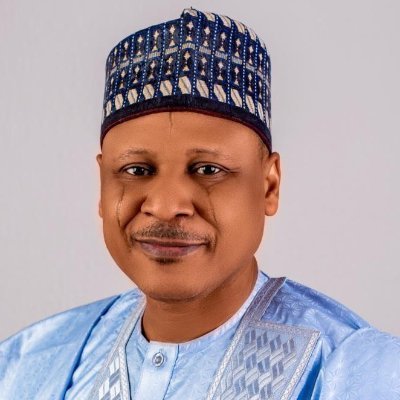
By: Saidu Ahmed
“There must be, not a balance of power but a community power; not organized rivalries but a organized, common peace”
– President Woodrow Wilson
In every administration, there emerges a governing philosophy that shapes how government communicates with its citizens. Under President Bola Ahmed Tinubu’s Renewed Hope Agenda, the leadership of Alh. Mohammed Idris, Honourable Minister of Information and National Orientation, has steadily developed into what is described as the Mohammed Idris Doctrine. A communication philosophy anchored on truth, transparency, national unity and strategic public engagement.

This doctrine is not merely about disseminating government information. It is about ensuring that communication serves as a bridge between public policy and the people, enabling citizens to understand government decisions, participate meaningfully in national development and strengthen confidence in democratic governance. For example, during the inaugural meeting of the Presidential Task Force Sub-Committee on Ebola Virus Disease, the Honorable Minister reassured Nigerians that there is currently no confirmed case of Ebola Virus Disease (EVD) in the country, while urging citizens to remain vigilant and rely only on verified information from official sources.
At the heart of the Mohammed Idris Doctrine is the belief that an informed citizenry is indispensable to a stable and prosperous nation. Democracy thrives when people have access to accurate, timely and credible information. In an era where misinformation and disinformation spread rapidly through digital platforms, government communication must be proactive rather than reactive. Information should educate, clarify and inspire confidence instead of merely responding to controversy.
The doctrine emphasizes transparency in governance. Public institutions are encouraged to communicate consistently, explain policies clearly and provide factual updates on government programmes. Such openness enhances accountability, promotes public trust and reduces the information gaps that often give rise to rumours and false narratives.
The Honourable Minister of Information and National Orientation two days ago received the Director-General and Chief Executive Officer of the National Identity Management Commission (NIMC), Engr. (Dr.) Abisoye Coker-Odusote, alongside her management team, on a courtesy visit to present the landmark provisions and strategic implications of the newly enacted NIMC Act 2026.
During the meeting, the Minister emphasized that a robust, inclusive and reliable national identity system is fundamental to effective governance, evidence-based national planning, financial inclusion, digital transformation and the successful implementation of President Bola Ahmed Tinubu’s Renewed Hope Agenda.

He noted that identity management lies at the very core of the administration’s reform programme, stressing that meaningful reforms can only succeed when government has accurate and comprehensive data about the people it serves. Identity management is central to the reform agenda. If you are reforming, you must know who you are reforming for. Without knowing the size of the population, its demographics and the characteristics of the people, effective planning and policy implementation become impossible.
Another defining pillar of the doctrine is national orientation. Development cannot be achieved through infrastructure and economic reforms alone. It also requires citizens who embrace values such as patriotism, integrity, unity, discipline and shared responsibility. Through strategic campaigns and public engagement, the Ministry seeks to rekindle these values while encouraging Nigerians to see themselves as active partners in nation-building.
The Mohammed Idris Doctrine also recognises that communication is an essential instrument of policy delivery. Every successful public policy depends not only on sound implementation but also on public understanding and acceptance. Citizens are more likely to support reforms when they understand their objectives, anticipated benefits and long-term impact. Communication therefore becomes an integral part of governance rather than an afterthought.
The doctrine promotes collaboration across government institutions. Ministries, Departments and Agencies are encouraged to coordinate their messaging to ensure consistency, accuracy and coherence. A unified government voice minimises conflicting narratives and enables citizens to receive clear and reliable information on national priorities.
For example, the Minister recently reaffirmed the Federal Government’s commitment to strengthening both local and international partnerships to project Nigeria’s progress and achievements to the world. While receiving a delegation from The Report Company, led by Senior Publishing Director José Rafael Ochoa Neri and Project Director Olivia Hardiman, the Minister stated that the Ministry remains dedicated to telling Nigeria’s multifaceted story, highlighting the country’s reforms, opportunities, and development journey to a global audience.
Equally important is the doctrines commitment to combating fake news and disinformation. Rather than relying solely on rebuttals, it advocates continuous public enlightenment, media literacy and partnerships with journalists, media organisations and digital stakeholders to safeguard the integrity of Nigeria’s information ecosystem. Truth remains the strongest defence against misinformation.
The Mohammed Idris Doctrine acknowledges the indispensable role of the media as partners in democratic development. A professional, responsible and independent press contributes significantly to informed public discourse, accountability and national cohesion. Government and the media may occasionally disagree, but both share a common responsibility to protect the public interest through factual reporting and constructive engagement.
Another notable feature of the doctrine is its emphasis on inclusiveness. Communication should reach Nigerians regardless of language geographical location, educational background or digital access. Every citizen deserves access to information that affects their lives. By promoting multilingual communication and expanding outreach through traditional and digital media, the doctrine seeks to ensure that no community is left behind.
Ultimately, the Mohammed Idris Doctrine reflects a broader vision of governance where communication is recognised as a strategic national asset. It positions information as a catalyst for development, unity, civic participation and democratic consolidation. It also reinforces the understanding that effective governance is measured not only by policies formulated but by how well those policies are understood by the people they are designed to serve.
As Nigeria continues its journey toward sustainable development under the Renewed Hope Agenda, the Mohammed Idris Doctrine offers a framework for building a reputable, informed and united Nigeria. It reminds us that communication is more than words; it is a tool for nation-building, a vehicle for accountability and a foundation for strengthening the bond between government and the governed.
In the years ahead, this doctrine may well be remembered as one that transformed government communication from a routine administrative function into a strategic instrument for promoting national unity, public trust and inclusive development. An informed Nigeria is a stronger Nigeria, and a united Nigeria is better positioned to achieve its aspirations for peace, prosperity and democratic progress.
Saidu Ahmed is the Technical Assistant, Research & Strategy to the Honourable Minister of Information and National Orientation
