
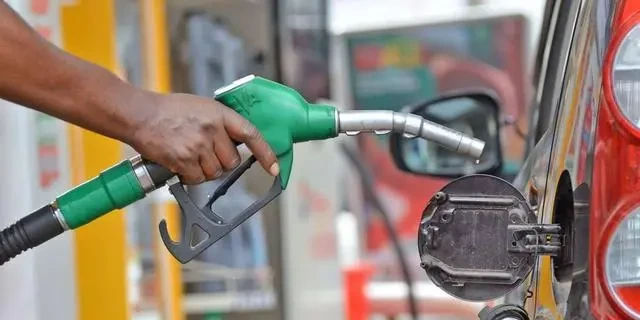
The average retail price of Premium Motor Spirit, commonly known as petrol, rose by 55.31% year-on-year to N1,596.25 per litre in May 2026.
The figure was higher than the N1,027.76 per litre recorded in May 2025.
This is according to the latest report from the National Bureau of Statistics.
The data showed that retail petrol prices remained uneven across states and geopolitical zones during the month.
What the data is saying
The NBS reported that the average price paid by consumers for petrol increased on both a year-on-year and month-on-month basis in May 2026.
- The national average retail petrol price rose by N568.49 per litre from N1,027.76 recorded in May 2025.
- Compared with April 2026, the average price increased by N63.32 per litre from N1,532.93.
- The month-on-month increase represented a 4.13% rise in the average retail price of petrol.
The increase reflects continued pressure on household transport and energy costs across the country.

Context
The latest petrol price data comes amid renewed pressure on global commodity markets, driven by geopolitical developments in the Middle East and disruptions to global energy supply chains.
- Industry operators attributed the continued volatility in petrol prices to higher depot prices, supply shortages, rising transportation costs and foreign exchange pressures affecting importation and distribution expenses.
- In April, the World Bank projected that global oil markets could face a major supply shock in 2026, with output expected to decline sharply in the second quarter.
- The projection was linked to concerns around the Strait of Hormuz, a key global energy chokepoint that accounts for a significant share of global oil and gas flows and remains highly vulnerable to geopolitical tensions.
Recent data showed that OPEC production declined by 27.5% to 20.79 million barrels per day in March 2026, representing one of the steepest production declines in decades.
The decline in oil output, combined with supply-chain disruptions and geopolitical uncertainty, continues to exert upward pressure on global energy prices and domestic fuel costs.
More insights
State-level data showed wide variations in average petrol prices, with Edo State recording the highest price during the month.
- Edo State recorded the highest average retail petrol price at N1,722.91 per litre.
- Bauchi and Benue followed with average prices of N1,715.47 and N1,698.57 per litre, respectively.
- Adamawa recorded the lowest average price at N1,469.83 per litre, followed by Katsina at N1,470.63 and Sokoto at N1,489.33.
The variation highlights differences in supply conditions, distribution costs and local market dynamics across states.
- The South-South recorded the highest average petrol price among Nigeria’s geopolitical zones in May 2026.
- The South-South recorded an average retail price of N1,623.84 per litre.
- The North-West recorded the lowest zonal average at N1,564.11 per litre.
Petrol prices remain a major driver of household spending because of their effect on transport, logistics and the cost of goods and services.
The latest NBS data shows that petrol prices continued to rise in May, adding to cost pressures for consumers and businesses.
What you should know
- Food inflation eased to 16.96% year-on-year, compared with 24.55% in May 2025, while month-on-month food inflation declined to 2.98% from 3.63%.
Core inflation, which excludes farm produce and energy, stood at 16.82% year-on-year, while the monthly rate rose to 1.94% from 1.03% in April.
SOURCE: Nairametrics
