

…With June exports dropping to 10,000 bpd from 81,000 bpd in April
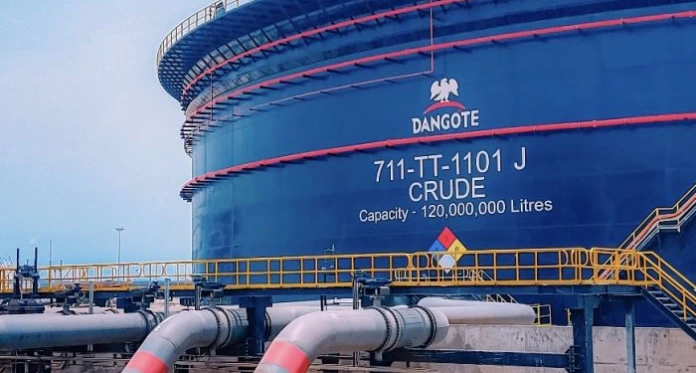
The reduction at the Residual Fluid Catalytic Cracking Unit has pushed June gasoline exports down to 10,000 barrels per day from 81,000 barrels per day in April, according to commodities analytics firm Kpler.
Africa’s largest refinery has reduced operating rates at its main gasoline-producing unit by 34 percent since May 21, raising concerns about fuel supply and export volumes at a time when global oil markets are already under pressure from Middle East tensions.
Industry monitor IIR Energy said the Dangote refinery’s Residual Fluid Catalytic Cracking Unit is expected to return to full rates by mid-June following repairs to a flue gas slide gate valve. “Initially, lighter crude being processed resulted in insufficient feed availability for the RFCCU,” IIR said in an email. “However, by the end of May, IIR Energy confirmed that the RFCCU was also facing an issue with its flue gas slide gate valve. Repair work on that issue is almost complete.”
The RFCCU converts heavy residual oils left over after crude processing into higher-value products including gasoline, diesel and liquefied petroleum gas. Disruptions to the unit directly affect petrol output, exports and refinery profitability.
The temporary reduction has already appeared in export figures. According to commodities analytics firm Kpler, gasoline exports from the refinery dropped to 17,000 barrels per day in May and have averaged just 10,000 barrels per day so far in June, compared with 81,000 barrels per day in April.
The 700,000-barrel-per-day Dangote refinery is Africa’s largest refinery and the world’s largest single-train facility. It became fully operational earlier this year after years of construction and billions of dollars in investment, built to end Nigeria’s decades-long dependence on imported petrol despite the country’s status as Africa’s largest crude oil producer.
Since reaching full operations, the refinery has increasingly supplied fuel to Nigeria and other West African markets, altering regional trade flows previously dominated by imports from Europe. It has also emerged as one of Africa’s fastest-growing exporters of refined petroleum products.

A report by Accra Street Journal noted that the outage comes at a delicate time for energy markets, with oil prices having risen sharply in recent weeks amid escalating Middle East conflict. For Nigeria, where fuel prices remain highly sensitive to international crude prices and exchange-rate movements, any reduction in domestic refining output attracts attention from consumers and fuel marketers.
While IIR Energy expects the gasoline unit to resume full operations within days, the incident underscores the growing importance of the Dangote refinery to Nigeria’s energy security and Africa’s fuel supply chain. Even short-lived operational disruptions now carry implications far beyond Nigeria’s borders.
SOURCE: newsghana.com.gh
