
By Anscella Obike
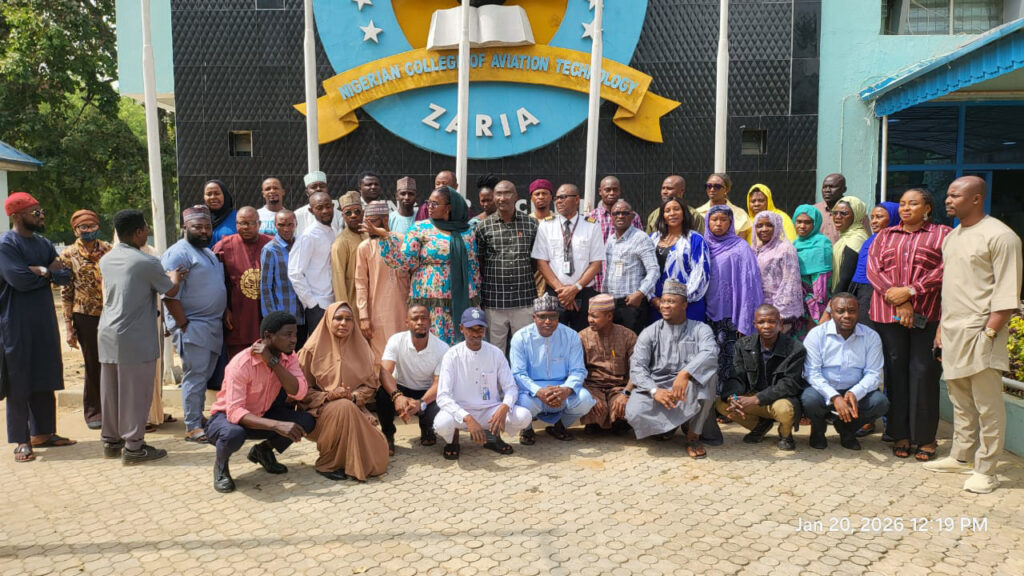
In the 2026 Appropriation Bill, the aviation sector has quietly taken centre stage with one of the most debated proposals in recent years: the decentralisation of the Nigerian College of Aviation Technology (NCAT), Zaria. The Federal Government has earmarked N2 billion to establish NCAT annexes across five geopolitical zones, reviving a plan first floated in 2025 with a higher allocation of N3.68 billion.
For the Ministry of Aviation and Aerospace Development, decentralisation represents a bold strategy aimed at expanding access to aviation training, creating regional opportunities, and preparing more Nigerians for careers in piloting, air traffic control, engineering, and aviation management.

But while the vision sounds promising, many experts warn that the plan carries risks that could undermine NCAT’s hard-earned reputation.
A Centre of Excellence on the Continent
NCAT is not just Nigeria’s premier aviation school; it is a continental leader, recognised as an ICAO Regional Centre of Excellence. Over decades, the institution has built a reputation for high-quality training, standardised instruction, and integrated learning across its flight, engineering, and air traffic control programmes.
This is why some critics are cautious. David Olubadewo, CEO of Starburst Aviation in the UK, emphasises that decentralisation could fragment the quality that has earned NCAT global respect. “NCAT’s excellence is the result of concentrated resources, expertise, and world-class equipment. Spreading the institution across multiple regions risks diluting these standards,” he said.
Industry insiders echo this concern, noting that aviation training relies heavily on standardisation and centralised supervision. Even a small lapse in infrastructure, equipment, or teaching quality across new annexes could affect the output of highly skilled aviation professionals.

The Promise of Regional Access
Supporters of the decentralisation plan argue that NCAT should no longer be concentrated in Zaria alone. Regional annexes, they suggest, would allow students from distant states easier access to aviation education, lower travel and accommodation costs, and create new jobs in each zone.
The Federal Government is also prioritising broader aviation investments. The Nigerian Airspace Management Agency (NAMA) received N6.3 billion in the 2026 budget for three key projects to enhance navigation, surveillance, and communication systems, a clear signal of intent to strengthen airspace safety and operational capacity.
Balancing Vision with Caution
The debate over decentralisation reflects a broader tension in Nigeria’s aviation sector: the need to expand opportunity without compromising standards. Critics argue that without matching infrastructure, experienced instructors, and standardised equipment, the new annexes could become weaker versions of NCAT rather than strengthening the institution.
At the same time, the decentralisation initiative underscores a forward-looking government strategy: making specialised aviation education more accessible, fostering regional development, and creating a pipeline of skilled professionals to meet Nigeria’s growing aviation demands.
Looking Ahead
With the N2 billion allocation now part of the 2026 appropriation bill, much will depend on how the ministry implements the plan. Will the annexes replicate NCAT’s high standards or operate as a basic extension? Will decentralisation be a stepping stone toward national aviation growth or a test of whether quality can be maintained across multiple sites?
One thing is clear: NCAT remains at a crossroads. Its reputation, influence, and impact on the African aviation sector are too important to risk. As stakeholders watch closely, the coming months will reveal whether Nigeria’s decentralisation plan achieves its vision or sparks new challenges for Africa’s leading aviation training hub.
