

By Adaobi Rhema Oguejiofor
Nigeria’s housing deficit remains one of the country’s most persistent development challenges, shaped by rapid urbanisation, rising construction costs, weak mortgage penetration and longstanding land administration bottlenecks. While successive governments have announced ambitious housing programmes, delivery has often fallen short of demand. Against this backdrop, the Federal Housing Authority (FHA) says 2026 will mark a turning point, as it moves into full-scale construction of affordable housing projects across the federation.
Speaking at a three-day management retreat at the Warm Springs Resort, Ikogosi-Ekiti, FHA Managing Director Oyetunde Ojo said the authority is now positioned to shift from groundwork to mass execution under President Bola Tinubu’s Renewed Hope Agenda.

According to Ojo, 2025 was deliberately used to stabilise the institution and lay structural foundations. “Last year was about preparing the ground, acquiring land, repositioning the authority and taking care of staff welfare,” he said. “This year is about full construction and delivery of the houses we promised Nigerians.”
From Land Banking to Delivery
Land availability has historically been a major obstacle to the delivery of public housing. Ojo noted that upon assuming office in 2024, FHA had to prioritise land acquisition across multiple states to unlock future projects. That preparatory phase, he said, is now largely complete.
With land reportedly secured nationwide, the authority says 2026 will focus squarely on its core mandate: building and delivering affordable homes at scale. The retreat, themed ‘Consolidating on the gains of positive reforms’, was designed to align management and staff around execution, delivery timelines and accountability.
Bwari as a Test Case

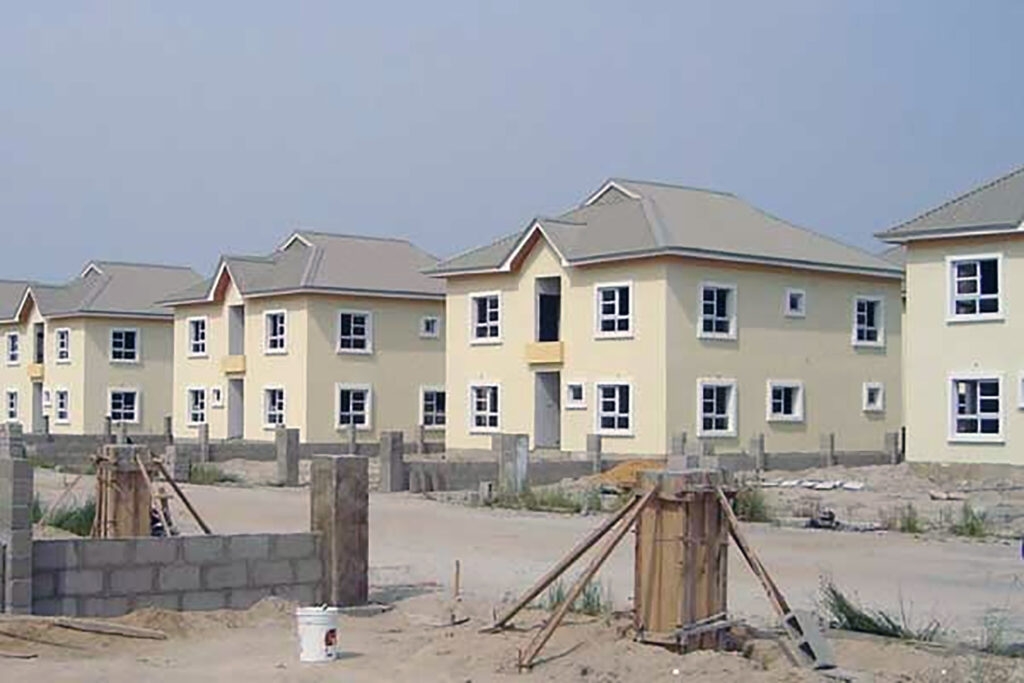
The Bwari housing project in Abuja has emerged as FHA’s flagship proof of concept. The development comprises about 400 housing units and is currently 86 per cent completed, with commissioning expected in the first quarter of 2026.
What makes Bwari significant is its financing structure. According to Ojo, the project is being delivered under a zero-funding model, demonstrating that alternative financing and operational efficiency can produce results even without direct government budgetary support.
Beyond construction, Bwari also reflects a shift in target demographics. Ojo disclosed that 70 per cent of the units have been allocated to the informal sector, a group that has traditionally been excluded from formal housing finance despite accounting for the majority of Nigeria’s workforce.
Nationwide Rollout
Beyond Abuja, FHA plans to maintain a continuous construction-delivery cycle throughout 2026. Projects scheduled for commissioning between the first quarter and May include developments in Odukpani, Cross River State, alongside other locations yet to be publicly detailed.
New groundbreakings are planned for Ekiti State in February, followed by Abia State, with Ojo emphasising that housing construction will take place “around the federation”.
“It is construction delivery, construction delivery this year,” he said. “Before the end of the year, Nigerians will see more projects commissioned.”
If sustained, this pace would represent a notable departure from the stop-start execution that has undermined many public housing initiatives in the past.
Financing Without Budget Dependence
A key pillar of FHA’s 2026 strategy is financing outside the national budget. According to Dr. Mathias Byuan, Executive Director of Finance and Accounts, the authority generates revenue internally and plans to scale housing delivery through public-private partnerships (PPPs).
“FHA is not on the national budget,” Byuan said. “This year, we are relying heavily on PPPs to enable large-scale construction of affordable homes across the 36 states.”
With land already acquired and prepared nationwide, the authority believes private capital can be attracted to support construction while keeping unit prices within reach of average Nigerians.
State Governments as Enablers
State-level collaboration is emerging as a critical success factor. In Ekiti State, Governor Biodun Oyebanji allocated 20 hectares of land along Ekiti State University Road to FHA, complete with a Certificate of Occupancy issued free of charge.
The site will host 200 two-bedroom bungalows, with construction starting on an initial batch of 100 units. According to Ojo, all approvals have been completed, allowing construction to commence immediately.
Such concessions significantly reduce project costs and timelines, highlighting how subnational cooperation can accelerate federal housing delivery.
A Test of Scale and Affordability
While FHA’s 2026 plans are ambitious, the real test lies in scale and affordability. Delivering hundreds of units is symbolically important, but Nigeria’s housing deficit runs into the millions. Affordability will ultimately be judged by pricing, access for informal workers and consistency of delivery.
Ojo urged Nigerians in both the formal and informal sectors to engage FHA directly to understand eligibility and access modalities, signalling a desire for broader inclusion.
If FHA sustains its execution momentum, leverages PPP financing effectively and maintains state cooperation, 2026 could mark a meaningful shift—one where affordable housing moves from promise to visible reality.
