The federal government’s plan to resume oil production in Ogoniland via the national oil company, NNPC Ltd. could hit a major roadblock, with influential leaders from the oil-rich region warning that no drilling will proceed without “wide-scale consultations” with the Ogoni people.
The ultimatum casts doubt on Nigeria’s hopes of boosting crude output, hovering around 1.6 to 1.7 million barrels per day (bpd), though showing recovery from earlier lows, but had hardly met its OPEC quota; thereby raises tensions in a region scarred by decades of environmental devastation and unmet promises.
Speaking exclusively to Business A.M., Celestine Akpo-Bari, a veteran activist and team lead of MIIDEEKOR Environmental Development Initiative, pulled no punches: “There will be no re-entry without proper dialogue. The Ogoni people have not been consulted, and we will resist any move otherwise.”
Akpo-Bari, who fought vehemently in the Ogoni struggle alongside the late Ken Saro-Wiwa and other influential members of the Movement for the Survival of Ogoni People (MOSOP), was emphatic that the government’s approach — including claims of talks with select Ogoni representatives — was illegitimate.
A wound that won’t heal
Ogoniland remains a potent symbol of Nigeria’s oil-related strife. Shell’s operations here sparked the 1990s unrest, culminating in Saro-Wiwa’s execution and a military crackdown that killed some 2,000 Ogonis, according to MOSOP claims.
While the UN-backed Ogoni cleanup is underway, Akpo-Bari argues that justice remains elusive: “The families of the dead haven’t been visited or compensated. The environment is still wrecked. You can’t bind a bleeding wound with a band-aid and expect it to heal.”
So what do Ogonis want? Akpo-Bari outlined a clear path forward: an “all-embracing, all-inclusive” dialogue to agree on operational terms for any oil restart. “We’ve been saying this for years since the issue of oil resumption in Ogoniland re-emerged. And we won’t shift,” he stressed. In 2021, MOSOP asked NNPC’s subsidiary NPDC for broad-based interface with critical stakeholders before oil resumption in the area.

The stakes are high: Ogoniland’s OML 11 block, a 250,000 bpd oilfield, could contribute meaningfully to Nigeria’s dwindling oil output, but local resistance could delay or derail plans. OML 11 is located in Ogoniland and operated by the NNPC Exploration and Production Limited (NEPL), a flagship upstream subsidiary of NNPC Ltd. It is Nigeria’s largest onshore block, with Ogoniland holding over 40 per cent of its recoverable reserves.
Last Monday, the NNPC group chief executive, Bashir Bayo Ojulari along with the national security adviser Nuhu Ribadu, governor of Rivers State Siminalayi Fubara, Don Baridam, head of the presidential committee on Ogoni re-entry, announced that it (NNPC) held a consultative meeting with Ogoni leaders, stating that the national oil company was committed to peace, dialogue, and responsible energy development in Ogoniland, describing the federal government’s renewed engagement as a demonstration of hope and a new beginning built on partnership and understanding.
Ojulari emphasised that recognising the past is essential to building a different future for the Ogonis. He commended the Presidential Committee on Ogoni Re-entry, led by Baridam, a professor and former vice chancellor of University of Port Harcourt, for a good job.
Government missteps
NNPC’s public declaration of having consulted Ogoni leaders has been dismissed by Akpo-Bari’s MIIDEEKOR Environmental Development Initiative. “People like Ledum Mitee (former MOSOP President) and Prof Don Baridam are unrepresentative of the gamut of Ogoniland. They don’t speak for us. They are friends of the Federal Government. The government has not met our real leaders —they just haven’t bothered to engage them,” he said. According to him, FG’s addressing of ‘Ogoni 4’ and ‘Ogoni 9’ families doesn’t solve the entire Ogoni crisis.
“FG has to address the pains and loss of families of the 2000 Ogonis killed by the Nigerian soldiers in a military crackdown. The ongoing Ogoni cleanup has yet to be completed, and lessons to be learnt on how to undertake future sustainable oil production.
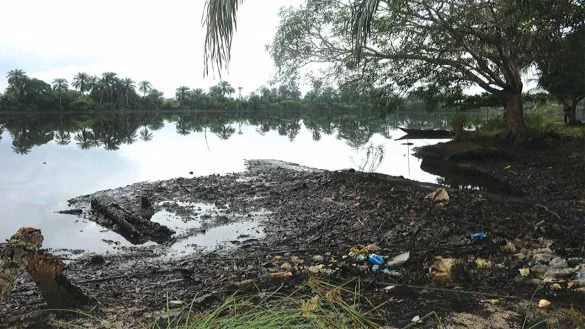
Checks by Business A.M. indicate that, as of late 2025, the Hydrocarbon Pollution Remediation Project (HYPREP) reported it has remediated only 17 out of the 21 initially focused spill sites. Approximately 65 other sites are only at stages of assessment. Complex sites which include contaminated groundwater and mangrove restoration are yet to be handled. Also, HYPREP is yet to clean some 2,000 hectares of contaminated shoreline and restore 560 hectares of mangroves.
Warning of unrest
The threat of Ogoni renewed resistance is not empty. Akpo-Bari warned that any attempt by the federal government through NNPC Ltd. to push ahead without consent would be met with fierce opposition: “If they like, let them bring soldiers from Borno and Sambisa, we’re ready. We’ve faced worse attacks at the hands of Nigeria’s soldiers. They killed us as if on a hunting spree”.
Broader implications of the standoff
The standoff between FG and Ogonis highlights deeper issues plaguing Nigeria’s beleaguered oil sector: community mistrust, environmental neglect and a failure to translate resource wealth into local prosperity. For President Bola Tinubu’s administration, resolving the Ogoni impasse is a test of its commitment to inclusive governance and energy security.
The clock is ticking. Can NNPC and the FG navigate the consultation minefield, or will Ogoniland’s oil remain shut in, as it had been since Shell’s forced exit in 1993? Only time will tell.
SOURCE: Businessamlive
