
There are high expectations in the upstream sector of the oil and gas industry as the Nigerian Upstream Petroleum Regulatory Commission (NUPRC) announced the commencement of the 2025 Licensing Round effective December 1, 2025.
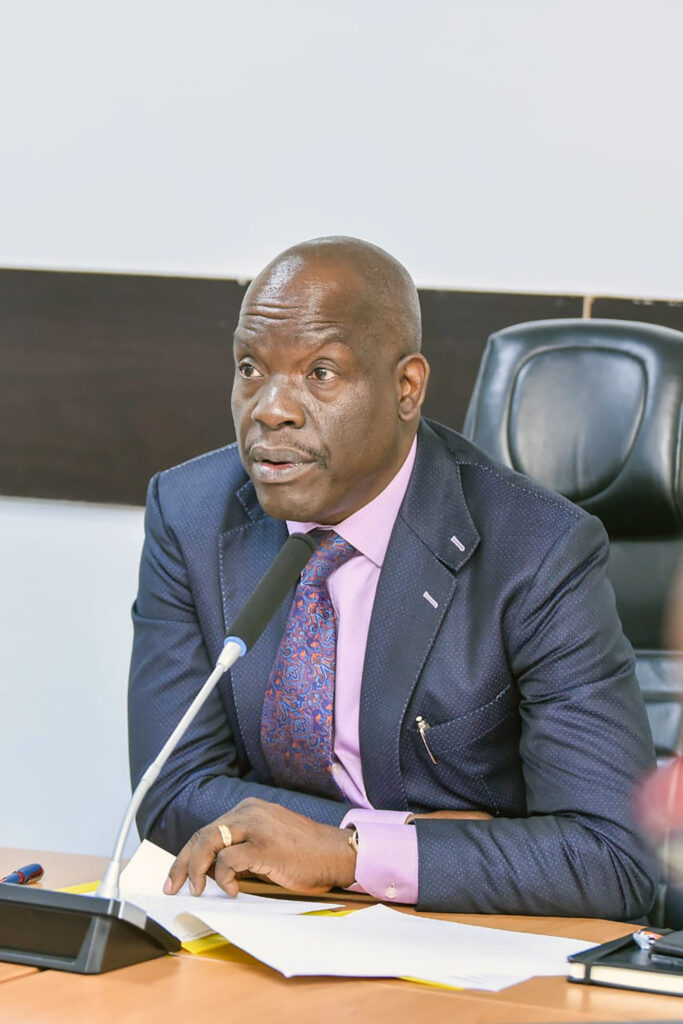
The Commission Chief Executive (CCE) of the NUPRC, Engineer Gbenga Komolafe, made the announcement at the NUPRC’s Project 1MMBOPD Additional Production Investment Forum in London on Tuesday, November 11, 2025.
Komolafe added that the announcement was in line with the Petroleum Industry Act following the approval of President Bola Ahmed Tinubu who doubles as the Minister of Petroleum Resources.
“We are announcing that we are ready, following the approval of the Minister of Petroleum Resources in line with the Petroleum Industry Act, to commence the 2025 licensing round beginning from December 1, 2025,” the CCE said.
At the forum which was attended by CEOs of oil companies, bank representatives and potential investors, the NUPRC boss said funding remained the biggest challenge in Nigeria’s upstream sector and the commission as a business enabler planned to tackle this by connecting interested parties.
He said crude production now averages 1.71 million BOPD with a peak daily output of 1.83 MMBOPD, evidence of tangible progress.
The CCE said 46 Field Development Plans (FDPs) had been approved from January 2025 till date, representing immediate investment commitments and production growth potential.
Komolafe noted that the rig count had grown to over 60 out of which at least 40 are active. He therefore stated that this was the best time for existing investors to deepen their stake in Nigeria.

Why licensing round
The NUPRC licensing round is a competitive process where the regulatory authority grants companies the rights to explore oil blocks. The licensing round has been designed, as part of the Petroleum Industry Act (PIA) provision, as a transparent process to award oil blocks.
This has replaced the old practice where oil prospecting licence (OPL) or oil mining licence are issued to cronies of the government in power without conducting any transparen process to determine the winners.
Drive to increase oil production
With about 1.7m barrel per day oil production, the federal government is far short of meeting its target to increase revenue generation from oil production.
President Bola Ahmed Tinubu in the 2025 budget presented in 2024 projected 2.5m bpd oil production. But few weeks to 2025, Nigeria is yet to achieve 2m bpd production as the country’s oil production still hovers around 1.7m bpd and 1.8m bpd.
Analysts say with the abundance of oil assets unexplored, Nigeria needs credible oil firms to be licensed for exploration.
According to the NUPRC, there are over 3.5 billion barrels of oil and condensate reserves locked in undeveloped fields across different basins in Nigeria.
This is why the licensing round is considered significant to identify credible companies and investors to develop the fields.
During the bidding process conducted in 2024, 25 companies emerged as preferred bidders at the end of the licensing round.
TotalEnergies Exploration and Production Company, MRS Oil and Gas Limited, Sahara Deepwater Resources Limited, among 20 others emerged after the competitive bidding conducted by the NUPRC.
31 oil blocks were offered for bidding while 25 were bid just as the remaining six were returned to the basket, according to the Commission Chief Executive, NUPRC, Engr. Gbenga Komolafe.
The CE said the 2024 licensing round offers 24 carefully selected blocks spanning onshore, shallow water, and deep offshore terrains.
Complementing these are the seven deep offshore blocks from the 2022 Mini Bid Round, bringing the total to thirty-one (31) blocks.
He described Nigeria as the sole winner in the bidding process, saying the exercise has been conducted in line with global best practices.
“This is the best in the history of the nation that we could conduct a licensing round in a very transparent manner. We have set the standards that we will continue to improve upon,” he said.
According to him, the 2025 licensing round will focus on underexplored assets, fallow fields and natural gas development as part of Nigeria’s commitment to the UN Sustainable Development Goals.
Komolafe said the NUPRC aims to make the licensing rounds an annual event to address challenges such as declining production and rising global competition.
The blocks for 2025 bid round will be harvested from an idle assets recovery programme known as ‘drill or drop,’ which the commission has commenced in line with the provision of the Petroleum Industry Act (PIA).
Komolafe said, “Declining production levels and increased global competition demand strategic action. Fortunately, the Petroleum Industry Act has given us a unique opportunity to transform the industry, attract investment and position Nigeria as a leader.”
Experts upbeat over 2025 process
An industry stakeholder, Otunba Adetunji Oyebanji in a chat with our correspondent expressed optimism of increased oil production with the selection of serious companies.
“My expectation is that if the appropriate people win, this will eventually result in increased production for Nigeria in the near future which will be good for the economy. The key is getting the right people,” he said.
Speaking with Daily Trust, A renowned professor of Petroleum Economics, Prof. Wumi Iledare said the continued use of the term “oil block” is somewhat inconsistent with the Petroleum Industry Act (PIA) 2021.
He explained that the PIA has deliberately departed from the old Petroleum Act (PA) 1969 mindset.
“What the law recognizes today is “petroleum prospecting licences” and “petroleum mining leases” awarded through a transparent and competitive process–not the traditional, politically-driven notion of “oil blocks.”
He added that the PIA places transparency, accountability, and fairness at the center of upstream petroleum governance as licensing round is only the first of the six phases in the upstream value chain and it is arguably the most consequential because it sets the tone for investor confidence and resource management.
“What I expect, therefore, is a licensing round that reflects: Strict adherence to the PIA, especially Sections 3, 4, 69-76, and 83-84 on openness and competitive bidding. Clear, predictable criteria for qualification, evaluation, and award. Robust data disclosure, so bidders are not disadvantaged by asymmetric information.
Alignment with Nigeria’s energy security and reserves-growth priorities, not political considerations.”
He said the commission carries a heavy responsibility, thus competitive bidding remains superior to discretionary awards because it promotes fair market value, investor equity, and sector credibility.
“However, competitive rounds are not without risk–especially the winner’s curse, where a bidder overpays for a prospect due to optimism rather than technical fundamentals. To mitigate this risk, I advise the cmmission to conduct rigorous pre-bid valuation checks to ensure bidding does not lead to unrealistic expectations that derail project execution.”
“Apply the monetary value left on the table concept to assess whether a winning bid is commercially sensible, and to avoid situations where overvaluation leads to default or asset dormancy.
Strengthen due diligence on bidders’ financial, technical, and operational capacity.”
He further urged the commission to publish evaluation reports, at least in summary form, to reinforce transparency and public trust while ensuring the process is free of political interference, consistent with the spirit and letter of the PIA.
He went on to call for prioritising assets with clear geological data, to reduce uncertainty and enhance bid quality.
He added that the credibility the licensing round will shape Nigeria’s reserves growth trajectory and investment outlook for years to come.
“If the Commission executes it strictly within the governance architecture of the PIA, Nigeria will not only attract quality investors but also signal that the era of opacity and discretionary awards is truly behind us.”
On his part, Prof. Dayo Ayoade, Energy Law expert at the University of Lagos, said there was a licensing round that took place 2023-2024 and what’s important about the licensing is that it should be regular to allow investors access to oil blocks and to keep interest in the international oil and gas sector.
“Now, the NUPRC’s last licensing round, according to NEITI, was done in a fair and transparent manner. I think that the only improvement you can say is where they should expand the scope of observers, maybe, they have to have reasonable observers, not just any old touts, and if you can expand the scope of observers, that could be very helpful, so that the people who are commenting are not just government or pseudo-government agencies.”
He added that the requirements of oil licensing in terms of publication of the bids and how the bids are to be evaluated and assessed as all these rules are very clear.
“The practise and the problem is that Nigerian agencies don’t follow the rules, so as long as the rules are being complied with, then that’s fine. A few licensing rounds doje before, I understand that the regulator basically combined, people that did not bid with each other were put together to create a composed marriages. So, we have to avoid these kinds of scenarios and so forth.
SOURCE: AllAfrica
