By Gideon Osaka
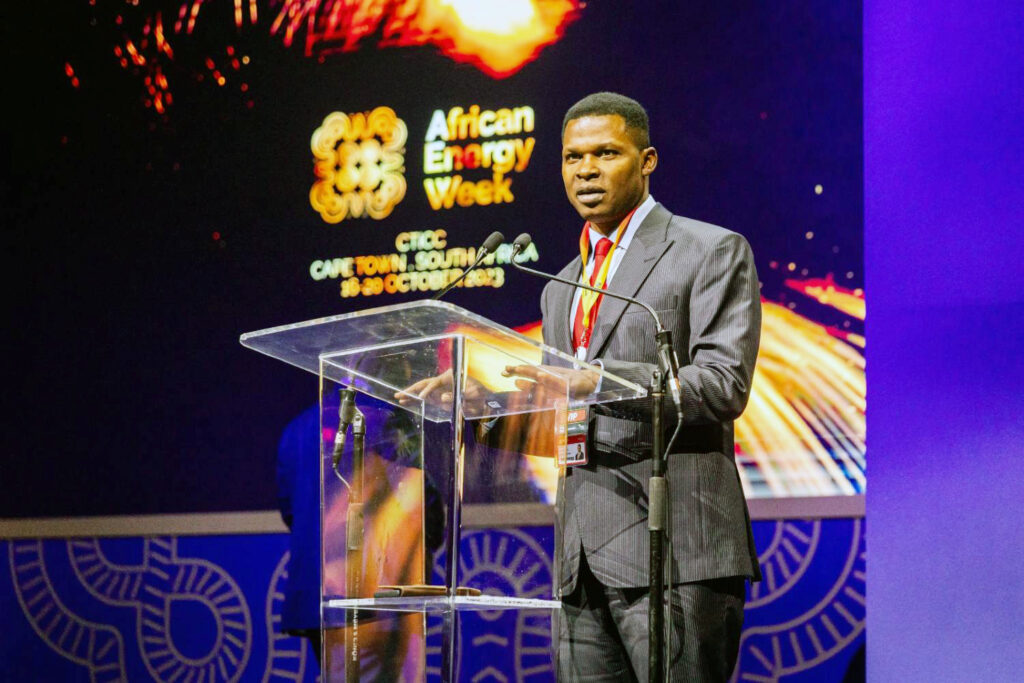
As African nations strive for energy security, sustainability, and industrial development, African Energy Week (AEW) 2025 promises to be a defining moment of the year. From September 29 to October 3, 2025, Cape Town, South Africa, will host over 7,000 energy stakeholders for five days of high-level dialogue, project showcases, and deal-making under the theme “A Platform for Dealmaking, Project Investment, and Energy Security.”
With global investors shifting their gaze toward Africa, and Nigeria actively seeking partnerships across upstream, midstream, downstream, and renewable energy sectors, AEW 2025 represents more than a networking opportunity—it is Nigeria’s springboard to unlock capital, technology, and geopolitical influence in shaping the continent’s energy future.
Star-studded agenda
According to the official draft agenda made available to Valuechain, AEW 2025 will unfold in a structured and deliberate format. It begins on Monday, September 29, with AEW Golf Day and an Opening Cocktail. The event formally kicks off Tuesday, September 30, with the Presidential and Ministerial Opening Ceremony and a high-powered CEO Roundtable. Wednesday, October 1, is dedicated to the Power & Infrastructure Forum, Energy Finance Summit, and the Women in Energy Leadership program. Thursday, October 2, features the much-anticipated NOC-IOC Forum, the African Farmout Forum, and a Local Content Roundtable. The week concludes on Friday, October 3, with panels on Green Hydrogen, Technology Showcases, and the Youth Energy Innovation Awards. More than 40 panels, deal rooms, technical workshops, and market spotlights will take place throughout the week.
Nigeria’s role: a continental powerhouse at the table
Nigeria, Africa’s top crude oil producer and largest holder of natural gas reserves, is scheduled for prominent engagement throughout the week. The “Invest in Nigeria Energies” country spotlight, set for Wednesday, October 1, will present opportunities tied to Nigeria’s latest bid rounds and emerging deepwater projects. This session will also highlight regulatory gains from the Petroleum Industry Act (PIA), the progress of NNPC Ltd as a commercial entity, and the domestic refining resurgence led by the Dangote Refinery. Nigeria is expected to play a central role in the Presidential Roundtable, where President Bola Ahmed Tinubu is anticipated to speak alongside leaders from Angola, Mozambique, Egypt, and Senegal.
Nigeria’s delegation, comprising officials from NNPC Ltd, the Nigerian Upstream Petroleum Regulatory Commission (NUPRC), the Nigerian Midstream and Downstream Petroleum Regulatory Authority (NMDPRA), and private operators, will focus on securing high-value project finance. Nigerian firms are expected to pitch upstream block farmouts, refinery co-financing deals, gas monetisation projects, such as the AKK pipeline and ANOH Gas Processing, off-grid renewable infrastructure, and carbon trading and hydrogen technology pilots. These opportunities align well with the Energy Finance Summit, scheduled for Wednesday, and the Deal Rooms, which will be operating throughout the week.
Nigeria’s call for global investors comes at a time of refining renaissance. The Downstream and Trade Logistics Panel, scheduled for Thursday, October 2, will feature case studies on indigenous refining, crude logistics, and domestic product supply. With the Kaduna, Port Harcourt, and Warri refineries still struggling post-rehabilitation, and with NNPC Ltd recently hinting at asset sales, this panel is especially timely. Nigeria can engage potential buyers, co-financiers, or joint venture partners to revitalise or replace these ageing assets.
AEW’s Africa Gas Market and Infrastructure Forum on Tuesday will be pivotal for Nigeria to showcase progress under its “Decade of Gas” policy. Key project highlights will include the Ajaokuta-Kaduna-Kano (AKK) pipeline, expansion of Nigeria LNG Train 7, the proposed Nigeria-Morocco pipeline, and gas-to-power scaling through NLNG and UTM FLNG. Panel discussions will explore regional integration via ECOWAS gas networks, carbon-neutral LNG strategies, and domestic gas pricing reforms—all highly relevant to Nigeria’s future gas strategy.
Catalysing IOC partnerships through the NOC-IOC forum
Scheduled for Thursday, October 2, the NOC-IOC Forum is billed as the most anticipated roundtable of the week. NNPC Ltd will share space with Sonangol (Angola), SNH (Cameroon), ENH (Mozambique), and global IOCs such as TotalEnergiesa, Shell, Chevron, and Eni. This forum provides Nigeria with the opportunity to clarify fiscal incentives under the PIA, explore joint ventures for deepwater exploration, attract global technology transfer in drilling and digital oil fields, and discuss security collaboration in volatile regions like the Niger Delta. NNPC’s restructuring into a private limited liability company offers a compelling model for governance reform.
Navigating the just energy transition
The Just Energy Transition track, anchored on Wednesday, October 1, will explore Africa’s path to net-zero without compromising development. With over 92 million Nigerians lacking access to electricity, Nigeria will advocate for natural gas as a transition fuel and for scaled off-grid solar deployment. The Renewables Showcase and Green Hydrogen Panel on Friday offer an entry point for Nigerian developers to attract investment for solar hybrid mini-grids, industrial solar for manufacturing clusters, and pilot hydrogen production projects in Niger and North-East Nigeria.
Strengthening inclusion through women and youth engagement
Nigeria will participate actively in the Women in Energy Leadership Panel and the Youth Energy Innovation Awards, taking place on Wednesday and Friday, respectively. These events will spotlight Nigerian female executives in the oil and gas sector and young entrepreneurs leading clean-tech innovations. Areas of recognition include energy storage solutions, software for grid reliability, and local fabrication of solar components, reinforcing Nigeria’s commitment to gender equity and local content development.
Issues of concern, what Nigeria hopes to achieve
Despite its high-level ambitions, Nigeria must contend with critical challenges that could impact its credibility at AEW 2025. These include unstable regulatory signals, oil theft and pipeline sabotage, as well as delayed project execution timelines. Nigerian delegations must arrive prepared with reliable data, bankable project summaries, environmental compliance frameworks, and well-articulated post-conference action plans.
African Energy Week 2025 arrives at a pivotal moment. Africa’s energy investment is poised to grow from an annual capex of $43 billion in 2025 to $54 billion by 2030, and West Africa, led by Nigeria, is at the forefront of that growth story. For Nigeria, AEW offers a window to accelerate project finance, engage IOCs in licensing deals, scale gas-to-power, showcase renewable energy setups, deepen participation in continental energy value chains under the AfCFTA, and align high-level political commitment with private-sector capital.
By the end of AEW 2025, Nigeria aims to return with tangible outcomes such as signed MOUs and term sheets for oil and gas blocks, expressions of interest or acquisition offers for state refineries, project finance for modular refineries and FLNG units, gas offtake agreements, and re-engagement from IOCs for upstream developments. Statements from Senator Heineken Lokpobiri and NNPC GCEO Bayo Ojulari already signal Nigeria’s readiness to engage and absorb private capital into its energy value chain.
With the world watching and Africa aligning to secure its energy future, African Energy Week 2025 is more than a conference; it is a referendum on leadership, readiness, and reform. Nigeria, endowed with vast reserves and a large consumer base, stands at the cusp of transformation. AEW offers a platform to present a modern, investor-ready energy ecosystem.
However, outcomes will depend not only on attendance alone, but also on execution, follow-up, and the political will to implement reforms. As the detailed agenda shows, every session holds immense potential. Nigeria’s task is to turn access into agreements and ambition into real, bankable energy projects.
