- As energy demands grow and reforms deepen, one summit is clearly steering the national conversation from the boardroom to the policy room
By William Emmanuel Ukpoju
In Nigeria’s ever-evolving energy landscape, two major industry events have come to dominate national discourse: the Nigerian Oil and Gas (NOG) Energy Week and the Nigerian International Energy Summit (NIES). While both serve as critical convening platforms for stakeholders across the oil, gas, and energy value chains, recent editions reveal a growing divergence in their impact — particularly when it comes to shaping policy direction and catalysing sustainable sectoral transformation.
With the curtains drawn on the 24th edition of NOG Energy Week, it is imperative to examine how its robust dialogues compare with the more policy-driven agenda of the NIES. Though both summits attract high-level participation, international attention, and media spotlight, the NIES is emerging as a more agile, government-aligned platform with stronger influence over regulatory reform, local content deepening, and national energy policy formulation.
NOG: High-Caliber Conversations, Limited Policy Conversion
The just-concluded NOG 2025 was nothing short of impactful. Featuring over 7,000 participants, 350+ exhibitors, and a spectrum of panels rich in insight, the summit was a marketplace of ideas. Engr. Irene Etiobhio of OPEC set a global tone with projections on oil demand surging from Africa and Asia, while panels explored vital themes such as regulatory harmonisation, refining resilience, upstream competitiveness, and energy abundance.
One of the key highlights was the strategic panel led by Engr. Gbenga Komolafe, CCE of the NUPRC, which reaffirmed progress since the Petroleum Industry Act (PIA) and unveiled Nigeria’s decarbonisation framework. Meanwhile, discussions by Aradel Holdings and the African Finance Corporation touched on de-risking investments and expanding local operator capacity.
The NOG Content Seminar also added crucial value with its focus on the Nigerian Content Intervention Fund (NCIF) and technology localisation. NCDMB’s Executive Secretary, Engr. Felix Ogbe, underscored the role of the NOGICD Act and Executive Orders 001 and 005 in strengthening local procurement and workforce development.
However, despite these deep and meaningful engagements, a recurring criticism of NOG Energy Week has been its corporate-leaning orientation — driven largely by service companies, IOC panels, and international exhibitors. While this ensures commercial robustness and global visibility, it often leaves a policy vacuum. Actionable outcomes, though discussed, are rarely codified into real-time policy change. Panels tend to end with consensus points, but seldom with institutional commitments or policy rollouts.
NIES: The State’s Strategic Summit
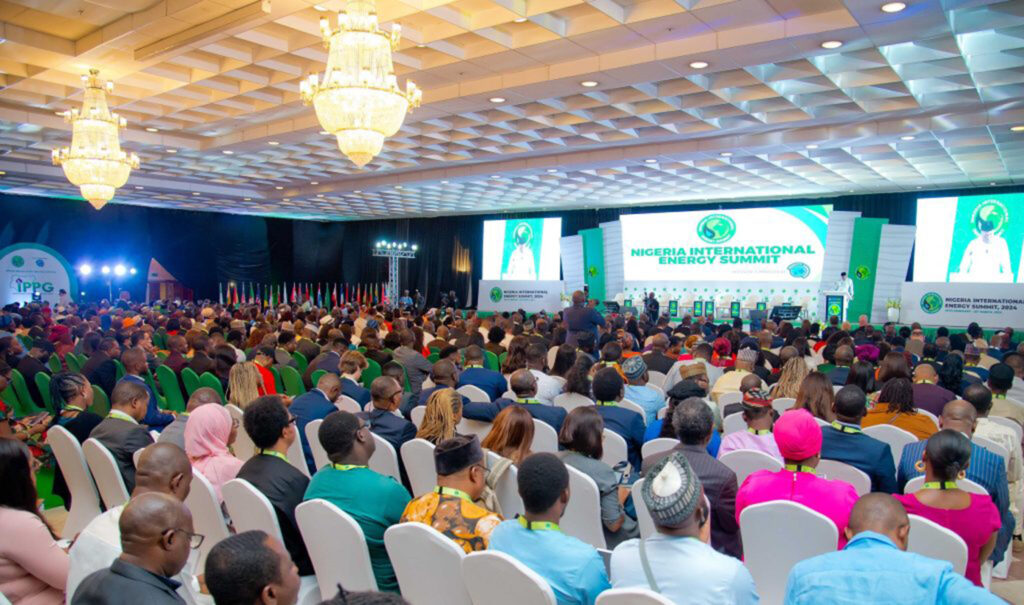
In contrast, the Nigerian International Energy Summit (NIES) has been increasingly distinguished by its government-forward posture. Backed by the Presidency and the Federal Ministry of Petroleum Resources, NIES is more than a conference — it is a policy announcement platform and implementation checkpoint.
At NIES 2024, for instance, new regulatory timelines were unveiled for licensing rounds, updates were given on Nigeria’s Gas Expansion Programme, and the Decade of Gas agenda was re-calibrated in response to new market dynamics. The summit has consistently served as a launchpad for cross-ministerial collaboration and real-time feedback loops between industry players and government officials.
Moreover, NIES provides a stronger link between the executive arm of government and sector regulators such as the NUPRC, NMDPRA, and NCDMB. Decisions or frameworks discussed at NIES often flow directly into government working groups, with timelines, responsibilities, and follow-ups assigned — a rare feat at most industry events.
Local Content as a Case Study: NOG vs. NIES
Both NOG and NIES preach the gospel of local content, but the implementation mechanisms differ starkly.
At NOG, panels reflect on the progress of NCIF, the 15-year journey of the NOGICD Act, and the future of technology as a local content imperative. Yet, the discussions remain largely retrospective and diagnostic.
On the other hand, NIES goes a step further. It mandates the NCDMB to release actionable dashboards, investment guidelines, and capacity assessment reports. During NIES 2023, the NCDMB launched a portal tracking local content compliance and held bilateral meetings with state governments to embed local content policies in subnational energy projects.
Technology and Workforce Development: A Clear Divide
Both summits acknowledge the importance of technology and future-ready skills. At NOG, technology is championed as a business driver with sessions focusing on AI in well performance, digital twin systems, and automation. The 2025 edition devoted considerable time to workforce reform, internships, and education alignment with industry needs.
However, these proposals often hang in limbo due to the absence of formal linkages with the Ministry of Education or National Universities Commission (NUC).
NIES, by contrast, brings regulators from the education sector into the conversation. In past editions, the Tertiary Education Trust Fund (TETFund) and the National Board for Technical Education (NBTE) have been active participants. These agencies take summit recommendations and translate them into revised curricula and special funding calls — effectively closing the policy loop.
Investor Confidence and Project Mobilisation
Another defining difference is the investor pipeline both summits generate. NOG attracts large exhibitors and commercial dealmakers — ideal for showcasing innovations and raising brand equity. However, project takeoff tends to lag due to regulatory bottlenecks.
NIES creates a better enabling environment by facilitating real-time discussions between investors and decision-makers. The summit’s government backing adds weight to MoUs signed during its weeklong activities, and announcements made there, tend to gain faster traction within relevant agencies.
The Verdict: A Place for Both, but a Policy Edge for NIES
The NOG Energy Week remains an indispensable fixture in Nigeria’s energy calendar — vibrant, commercially rich, and internationally relevant. It is ideal for peer-to-peer learning, networking, and technical showcases. But its format limits direct policy intervention, and its outcomes rarely feed immediately into regulatory timelines or government white papers.
In contrast, the Nigerian International Energy Summit is evolving into a true national forum — not just for discussion, but for action. Its alignment with state institutions, its deliberate focus on domestic policy, and its ability to influence decisions at the highest levels of government give it a clear edge when it comes to shaping Nigeria’s energy future.
For Nigeria to unlock its full energy potential, both summits must continue to thrive. However, when it comes to policy formation, regulatory recalibration, and national strategy, NIES is proving to be the more effective summit — one that is not just talking about the future but actively building it.
