By Adaobi Rhema Oguejiofor
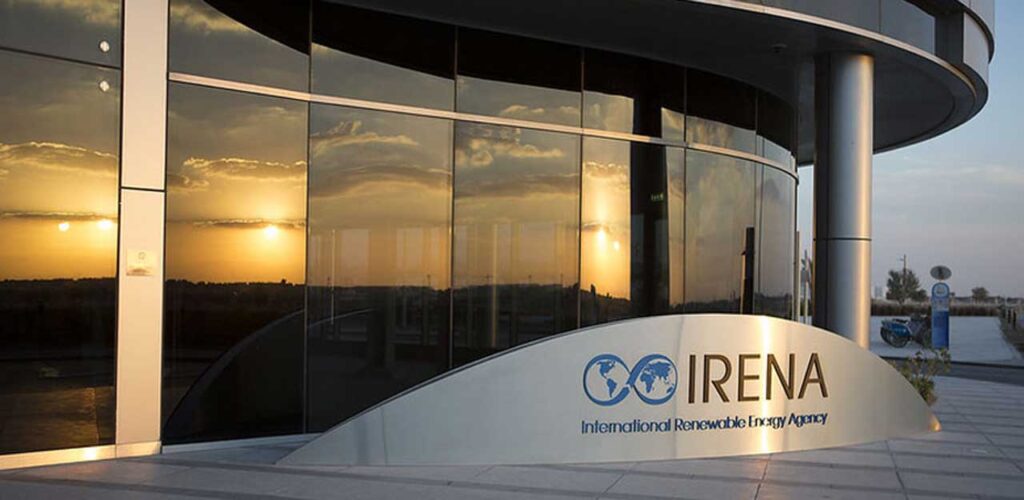
The International Renewable Energy Agency (IRENA) has outlined the urgent need to accelerate the deployment of renewable energy and the immense work still required to fully realise the renewable energy revolution by the end of the decade to meet global targets.
IRENA disclosed that despite record-breaking progress in 2024, with renewables achieving significant milestones, the growth pace remains inadequate to achieve the ambitious goal of tripling renewable energy capacity by 2030, which is a critical benchmark for limiting global temperature rise to 1.5°C. The Agency also warned that the annual growth rate must increase to at least a minimum of 16.2 per cent to stay on track for the 2030 goal.
In 2023, renewable energy capacity surged to unprecedented heights, reaching a global total of 3,865 Gigawatts (GW). Renewables also accounted for about 86 per cent of new capacity additions, with 473 GW added globally.
However, IRENA’s recent analysis highlighted a troubling gap between political commitments and actionable policies, noting that current national plans are projected to deliver only half of the renewable energy capacity required by 2030. As countries prepare to submit the next round of Nationally Determined Contributions (NDCs) in the coming month of 2025, the Agency called for more ambitious and actionable plans to align with the global tripling target.
According to the Agency, NDCs 3.0 which is due for submission this year must reflect the global goal of tripling renewable power capacity by 2030 to stay on a pathway to limit global temperature rise to below 1.5°C by 2050.
IRENA also stated that a significant gap remains between political announcements and actual county plans and policies as current national plans, as well as targets, are set to deliver only half of the required growth in renewable power by 2030.
It noted that although 2024 saw record-breaking achievements positively shaping the renewable energy landscape, the need for accelerated action to align global efforts with the Paris Agreement targets and Sustainable Development Goals has never been more urgent. This is because, the renewable energy revolution according to the agency, is not just a goal but an imperative for the planet’s future.
IRENA’s #3xRenewables campaign has continued to spotlight the 2030 target as a pillar of sustainable development, economic empowerment, social equity, and energy security. The Agency is also actively intensifying its efforts to support countries in bridging the gap between ambition and implementation, offering technical and policy guidance to fast-track their energy transitions.
With just five years left to meet the 2030 deadline, IRENA’s Director-General, Francesco La Camera, said that the surge in renewable generation capacity shows that renewables are the only technology available to rapidly scale up the energy transition aligned with the goals of the Paris Agreement.
In his words, “The COP28 goals of tripling renewables and doubling energy efficiency are key enablers for our global efforts to keep 1.5°C within reach but we risk missing them. The next NDC must mark a turning point and bring the world back on track.”
In another development, the 2024 Sustainable Development Goal (SDG) 7 progress report, jointly produced by IRENA in collaboration with the International Energy Agency (IEA) and other relevant organisations, showed that at the current rate of renewable energy’s progress, about 1.8 billion people will remain without access to clean cooking by 2030.
A report by IRENA’s Programme Officer for Energy Access Policy, Knowledge, Policy and Finance Centre, Caroline Ochieng, highlighted that climate-related emissions from cooking with polluting fuels account for 2 per cent of global carbon dioxide (CO2) emissions and 58 per cent of global black carbon emissions due to the soot when biomass is burned in traditional cook stoves.
She noted that in Sub-Saharan Africa where the clean cooking access deficit is the highest, renewable-based clean cooking solutions can offer environmental benefits, fuel and cost efficiency, as well as co-benefits arising from supply chains across other sectors such as agriculture.
Ochieng added that as a result of the intricate linkages between household energy use and the climate, many governments in access-deficit countries have included clean cooking in their NDCs, targeting the increased use of electric cooking, improved cook stoves, biogas and sustainable biomass. Apart from the fact that over a quarter of Sub-Saharan African countries do not have clean cooking in their NDCs, the existing targets still need to be more ambitious, more quantifiable, and more specific.
From target setting to implementation many low and middle-income countries are relying on development finance to support the implementation of measures outlined in their NDCs. Ochieng stated that countries can be supported by identifying investment needs and sources, creating convening platforms that bring together investors and the target countries for investments as well as providing technical assistance and capacity building to pursue carbon finance as an opportunity to develop their clean cooking sectors.
Carbon finance for clean cooking continues to be concentrated in a small number of countries and enterprises. Therefore, supporting countries to access the market would widen their opportunities to finance the implementation of their NDCs.
Ochieng concluded that NDCs provide the opportunity to mainstream renewables-based clean cooking in climate actions while concurrently achieving universal energy access (SDG7) and energy transition goals. There is an urgent need for the international community to support access-deficit countries through the improvement of their NDCs by including concrete clean cooking targets in their NDCs, or increasing their ambitions if the targets are already included. Most importantly, support must be given to turn those ambitions into actions, to ensure everyone benefits from a just, fair and equitable transition.
