
Let me start off my saying don’t believe what you see on tv. They told me it was dangerous, they told me security was needed everywhere and the told me it was impossible for me to walk in the streets safely. They were wrong.
This month, I traveled to Caracas as part of an African Energy Chamber delegation to assess collaboration opportunities across Venezuela’s energy value chain. Despite complex travel logistics and persistent narratives about instability, what I found was a country at a defining moment.
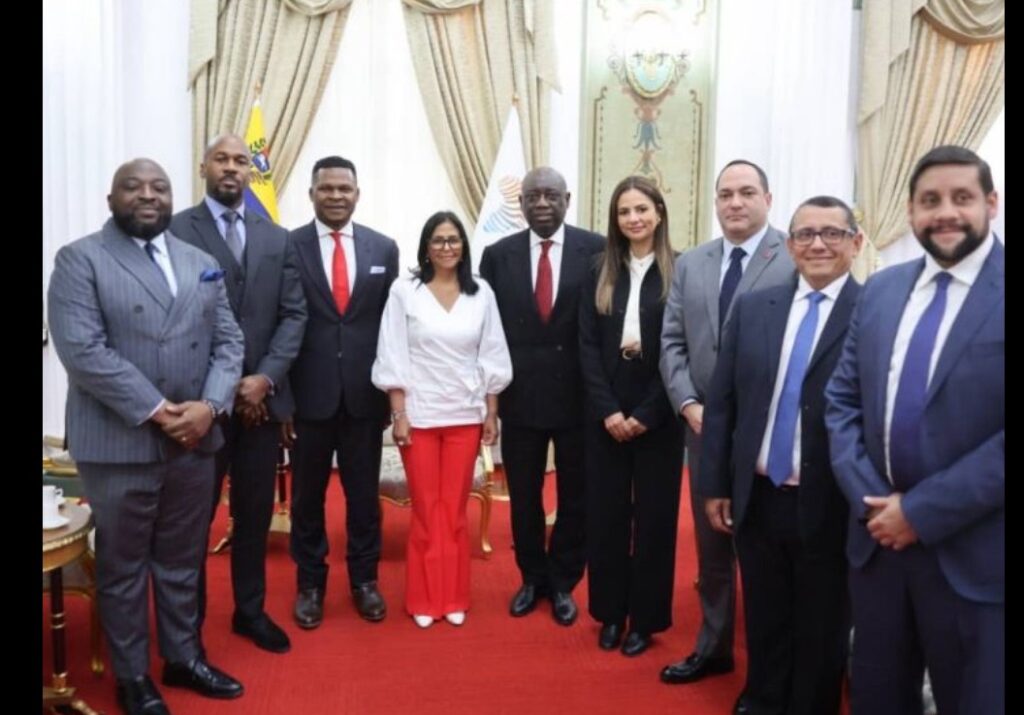
Our meetings spanned private-sector executives, senior leadership at PDVSA, ministers overseeing commerce and trade, and interim president Delcy Rodríguez. The message across stakeholders was consistent: this is a pivotal window for economic repositioning.
Venezuela is navigating an exceptionally delicate balance engaging Washington in hopes of easing sanctions while firmly asserting national sovereignty. The recent capture of President Maduro has intensified diplomatic tensions, yet paradoxically reopened negotiations that could unlock sanctions relief. Across both public and private sectors, there is urgency and cautious optimism.
From an energy standpoint, the opportunity is significant:
The world’s largest proven oil reserves. A newly announced hydrocarbon framework offering flexible participation models joint ventures, licenses, technical-financial alliances, and production-sharing structures.
Greater operational control and improved commercialization rights for investors. Production currently around 1.1 million bpd, with a credible near-term target of 1.5 million bpd and a five-year ambition of 3 million bpd.
Reported production costs in the $15–$20 per barrel range in many cases materially below common external estimates.
International majors are positioning carefully, aware that early entry could define long-term advantage. There is also strong appetite for “South-South-South” cooperation particularly triangulating Gulf capital and technology with Venezuelan resources in a multipolar energy landscape.
That said, lifting sanctions alone will not be enough. Sustained momentum will depend on regulatory clarity, institutional stability, and minimizing corruption and bureaucratic friction.
Venezuela stands at an inflection point. The next moves diplomatically, politically, and commercially will determine whether this moment translates into structural recovery or another missed opportunity.
Amena Bakr, 3rd Head of Middle East & OPEC+ A very special thanks to NJ Ayuk JD, MBA. And the African Energy Chamber
