
How the continent’s next investment wave is being shaped in Paris
By Silverline Ifeanyi Onyeabor
From the ongoing aftershocks of the Russia-Ukraine crisis to renewed instability in the Middle East, energy security has once again become a top priority on the global agenda with clear urgency. For Europe in particular, the pursuit of stable, diversified, and politically dependable energy partners has become more intense. In this realignment, Africa, long regarded as a continent of potential, is increasingly recognised as a continent of opportunity. At the centre of this renewed attention is gas.
For much of the past decade, conversations around energy transition often overshadowed the more immediate concerns of supply stability. That illusion has now faded. Governments and investors alike are confronting a dual reality: the world must decarbonise, but it must also keep the lights on. This is where Africa steps in.
With vast untapped reserves, expanding LNG ambitions, and growing domestic demand, the continent is uniquely positioned to serve both global export markets and its own developmental needs. The resurgence of interest in African hydrocarbons is not accidental; it is a direct response to global supply disruptions and the need for diversified energy sources.
Events like the Invest in African Energy Forum 2026, scheduled for April 22–23 in Paris, are emerging as critical platforms where these shifting dynamics are being translated into real investment conversations.
A Gas Opportunity Too Big to Ignore
Africa’s gas story is entering a decisive phase. According to projections by the Gas Exporting Countries Forum, the continent could attract up to $115 billion in midstream gas investment between 2031 and 2040. This wave of capital will be largely driven by LNG infrastructure, export terminals, and pipeline networks designed to connect African gas to global markets. But the opportunity is not just external; it is profoundly domestic.
More than 600 million Africans still lack access to electricity, a stark reminder that the continent’s energy paradox persists: resource abundance alongside energy poverty. Gas, in this context, is not merely an export commodity; it is a development tool. Gas-to-power projects, industrial feedstock applications, and decentralised energy systems are all part of a broader push to convert natural resources into economic transformation.
Countries such as Mozambique, Nigeria, Senegal, Mauritania, Libya, the Republic of Congo, and Algeria are already at the forefront of this transformation, anchoring new LNG hubs and reshaping Africa’s role in global gas supply chains.
From Potential to Projects
What distinguishes this moment from previous cycles of African energy optimism is simple: projects are actually moving forward.
Across the continent, a new generation of infrastructure is taking shape: floating LNG (FLNG) facilities are unlocking offshore gas reserves once considered commercially unviable. Downstream investments from refineries to petrochemical complexes are expanding value addition within African economies. Cross-border pipelines are beginning to integrate fragmented energy markets, while renewable energy projects are scaling to complement gas in national power mixes.
The numbers reflect this momentum. In 2025 alone, Africa attracted nearly $14 billion in power and energy investment, with upstream spending projected to hit $41 billion in 2026. These are not speculative figures; they represent active capital flows into bankable projects.
Governments Step Forward
A key driver of this new momentum is the increasing assertiveness of African governments in shaping their energy narratives.
At the upcoming forum in Paris, policymakers will not merely be observers; they will be dealmakers.
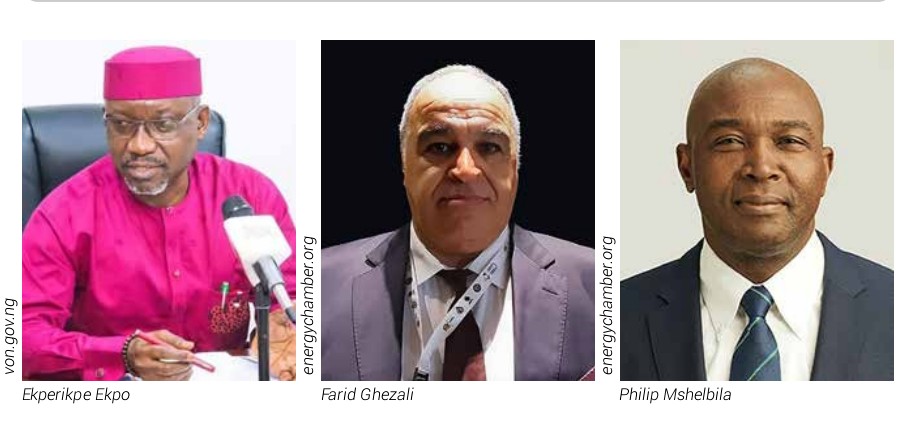
Leaders such as Farid Ghezali of the African Petroleum Producers’ Organization, Philip Mshelbila, Bruno Jean-Richard Itoua, and Ekperikpe Ekpo will present concrete investment frameworks, licensing rounds, and project pipelines. Their presence signals a shift from rhetoric to execution.
Also expected are ministers and senior officials from across the continent, including representatives from Gabon, Zambia, Djibouti, the Democratic Republic of Congo, Guinea, Equatorial Guinea, Gambia, and Sierra Leone, each bringing a portfolio of opportunities spanning upstream exploration, LNG development, refining, and power infrastructure. For investors, this level of direct access is rare and valuable.
Where Deals Begin
What sets the Invest in African Energy Forum apart is its focus on outcomes. Unlike traditional conferences that prioritise dialogue, this forum is structured to facilitate transactions. Ministerial roundtables, investor matchmaking sessions, project showcases, and private deal rooms are all designed with a single objective: converting interest into investment.
Participants will include national oil companies, international energy majors, commodity traders, private equity firms, infrastructure funds, and technology providers, creating a dense ecosystem where capital meets opportunity. At a time when global capital is increasingly selective, such curated engagement platforms are essential.
The Strategic Case for Africa
The case for investing in Africa’s energy sector rests on three pillars.
First, resource scale. Africa holds some of the world’s largest untapped gas reserves, offering long-term supply potential at a time when traditional sources are under strain.
Second, market duality. Investors are not limited to export markets; they can also tap into rapidly growing domestic demand for power, fuels, and industrial inputs.
Third, policy evolution. Governments are increasingly adopting investor-friendly frameworks, streamlining regulations, and prioritising energy infrastructure as a cornerstone of economic development.
Together, these factors create a compelling investment narrative, one that aligns commercial returns with developmental impact.
A Defining Decade
As NJ Ayuk, Executive Chairman of the African Energy Chamber, emphasises, Africa’s energy future will be shaped by the partnerships being forged today.
The stakes are high. For Africa, this is an opportunity to monetise its resources, industrialise its economies, and lift millions out of energy poverty. For global investors, it is a chance to secure a reliable supply, diversify portfolios, and participate in one of the last major frontier energy markets.
The convergence of these interests is what makes this moment different and potentially transformative.
Paris as the Meeting Point
In April, Paris will serve as more than just a venue. It will be a crossroads where global energy priorities intersect with African ambition.
The conversations that take place and the deals that emerge could help define the trajectory of Africa’s energy sector for decades to come.
For those paying attention, one message is becoming increasingly clear: Africa is no longer waiting to be discovered. It is ready to be invested in.
