

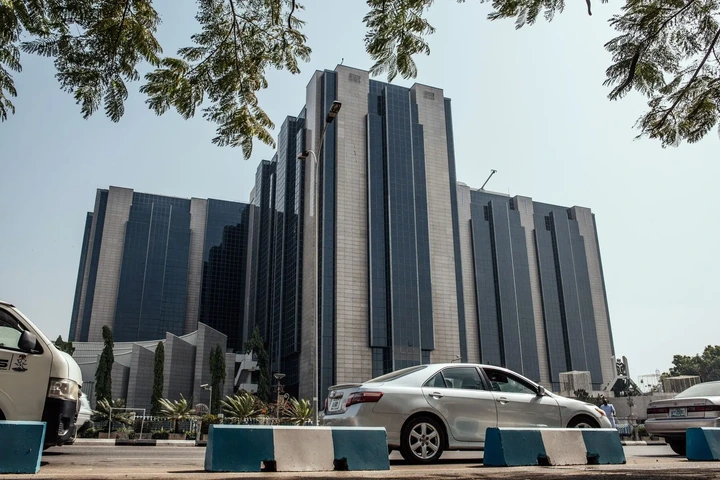
The Central Bank of Nigeria (CBN) has signaled its readiness to intervene in the foreign exchange market to defend the naira if global market volatility triggered by escalating geopolitical tensions begins to pressure Nigeria’s currency.
The move comes as investors across global markets shift toward safe-haven assets following rising tensions linked to the conflict involving the United States, Israel and Iran.
The uncertainty has strengthened the U.S. dollar and increased risk aversion toward emerging market assets.

Deputy Governor of the CBN, Muhammad Sani Abdullahi, said the apex bank is prepared to step in to stabilise the naira should market pressures intensify.
According to Abdullahi, the central bank will closely monitor developments in global markets and intervene where necessary to smooth volatility in Nigeria’s foreign exchange market.
He explained that geopolitical conflicts often lead to shifts in global capital flows as investors reduce exposure to riskier assets and increase holdings in safer currencies such as the U.S. dollar.
Such movements typically create pressure on emerging market currencies, including the naira, especially when global investors move funds out of local bond and equity markets.
However, Abdullahi noted that Nigeria’s relatively high interest rates have continued to attract foreign portfolio investors seeking stronger yields in emerging markets.
These inflows have helped support demand for naira-denominated assets in recent months despite persistent global economic uncertainty.
The central bank’s readiness to defend the currency underscores the importance of maintaining stability in Nigeria’s foreign exchange market, particularly at a time when global geopolitical tensions are creating uncertainty across financial markets.
Analysts say that prolonged conflict in the Middle East could heighten volatility across global markets and trigger capital outflows from emerging economies.
When investors withdraw capital from such markets, demand for foreign currencies typically rises, increasing pressure on local currencies.
Nigeria’s economy remains highly sensitive to external shocks due to its reliance on crude oil exports for the majority of its foreign exchange earnings.
Any disruption in global energy markets or investor flows can therefore have significant implications for the country’s currency stability and broader economic outlook.
In recent weeks, rising geopolitical tensions have also contributed to increased volatility in oil prices, which have climbed above the $100 per barrel mark amid concerns about potential disruptions to supply routes in the Gulf region.
Higher oil prices can boost Nigeria’s export revenues and support foreign exchange reserves, but market analysts say sustained global uncertainty could still weigh on investor sentiment.
The CBN said it will continue to monitor market conditions closely while deploying available monetary and foreign exchange policy tools to maintain stability in the naira and support confidence in Nigeria’s financial system.
Market participants will be watching closely for any signs of increased intervention by the central bank as global financial markets react to ongoing geopolitical developments.
SOURCE: Investorsking
