
By Anscella Obike
Nigeria’s ambition to reposition its solid minerals sector as a pillar of post-oil economic diversification is facing a serious setback. Rampant illicit financial flows, weak oversight and entrenched informal networks are draining billions of naira annually from a sector that should be powering jobs, industrialisation and foreign exchange growth.
A recent report by BusinessDay highlights mounting concerns that illegal mining, under-reported exports and regulatory loopholes have created a parallel economy operating largely outside government control. The consequence is stark: vast mineral wealth is extracted from the ground, yet only a fraction translates into public revenue.
A Sector of Promise, Undermined by Leakages
Nigeria is richly endowed with gold, lithium, tin, limestone, barite and other strategic minerals. In policy documents, the sector is often described as the country’s next frontier for growth, capable of reducing reliance on crude oil. However, persistent illicit financial flows (IFFs) have severely limited its contribution to national development.
Data presented by the Nigeria Extractive Industries Transparency Initiative (NEITI) indicates that extractive industries account for the overwhelming majority of Nigeria’s illicit outflows, with the solid minerals segment increasingly vulnerable. Illegal mining operations, smuggling networks and systematic under-declaration of production volumes continue to deprive the government of royalties, taxes and export earnings.
Estimates cited in the report suggest that Nigeria may be losing billions of dollars annually to illegal mining and related activities. Beyond lost revenue, these flows distort official production statistics, weaken planning frameworks and discourage responsible investment.
The Informal Economy and Weak Enforcement
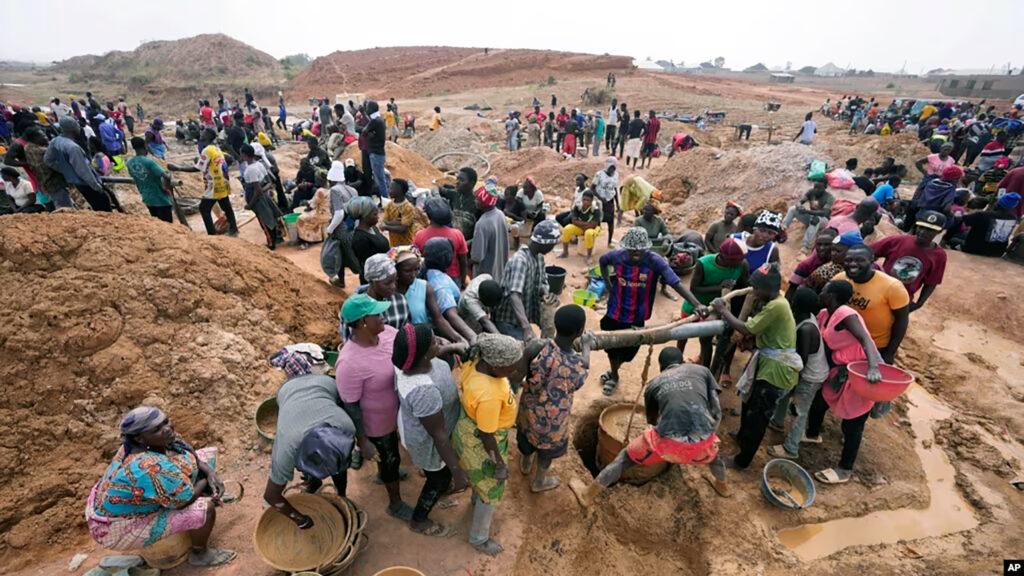
One of the sector’s defining challenges is the dominance of informal and artisanal mining. While small-scale miners provide livelihoods for thousands, the absence of structured oversight has allowed criminal syndicates and middlemen to exploit regulatory gaps. Minerals are frequently transported across porous borders or exported without proper documentation, escaping taxation and oversight.
Institutional fragmentation compounds the problem. Weak coordination among mining regulators, customs authorities, revenue agencies and security services makes it difficult to reconcile production figures with export data. Without integrated monitoring systems, discrepancies go undetected, and enforcement remains reactive rather than preventive.
Licensing transparency also remains a concern. Limited disclosure of beneficial ownership and inconsistent reporting requirements create space for shell companies and opaque operators to move funds offshore. In such an environment, illicit financial flows thrive.
Economic and Security Implications
The impact extends beyond fiscal losses. Illicit mining has increasingly been linked to insecurity in mineral-rich communities, where armed groups and criminal networks compete for control of high-value sites. Revenue from illegal extraction can fuel broader criminal activity, deepening instability in already vulnerable regions.
At the macroeconomic level, the leakage of export proceeds reduces foreign exchange inflows at a time when Nigeria faces persistent currency pressures. It also weakens investor confidence. Legitimate mining companies are unlikely to commit long-term capital in a system where unregulated actors operate with relative impunity.
Despite its vast geological potential, the solid minerals sector contributes less than one per cent to Nigeria’s GDP, a stark contrast to its resource base. Without stronger governance, the promise of diversification risks remaining rhetorical.
Reform Pathways: Transparency, Technology and Coordination
Stakeholders increasingly argue that addressing illicit flows requires structural reform rather than piecemeal interventions. Strengthening export tracking mechanisms, digitising production reporting and deploying real-time monitoring systems could significantly reduce under-declaration and smuggling.
Improved inter-agency collaboration is equally critical. Harmonised databases linking mining licences, customs declarations and tax records would allow authorities to detect inconsistencies early. Embedding anti-money laundering controls across the mineral value chain, from licensing to export, would also limit the ability of illicit actors to launder proceeds.
Equally important is formalising artisanal and small-scale mining through simplified licensing, technical support and access to finance. Bringing informal operators into the legal framework can broaden the tax base while improving safety and environmental standards.
Overall, Nigeria’s solid minerals sector stands at a decisive point. The resources are abundant, global demand for critical minerals is rising, and the policy ambition to diversify the economy is clear. Yet unless illicit financial flows are decisively tackled, the sector will continue to haemorrhage value.
Restoring credibility will require transparency, institutional discipline and sustained political will. If Nigeria can close the leakages, strengthen oversight and build investor confidence, the solid minerals industry could evolve from a source of lost billions into a genuine engine of inclusive growth.
